
Rivals in Syria race to assault militants’ ‘capital’ Raqqa
Trending
BEIRUT -- After the battlefield of Iraq’s Mosul, the next major campaign against the Islamic State group will be to take its de facto capital, the Syrian city of Raqqa. The Pentagon has drawn up a secret plan to do that, likely leaning on local allies with stepped up American support.
The question is: In the tangled mess that is Syria’s conflict, who are those local allies?
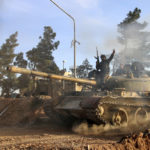
Syrian government forces, Turkish troops and their Syrian militia allies, and U.S.-backed Kurdish forces all have their eye on Raqqa. Each vehemently rejects letting the others capture the city and would likely react in anger should the United States support the others. And it is not clear that any has the resources to take the city on its own.
“Raqqa is more of an abstract goal: everyone wants it in principle, but no one is willing to commit the resources and bear the risks necessary,” said Faysal Itani, an analyst at the Washington-based Atlantic Council.
The fall of Raqqa, the Islamic State group’s de facto capital and largest remaining stronghold, would be the biggest defeat for the militants in Syria since they captured the northern city on the banks of the Euphrates River in January 2014.
President Donald Trump has vowed to “obliterate” the group. “We will work with our allies, including our friends and allies in the Muslim world, to extinguish this vile enemy from our planet,” he told Congress on Tuesday.
The top U.S. commander in the campaign against IS, Lt. Gen. Stephen Townsend, has said he believes Raqqa and Mosul will be taken within six months. So far, the offensive on Mosul has been underway four months, with only half the city captured from the militants in ferocious street-to-street urban combat. And that is using a relatively intensively trained and united military, backed by heavy U.S. firepower and commandos on the ground -- a contrast to the comparatively undisciplined and fragmented forces the U.S. has to choose from as allies in Syria.
Raqqa is a smaller city than Mosul, but the militants are believed to have dug in with powerful fortifications there.
In Syria, U.S-backed predominantly Kurdish fighters known as the Syria Democratic Forces, or SDF, remain Trump’s best bet. Aided by U.S.-led coalition airstrikes and some 500 U.S. special forces troops deployed in an advisory role, the force has been marching toward Raqqa since November. Closing in on the city from different directions, it is now stationed some eight kilometers (five miles) north of the city.
The U.S. military recently provided a small number of armored vehicles to the U.S.-backed force to give better protection from small arms fire and roadside bombs as they get closer to Raqqa.
Further aid to the rag-tag group, however, raises sensitive questions over how to deal with Turkey, a NATO ally with much at stake in Syria. Turkey considers the main Kurdish militia in Syria -- known as the YPG, and an affiliate of the U.S.-backed SDF -- a terrorist organization, and has vowed to work with Syrian opposition fighters known as the Free Syrian Army to liberate Raqqa.