
Trending
The cost of getting a post-secondary education is a hot political topic in the nation and the state, and news of proposed tuition hikes by Iowa State interim President Ben Allen has caused some concern.
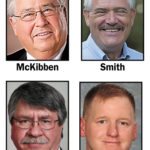
"At this point in time, I'm keeping it very neutral; I'm listening and learning," said State Board of Regents member, attorney and former state Sen. Larry McKibben. "We're going to have tuition increases, there's no doubt about that."
Allen's proposal Wednesday included a 7 percent increase in tuition costs every year for the next five years, totaling roughly $3,000 in increases over that period.
"We've had to adjust tuitions this last year a couple of different times, because the legislature cut back budgets a couple different times as we were moving along," said McKibben, of Marshalltown. "We're doing business in a reactive manner that makes it very difficult for students and families to know what their budgets are and what they need, and it's a poor way to run a business."
State Sen. Jeff Edler, R-State Center, was present at the meeting in Ames where Allen outlined the proposed five-year plan.
"That [estimate] was based off of some assumptions that figured a 0 percent increase in state funding as well as 0 percent increase of growth of student population," he said. "I think that would be probably their most conservative estimate."
Iowa State has seen an uptick in student population in recent years, with the total student head-count in fall of 2015 at 36,001 to the 36,660 total head-count in the fall of 2016.
State Rep. Mark Smith, D-Marshalltown, said the proposed increases are going to hurt middle class Iowans.
"This is just another example of the middle class of our state not getting the return for the taxes they are paying," he said, adding he thinks the proposed hikes may discourage students from considering college. "What we've seen is tax cuts on services like college education, that affect the middle class; instead, the Republicans have chosen to give tax breaks to large, out-of-state corporations."
Fellow state Rep. Dean Fisher, R-Montour, said the regent universities, which also include the University of Northern Iowa and the University of Iowa, need to do a better job of managing their costs. He also said the schools may not see much difference in appropriations this coming session.
"I can't say for sure," Fisher said. "The revenue numbers are not necessarily looking very positive; I don't think it will change much."
He also said the tuition increases may encourage students to look into other forms of post-secondary education, such as community college.
McKibben, who has supported tuition freezes in the past, said the governor's office and legislature have not been giving enough support to the universities' needs.
"Our university leaders now are trying to put together five-year budgets," he said, adding many contingencies are being planned for, including different amounts of funding from the state over the coming years.
He said the regent schools have been holding public "hearing sessions" for students, faculty and other interested people to share their thoughts.
"These are proposals that the universities are putting together for their need-based tuition, since the legislature and the governor didn't furnish any baseline increase for next year," McKibben said.
Smith also said he thinks it's unlikely much will change in the coming year for regent school appropriations.
"We haven't seen what Gov. Reynolds is proposing yet, nor have we seen what the legislature is going to do on this," he said. "The path that they have been going on would indicate that it's not going to get better this next session."
Edler said he's happy to see the university planning for the future and informing students on changes that may be coming.
"It was a good, conservative estimate for them to use that; I hope it doesn't become a reality," he said of the proposed increases. "We've tried to really protect the K-12, and that's come at a cost."
While tuition appears to be on a path of increase, McKibben said the Board of Regents is looking at ways to support students, including grants.
"I'm a first-generation student, and I come from a very diverse community," he said. "I don't want to keep first-generation students from being able to afford college education."
--------
Contact Adam Sodders at (641) 753-6611 or asodders@timesrepublican.com