
Garwin man travels world, visits refugees
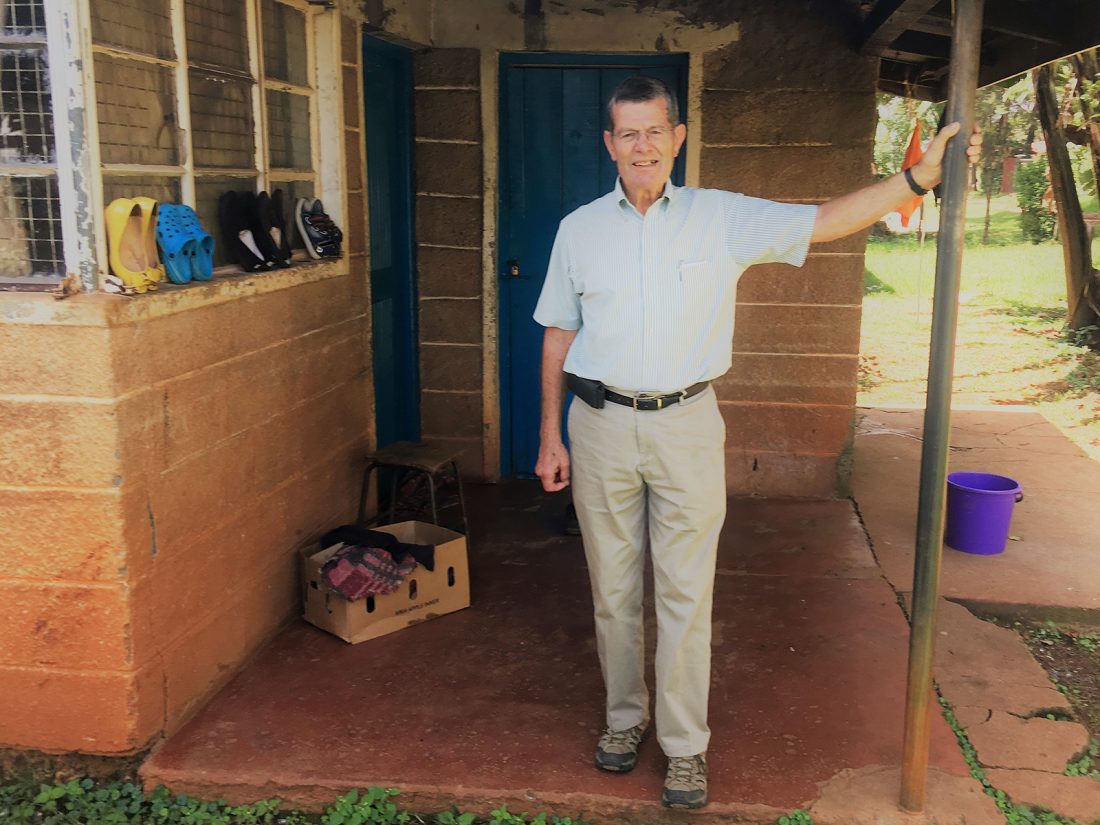
CONTRIBUTED PHOTO - Daniel Beane of Garwin has had a life-long interest in the human condition, traveling the world getting to know people from cultures and backgrounds different from his own in rural Iowa. From 1964-67 he taught school in Kenya. He’s pictured in front of his old home there on a recent trip.
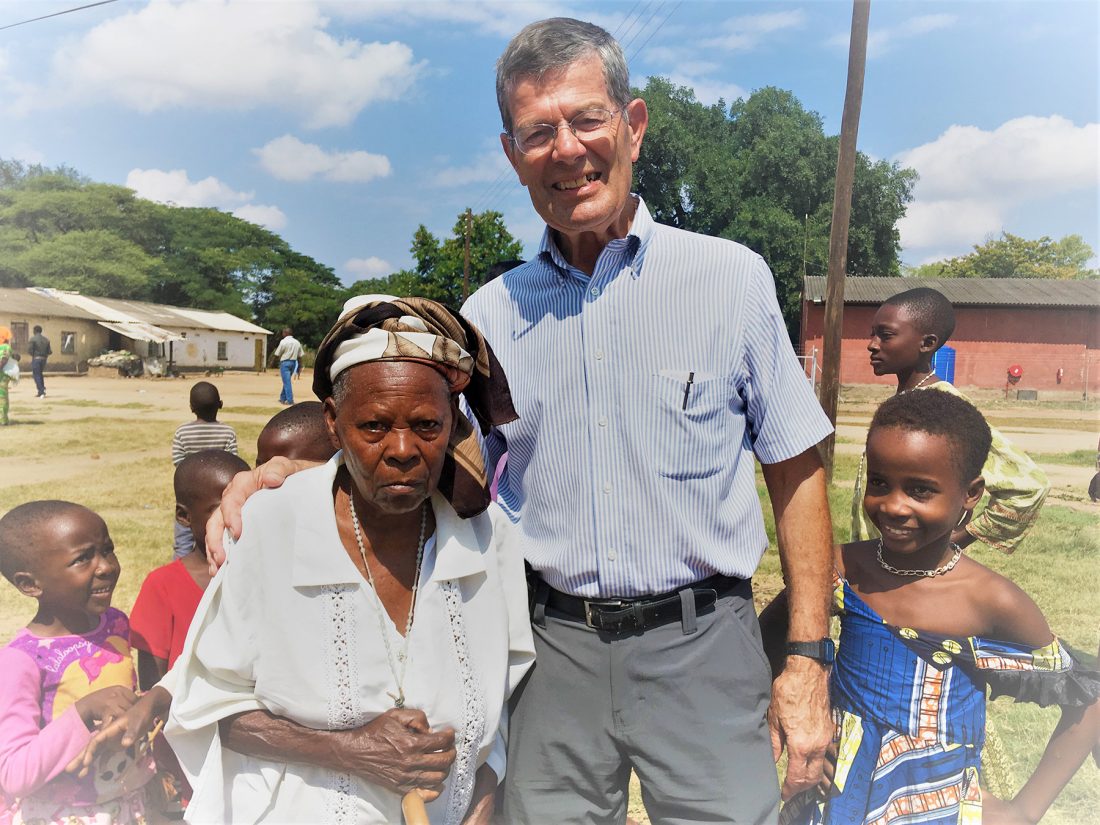
CONTRIBUTED PHOTO - Last month, Beane visited Kenya and Zimbabwe. Here he meets with residents of the Tongogara Refugee Camp in Zimbabwe.
CONTRIBUTED PHOTO - Daniel Beane of Garwin has had a life-long interest in the human condition, traveling the world getting to know people from cultures and backgrounds different from his own in rural Iowa. From 1964-67 he taught school in Kenya. He’s pictured in front of his old home there on a recent trip.
CONTRIBUTED PHOTO - Last month, Beane visited Kenya and Zimbabwe. Here he meets with residents of the Tongogara Refugee Camp in Zimbabwe.
Trending
Daniel Beane has had a life-long interest in the human condition, traveling the world getting to know people from cultures and backgrounds different from his own in rural Iowa. He recently spent over a month in Africa, visiting Kenya and Zimbabwe. He also volunteers his time at a school for the deaf in Belize.
Beane, 77, of Garwin is a native of Le Grand. He earned a Bachelor's degree in agricultural education from Iowa State University in 1964. He then accepted his first teaching position -- half a world away.
"I was registered with the draft board as a conscientious objector and we had to do two years of alternative service," he said. "Some friends suggested I teach in a school in Kenya that was looking for a vocational agriculture teacher."
Beane ended up spending three years in rural Kenya (near the city of Kisumu) teaching at a Quaker school where students are taught in English, beginning in kindergarten. His time spent living in east Africa inspired him to make an additional 20 trips to the continent since the 1960s.
"My heart is in Africa," Beane said.
He married his late wife Sarah Squires in 1969, also earning a master's degree that year, and the two went on to have a family. Spending only a brief time teaching in the States, he then spent 45 years tending to the family farm in Garwin. From 1997 to 2001 he and his wife served four months of the year at the Friend Theological College in Kenya. From 2002 until his wife's death in 2015, they served four months of each year at the Cayo Deaf Institute in Belize. Beane now volunteers at the school for around two months at a time.
"Over the years, I've led probably 15 different short-term youth teams to different places, including Bolivia, Tanzania, Kenya and Belize," he said.
On Jan. 14, 2019, Beane started his journey through Africa in Kenya, where he spent time building houses for widows. He then rented a car and set out to make his third visit to the Tongogara Refugee Camp in Zimbabwe, which required obtaining a permit to enter. The refugee camp has a population of 12,000.
"In a way it had the feeling of an African village," Beane said. "There's a couple shopping districts where they have small shops selling a few essentials. The United Nations furnishes some basic materials to build houses. The basic house is 10 feet wide and 20 feet long with two rooms, and the option for a third 10×10 room. So (residents) build the walls out of sun-dried bricks or fire them, and the UN furnishes the rafters, doors and metal roofing."
There is an outhouse between every two houses. No electricity or running water can be found in the homes, but wells connected to pipes allow for water to circulate throughout.
"People walk less than 1,000 feet to get water," he said.
Beane said the reason why he returns to the refugee camp is a desire to hear the inhabitants' stories and let them know people outside of the settlement care about their welfare.
"Ninety percent of these refugees in Tongogara came from the Democratic Republic of the Congo. Another 5 percent from Rwanda and another 5 percent from Mozambique," Beane said. "The DRC has had conflicts and civil wars since independence (from Belgium) in 1960. And in that state of constant warfare, lawlessness exists with bandit groups operating, militias, etc. If you get on the wrong side of one of those groups, they'll either make life miserable for you or kill you."
He has heard many first-hand stories of the plights of refugees.
"Daniel and his wife Mary have spent 15 years in the camp. He had worked in the eastern part of the Congo and as a part-time pastor, preaching reconciliation. He was targeted by a militia who burned down his house and he fled to a different village, one to the next, before ending up in Tongogara. He doesn't want to go back to the DRC. He is quite sure he'll be killed if he goes back," Beane said.
While spending weeks in the camp, he met with representatives from the Zimbabwe government and the United Nations. He said he was surprised to learn the camp is largely run by non-governmental organizations.
"NGOs work in the camp running health care, schooling, water and income generators to grow crops. The refugees can use the produce from the crops for their own families or sell it in the market to generate some income," he said.
Refugees have access to a library, job training and counseling.
Beane said there are many churches in the refugee camp, noting how choirs even hold competitions with one another.
Next week, he will set off for Belize.
He hosts the Beane Lecture Series at William Penn University, a school he attended during his undergrad years. The goal of the talks is to educate Iowans about the plight of refugees.