
Sacheen Littlefeather, actor who declined Brando Oscar, dies
Trending
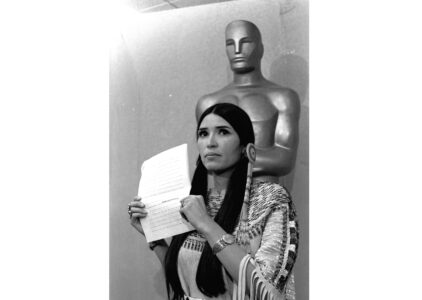
Sacheen Littlefeather, the actor and activist who declined Marlon Brando's 1973 Academy Award for "The Godfather" on his behalf in an indelible protest of Hollywood's portrayal of Native Americans, has died. She was 75.
Littlefeather's niece, Calina Lawrence, confirmed that she died peacefully Sunday, surrounded by loved ones at her Marin County, California, home. The cause was breast cancer, the family said.
Littlefeather's appearance at the 1973 Oscars would become one of the award show's most famous moments. Clad in buckskin dress and moccasins, Littlefeather took the stage when presenter Roger Moore read Brando's name as the winner for best actor.
Speaking to the audience, Littlefeather cited Native American stereotypes in film and the then-ongoing weekslong protest at Wounded Knee in South Dakota as the reason for Brando's absence. She said Brando had written "a very long speech" but she was restricted by time to brief remarks. Producer Howard Koch had allegedly warned Littlefeather, then 26, that he would have her arrested if she spoke for more than a minute.
"I beg at this time that I have not intruded upon this evening and that we will in the future, our hearts and our understandings will meet with love and generosity," Littlefeather said, becoming the first Native American woman to appear onstage at the Oscars.
Although brief, straightforward and courteous, Littlefeather's appearance was contentious, receiving a mix of applause and boos from the audience. In the years after, Littlefeather endured considerable scorn and abuse for her speech, she said.
"I spoke from my heart," she told The Associated Press days after the Oscars. "Those words were written in blood, perhaps my own blood. I felt about like Christ carrying the weight of the cross on his shoulders."
Only recently did the Academy of Motion Pictures Arts and Sciences officially address the treatment Littlefeather received following her appearance. In August, the film academy apologized to Littlefeather. Two weeks ago, it held an evening of "conversation, healing and celebration" in her honor.
"The abuse you endured because of this statement was unwarranted and unjustified," the academy's president, David Rubin, wrote in a letter to Littlefeather. "The emotional burden you have lived through and the cost to your own career in our industry are irreparable. For too long the courage you showed has been unacknowledged. For this, we offer both our deepest apologies and our sincere admiration."
Littlefeather responded in a statement: "We Indians are very patient people -- it's only been 50 years!"
"We need to keep our sense of humor about this at all times," she added. "It's our method of survival."
Littlefeather was born Marie Cruz on Nov. 14, 1946, in Salinas, California. Her father was from the White Mountain Apache and Yaqui tribes and her mother was white. Both were saddle makers. They separated when Littlefeather was four, after which she was raised largely by her grandparents. She took the name Sacheen Littlefeather after high school. Sacheen, she said, was what her father had called her; the surname came from a feather she often wore in her hair.