Hunting season begins to close out
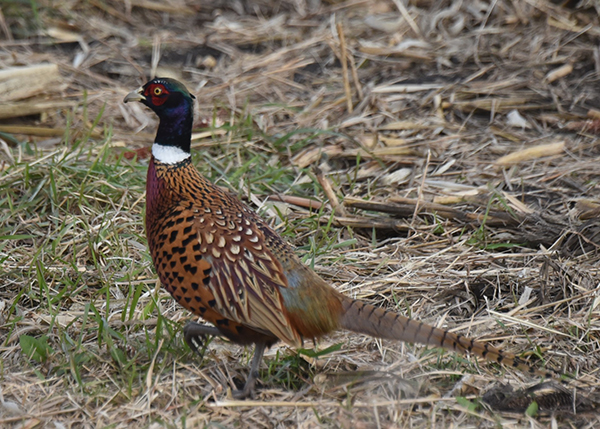
PHOTO BY GARRY BRANDENBURG Pheasant hunting season will end at 4:30 p.m. on Jan. 10. This popular upland game bird is a classic poster-pick for hunting enthusiasts. Many miles of walking and many watchful eyes by both the human hunters and trained bird dogs have been expended to try to procure a few of these pheasants for future family meals. Overall in Iowa, the pheasant hunting season was snow free, relatively mild in terms of weather events, and as always presented challenges for the hunters to get close enough. Biologists can fairly well determine the winter survival rate of ring-necked pheasants by the weather we will experience between now and the end of March. Not too much snow, cold but not super cold air temps, no ice storms, and no blizzards of sideways blowing snow. These factors will go a long way to assist rooster and hen pheasant survival.
Pheasants are survivors. They are hardy and can make due in many circumstances of winter weather events. What they need are good winter cover habitats for protection from weather and predators, food sources.
What they do not need are freezing rain systems to coat the ground with ice or make any snow cover crusted over and impenetrable. Really deep snow cover does not allow birds to find waste grains.
Wildlife do not like that. Neither do us humans, but we must take what we get and adapt.
The ring-necked pheasant is an Asian species introduced into the United States in 1881. It was introduced to Iowa around the year 1900.
A private game farm owned by William Benton near Cedar Falls had a large flock inside penned areas. And then a severe winter storm with its strong winds wrecked the pen fencing/overhead netting. This accidental release of pheasants allowed about 2,000 birds to escape. Many survived, and people took note.
The Iowa Conservation Commission began raising pheasants soon after. By the 1930s, many regions of Iowa were stocked with birds. This experiment took off (pun intended) and ring-necks flourished.
A huge reason for their success at that time was the result of typical small farm sizes. Small farms were the norm and had a mixture of permanent grasses or hay, small grains, lots of weedy fence rows, and adjacent wetlands.
The pheasant quickly adapted and became an important game bird for hunters. Estimates of the population were put at between 4 to 6 million!
Lots of things have changed since the 1930s, namely 90 years of change in how our Iowa farmlands are managed. That means habitats also changed and good habitats only continued to survive in more and more isolated parcels.
We still have grasslands, just not as many. We still have wetlands, just not as many. We do have larger and larger farm operations with fewer and fewer fence rows, and in spite of all these changes, the pheasant population lowered but did continue to hang on and survive.
A review of aerial photographs of Iowa land uses compared 1939 to 1972 from 27 counties in north central Iowa. What was found was not surprising but informative — a decline of 76 percent in good pheasant cover during the growing year and a 33 percent decline for winter habitat. Conservation Reserve Programs have helped return large blocks of grasslands to the landscape.
Iowa DNR biologists conduct August roadside counts along more than 6,000 miles in over 30 standardized survey routes. The only thing that may change from year-to-year is how any adjacent habitats fluctuate.
Back in Iowa’s more prime days of the 1960s, 70s and early 1980s, hunters could and did take 1.2 to 1.4 million pheasants during the season. Now, the harvest take is closer to 800,000 statewide.
We will soon find out if that number has climbed a bit over the last decade. We will stay tuned for that finding.
Pheasant reproduction is a spring time thing. Rooster pheasants begin crowing more in March to help attract hens to his territory. One male will breed with many hens, as many as 50. It is a polygamous title.
Nesting can begin in late March in southern Iowa. A more typical nesting time is April, incubation during May, and hatching in early June. A first nest by the hen can have 10 to 12 eggs and if she is successful. A complete nesting cycle from laying eggs to hatching takes
37 days.
Young hatchling pheasants are termed precocial and can leave the nest to follow the hen within hours of hatching. Foods for adult pheasants and chicks are bugs, any small insect, slugs, and other invertebrates for the first six weeks.
Later, the chicks will add seeds, berries and green vegetation to their menu. Water can come from dew drops and in combination with the foods they eat.
Growth will be fast. At about 12 to 14 days old, the young can make short flights. As they age, flights become a primary method of avoiding ground predators.
Pheasants are survivors. However, they need helping hands by landowners, private conservation organizations, public conservation agencies and favorable weather. Given those conditions, the ring-necked pheasant will continue to be a colorful game bird for us to see and for hunters to hunt and eat.
———
There are other game seasons remaining open. Quail, partridge and Ruffed Grouse can be hunted through Jan. 31. Squirrels may be taken until Jan. 31. Rabbit season goes until the end of February.
Dark Goose seasons are regulated by north, central and south zones with end dates of Jan. 13, Jan. 20 and Jan. 27 respectively. Light goose seasons for white and blue phase snow geese and Ross’ geese will be open between Jan. 28 and May 1, 2024.
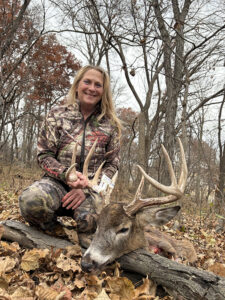
Most deer seasons end Jan. 10. There may be special deer zone seasons authorized to remove more doe deer in certain areas. Do check with local game wardens and/or biologists to find those unique zones for deer.
Statewide deer harvest numbers continue to be reported. Midweek, the total for Iowa was over 96,000. Last Wednesday, the count was 96,381. Marshall County deer hunters took 530.
———
Winter days are beginning a slow transition to longer light. It maybe isn’t much right now, but it is inevitable and timeless in its ages old passage of our earth around the sun.
On Jan. 1, the day length was 9 hours and 10 minutes. On Jan. 31, the day length will have increased by 47 minutes to 9 hours and 57 minutes. These numbers reflect times for people living at northern latitudes of about 42 degrees. As February and March come to us, those daylight lengths will increase more rapidly.
It may be winter, but some wildlife species are already thinking of spring. For example, the mating season for foxes and coyotes will begin mid month. Workers in fish hatcheries are diligently caring for fish to be stocked in trout streams of northeast Iowa.
Eagles and owls have territories to defend and nests to build or refurbish. They also will mate soon and prepare the time for the next generation of new eagles or new owls. Nature’s cycles of life will carry on. Good.
———
It is a new year. So what will we make of it to make it a truly great year? That is a bit hard to say given the flux of state, national and worldwide events that seem overwhelming.
While the rest of the world may be going bonkers, we do not have to follow suit. Helpful things to
accomplish between family and friends are high on the list. Community service via personal initiatives or group efforts are welcome.
Supporting good causes with our time and monetary assistance will work.
Vern McLellan said “What the new year brings to you will depend a great deal on what you bring to the new year.” I like that statement.
———
Garry Brandenburg is the retired director of the Marshall County Conservation Board. He is a graduate of Iowa State University with a BS degree in Fish & Wildlife Biology.
Contact him at:
P.O. Box 96
Albion, IA 50005