
Trending
Gov. Kim Reynolds signed a bill into law Friday requiring all schools to provide a 100-percent in-person learning option but it isn't the only piece of legislation on the table regarding schools.
Senate File 80 was introduced in the Iowa Senate this week by Rep. Amy Sinclair, R-Allerton. If signed into law it would require schools to notify parents a week in advance if students will be asked or be given a survey asking for pronoun preference. If a student identifies by a pronoun different from their biological sex the school would be required to notify the parents of the student.
The bill has been assigned to an education subcommittee which has not convened on it yet.
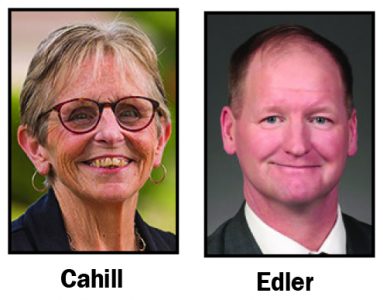
Sen. Jeff Edler, R-State Center, no longer serves on the education committee and had a brief look at the bill this week.
"I don't think there should be secrets going on in school," he said. "A parent and a child should have an interaction to discuss those issues. That's how you deal with things as a family would be my initial premise."
Rep. Sue Cahill, D-Marshalltown, worries this legislation could force LGBTQ students to come out to their parents.
"It is their choice how they let their family know or how they share information about themselves," she said. "I support students and their rights to decide how and when and if they notify their families."
According to a report by the Williams Institute -- UCLA's School of Law -- half of teens who come out to their parents get a negative reaction and one-in-four are forced from their home as a result.
The Senate passed Senate File 159 by a 26-21 vote Thursday. The bill regards Gov. Reynolds proposed Student First Scholarship. It would provide scholarship opportunities to students in schools classified as needing improvement or comprehensive support under the federal Every Student Succeeds Act. The scholarships would go toward tuition and expenses for parents who choose to enroll their children in an accredited non-public school or charter school.
"I believe our public funds need to go to public schools," Cahill said. "With offering these scholarships we only widen the achievement gap and the diversity gap in our schools. Let's not leave behind kids that have barriers from moving to another district. We've got to fund these schools so all kids can succeed."
Edler said the scholarships would impact between 2-5 percent of about 10,000 students who would be eligible to receive the funds.
"There were some schools that were on that list that I would say already started correcting some of those issues," he said. "If there's good communication between the schools and the parents this won't be an issue. If the schools are not getting better this gives the parents a chance to help those kids."
The bill also establishes new provisions for charter school programs. In order for a school to operate as a charter school inside the guidelines of this bill, it must be able to operate as a non-sectarian, non-religious school. It will also be subject to the same financial auditing processes as a school district.
The third tenet of the bill allows students to transfer out of schools with voluntary or court-ordered diversity plans.
Before Reynolds signed into law the bill requiring school districts to offer 100-percent in-person learning on Friday, the House of Representatives debated it into Thursday evening.
Cahill proposed two amendments to the bill. First, she submitted an amendment requiring school district's to adhere to the Centers for Disease Control's guidelines on returning to school. It was voted down.
She then proposed an amendment to move the return to school date from Feb. 8 to Feb. 15. It passed.
"I equate it to like a brand new school year. In August, we have two or three months to plan our bus routes, class sizes, meal allotments," she said. "It's not just saying, 'Come on kids. Come back to school.' There's a lot of behind the scenes work that comes into play."
While she's happy to have bought school districts more time to prepare, she wishes following the CDC guidelines would become a requirement too.
"I wish at the state level we'd have put more teeth into it and said these safety measures are mandated," she said. "We debated until 8:30 (p.m.) or so to try and make sure this return to learn would be safe. I'm not sure we accomplished that."
Edler said he has had an "overwhelming" amount of correspondence from parents relating to in-person learning. He has been pleased with how the schools in Marshall County have handled the COVID-19 pandemic.
"I commend the schools in our district for doing a very good, tough job with what they had to deal with," he said.
Contact Joe Fisher at 641-753-6611 or jfisher@timesrepublican.com