
Types of food donations most useful at food box
Trending
Fifty percent of the food distributed to people at the Emergency Food Box in Marshalltown does not only come from the Food Rescue Program mentioned in Sunday's Times-Republican, but also from local community donations.
"The people of Marshalltown have been amazing, benevolent, wonderful," said Emergency Food Box co-chair of operations Cindy Staron.
The food box can always use more food donations, but not everyone knows what is needed, or what can be donated. She said when it comes to frozen or refrigerated food, such as meats, the food box proceeds with caution. They do not know if it was stored properly.
"If a family wants to give us meat, they can make arrangements in advance to make sure we have the space," Staron said.
Ideally, a meat donation would be made the day of processing or purchase so food box staff can look at the receipt. The processor must be approved by the United States Department of Agriculture and meats should be labeled.
Despite some excellent canners in the community, Staron said they are not allowed to accept home-canned foods. However, they love to accept fresh vegetables and fruits.
"We leave those available outside our door this time of year," she said.
Plus, Staron said they are aware of the many ethnic foods numerous households eat in Marshalltown. It is common for them to only use fresh produce, rather than canned.
"Some of them do not use canned food at all," she said. "That is why we try to have fresh."
Depending on what the produce is, Staron said it goes quickly.
"We get a lot of zucchini, apples, tomatoes, cucumbers, green beans," she said.
Financial donations sent to the Emergency Food Box are used to purchase egg and milk vouchers for clients to utilize. Those donations can be sent to the Emergency Food Box United States Post Office box 391.
Food and financial donations are especially useful at the beginning of each month, when the food box sees higher numbers of clients.
"We see 30 families a day then and we used to see 15 to 25," Staron said.
Besides months, there are busier times of the year. One of those times is the summer and the other is November and December during the holiday season when families are preparing to gather and eat together in celebration.
"Whatever foods your family eats at home, the families who come to use looking for help also eat," Staron said.
FOOD DONATIONS:
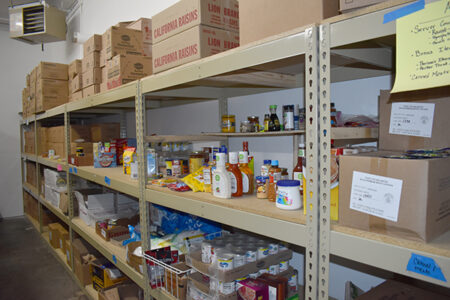
While most donations are accepted at the Emergency Food Box, some will sit on shelves for longer periods of time. Other types of food will go quickly. Food donations that are put to the most use include:
• Cereals;
• Meal starters, such as Hamburger Helper or RiceARoni;
• Beans;
• Condiments, such as ketchup or mayonnaise;
• Canned proteins, such as tuna;
• 100-percent fruit juice;
• Baking items, such as flour or baking powder;
• Canned foods, such as vegetables or soups;
• Oils;
• Jellies;
• Pickled foods.
EMERGENCY FOOD BOX:
Address: 107 N. First St.
Post Office box: 391, Marshalltown, IA 50158
Telephone: 641-753-2801
Hours: 1:30 p.m. to 4:30 p.m., Monday through Thursday; 10:30 a.m. to 1:30 p.m., Friday
------
Contact Lana Bradstream at 641-753-6611 ext. 210 or
lbradstream@timesrepublican.com.