
‘Rosie the Riveters in Iowa’ book talk slated for Sunday
Trending
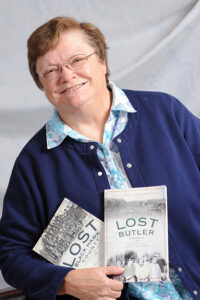
Rosie the Riveter has become an iconic representation of the independent woman. Notably, she symbolizes the almost 20 million women who went to work in war industries during World War II. Many of them were from Iowa, and some of them even worked at factories in the state. Historian and author Linda Betsinger McCann will share the stories of these women during her book talk "Rosie the Riveters in Iowa" at 2 p.m. on October 1 at the Marshalltown Public Library's community meeting room.
"Linda is great to work with and is a great storyteller," said librarian Katie Fink.
McCann's book, which had been on hold with her publisher since the start of the COVID-19 pandemic, was finally released this month.
The idea to write the book came after a conversation with her granddaughters. They had thought Rosie the Riveter had merely been an advertising gimmick, and not based on real-life women. By the time her project was completed, McCann had interviewed 35 Rosies, interweaving these women's stories to create one non-fictional narrative.
"What surprised me the most was how many of these women stayed in Iowa and worked. I had the idea they all went to one of the coasts to find work," she said. "Some of course did, but there were at least 70 companies in Iowa that had military contracts and used Rosies for the work."
These companies include Maytag, John Deere and an airplane factory in Des Moines.
"Their fingers were small enough, they could get into places men's hands couldn't," she noted. "As they got hired and trained, the foreman learned that women were much more precise than the men were, and took their time."
Some of the ladies McCann spoke with carpooled or hopped a bus cross-country to find employment. One woman took a bus to California but had yet to line up a job or find a place to live. Even though she hadn't had a plan in place, people rallied to assist her. Walking on the side of the road, a man stopped her, gave her a lift, and got her connected with a woman who had a room for rent. He also told her about an airplane factory that was hiring.
"I don't think of things being that way in the big city," McCann said.
Because many of these factories previously only employed men, there were rarely on-site women's restrooms. McCann learned some males who remained working at these places would even clean the men's restrooms to make them more appealing for when the women used them.
After the war ended, most of the Iowans working out of state returned home, but some stayed. One commonality was their desire to remain employed.
"The majority of the women wanted to stay on working after the war, but that wasn't in the cards. They'd found some freedom from not having parents around. They had learned they could do the job and help the U.S," McCann said. "One thing every woman said, which surprised me, was they didn't think they did anything special."
McCann also learned these Rosies considered all the women who worked on behalf of the war effort to be Rosies and not just those who labored in factories building airplanes and working with rivets.
"They very much wanted me to understand that there were a lot of other women doing things that weren't getting the publicity like the Rosies did," she noted.
McCann's next book will be entitled "Polio in Iowa."
"I never know what I don't know, until I get into it," she said of the book writing process. "I talked with a lady from Kansas City that still lives in an iron lung. She can only be out about 14 minutes a day, and then she can't get her breath. She bought two machines, because nobody makes parts anymore."
McCann is also the author of "Prohibition in Eastern Iowa," "Prisoners of War in Iowa," and the Iowan books' Lost County series in which she explores the towns, institutions and other history that may have been forgotten in counties across the state.
Books will be for sale after the presentation for $20 each (cash or check accepted). This event is sponsored by the Marshalltown Public Library and is free to attend. For more information, call the library at 641-754-5738 or visit: www.marshalltownlibrary.org.