Teen siblings ‘buzzing’ with results from new honey farm
Pollinators are extremely important to our environment and the food we enjoy. When the population numbers of pollinators — bees, butterflies, birds and more — began to dwindle in the past few years, the National Wildlife Federation implemented National Pollinators Month in June.
One pair of Marshall County siblings – Levi and Anna Stafford – came to realize the importance of pollinators through their recent beekeeping education and operation – Honey Creek Farm.
“Plants, not all but a lot, require pollination,” Levi said. “Bees are important for that.”
Through pollination, Anna said plants thrive and result in healthier crops. She highlighted almond trees in California as an example. Almond trees do not self-pollinate and rely on the insects to take care of that. As the bees flit between the trees, they collect pollen and nectar and pollinate the flowers along the way, which results in the production of seeds.
The Stafford brother and sister team opened Honey Creek Farm in November with two bee hives. They have been selling their raw honey online and at the Journey Church Christmas market.
Levi and Anna rely on local wildflowers, such as clove and dandelion, to provide the necessary nectar for their bees. Anna said their bees also gather nectar from nearby fruit trees and from the large flower garden belonging to their neighbor.
The operation does not require a lot of daily work for the teenagers. In fact, Levi said they check the hives once every week or two.
“We open them and see how they are doing,” he said. “If they seem fine, we leave them alone.”
However, if it seems some of the bees in a hive are struggling, they will take a frame from that hive and switch it with a frame from a stronger hive.
“Otherwise, we just let the bees work on themselves,” Levi said. “There is not much to do on a daily basis. We just do the checks and help accordingly.”
Anna said they use a smoker when they do the checks. The smoke does not harm bees, but calms them down. When bees sense danger, they emit a natural alarm pheromone which alerts other bees to be ready for attack. The smoke interferes with that pheromone, and helps the Staffords escape bee stings. However, the brother and sister have not been completely free of stings. Fortunately, the sting count is not great.
“At first, it hurts more than you would think, but then it’s not too bad,” Levi said.
Anna said the pain from a honey bee sting varies from person to person.
“Mine just hurt for a few seconds, but some of our other siblings are sore for a while,” she said.
Levi and Anna are not sure if they want to expand their honey business. Their primary focus is to have enough bees during the summer and then get them through the winter.
“It’s just been great harvesting and selling,” he said. “We are also training our youngest siblings to help.”
Bee population
This past year saw a turnaround in the long-standing concern of the decreasing honey bee population. More than one million hives have been added in the United States since 2006, according to the United States of Agriculture National Agricultural Statistics Service 2022 census. The Staffords have contributed three of those new hives.
The dwindling bee population problem became known in 2006 when entire colonies began dying. The fear was the alarming bee loss would lead to a break in the food system. Unfortunately, the siblings had to deal with the loss of some bees when one of the two starting Honey Creek Farm hives died last winter due to varroa mites – a pest they have become very familiar with since starting their honey production in May 2023.
“They are believed to be one of the primary factors of hive decline,” Levi said.
Varroa mites are parasites which require honey bees to survive and reproduce. According to Anna, 15, the mite will enter bee brood cells before capping, and will lay eggs. When the eggs hatch, the larvae and the grown mites eat the bees. The invasion also opens the door for viruses to which bees are susceptible.
“There are various viruses [they bring] which cause death,” Anna said. “The laying of the varroa mite eggs, the killing of the bees, contributes to an untimely colony collapse.”
Anna said it is only a matter of time before a hive gets struck by the tiny external parasites.
“The problem occurs when there gets to be too many,” she said. “We just keep treating, killing and staying ahead [of the varroa mites].”
Levi said beekeepers can use natural or chemical treatments for the mites. They have chosen chemical treatments two or three times per year with successful results.
Despite the loss of one hive early on, the Staffords have enjoyed the resulting honey – which is the primary reason they got into beekeeping.
“We originally wanted the honey for ourselves,” Anna said. “Then we started selling it.”
Their first harvest resulted in 92 pounds of honey.
“Harvesting the honey has been the most rewarding,” Levi said. “Seeing the frames filled with honey, and then our buckets filled with honey. That is fun.”
Having the honey to consume is the best aspect of beekeeping, and Anna also loves the health benefits raw honey can provide.
“It really helps with allergies,” she said.
Getting started
The Stafford siblings got Honey Creek Farm started through the Iowa Honey Producers Association. Levi said they applied for the Youth Scholarship Program, which supplied the hive and bees, a suit and smoker and a beekeeping mentor.
“The purpose is to get the younger generation interested,” he said. “We never planned this, but thought we were able to do that. We have enjoyed it.”
Applicants must be new to beekeeping, between the ages of 13 and 16 and should submit their applications by Sept. 15.
If some Marshall County youth have a budding beekeeping interest, Anna suggested taking a class.
“They are super informational,” She said. “It helped us understand what we were doing and how to tackle it together.”
Levi suggested new and potential beekeepers reach out to established producers.
“You can ask 10 different beekeepers and get 11 different answers,” he said. “But you need to be informed on what you are doing. Find a keeper who will give you help and advice. Then get that varroa mite treatment on, and get that under control.”
Contact Lana Bradstream at 641-753-6611 ext 210 or lbradstream@timesrepublican.com.
-

- T-R PHOTOS BY LANA BRADSTREAM — Honey Creek Farm in Marshall County is a new honey operation started by teenage siblings Anna and Levi Stafford on the right. To the left are their younger siblings, Esther and Abram, who are being trained in beekeeping.
-
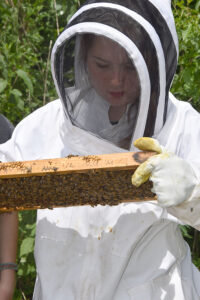
- Anna Stafford, co-creator of Honey Creek Farm, checks a frame of bees to make sure they are healthy. Checking the welfare of the bees is something Anna and her brother Levi do weekly.
-
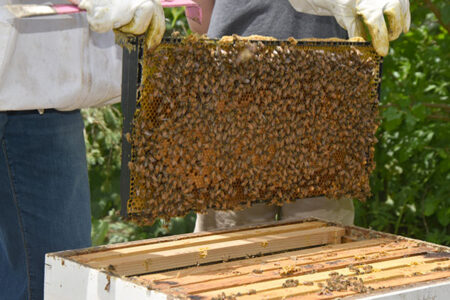
- Teenage beekeeper Levi Stafford lifts a frame of bees out of the hive to check on the pollinators and honey producers. He started Honey Creek Farm in Marshall County with his sister, Anna, 15. They harvested 92 pounds of honey last year.
Todays News

Two members of VFW Post 839 honored with special recognitions Tuesday

Iowa attorney general candidate Nate Willems stumps at Legends
Pesticides ‘shatter’ leaves of Iowa’s state tree

Community leaders honored at annual Chamber banquet
Former MCSD secretary, girls soccer coach reaches plea deal over inappropriate relationship with student