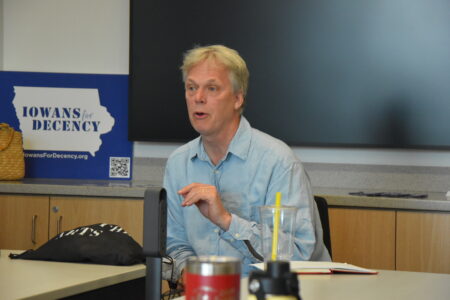
Meet the candidate 2025: City Council At-Large pt. 1
In the 2025 election, four candidates are seeking two at-large seats on the Marshalltown city council: JBS employee and bus driver Tim Bradbury, Iowa Department of Transportation Emergency Management Coordinator Scott McLain, retired educator and former State Representative Sue Cahill, MARSHALLTOWN Company IT Director Jeff Schneider, the lone incumbent in the race. The T-R sent questionnaires to each candidate, and their responses are printed below in alphabetical order by last name.
What is your personal, professional and educational background, and why are you running for a seat on the Marshalltown city council?
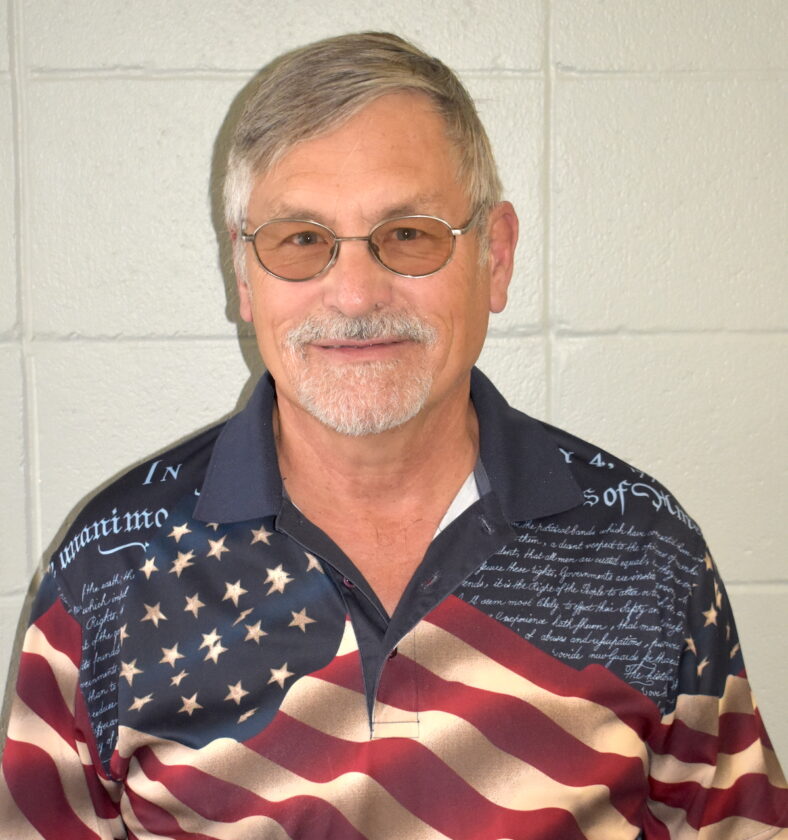
Bradbury
Timothy Bradbury: I graduated from MHS in 1976. Some experiences that helped shape my career include growing business — Curt’s, Lil’ Jenny’s, Smitty Big Town for 15 years, 38 years with JBS and 15 years a school bus driver. I have been involved with foster parenting, Jaycees, Hospice, serving as Union Vice President and church. I am running to use common sense and bring common sense and pride back. It seems the city council is not listening to the people. I want to be a voice to find out why our taxes keep going up and our services going down — why our road conditions are the way they are, less jobs, less restaurants, hospital services, affordable housing, drugs, homelessness increasing, UnityPoint wanting to shift ambulance services to the fire department and to see if we have more bonds coming up on the Center Street Bridge, water lines, road bonds and can we find better ways to take care of these costs? I also want to find better ways to get answers on the Legionnaires’ disease outbreak.
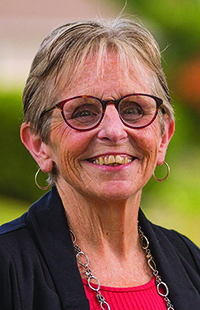
Cahill
Sue Cahill: I am Sue Cahill. I have been an active citizen of Marshalltown for 35 years. I raised my six sons here, operated a business for 10 years, earned additional educational degrees and worked for 23 years for the Marshalltown Community School District, serving mainly at Woodbury School. In 2017, I was elected to the Marshalltown City Council, representing Ward 1. In 2020 I was elected to the Iowa House of Representatives. I served the area for 4 years. Currently I serve on several boards and committees. I volunteer regularly with vital organizations in our community. I realize that I still have energy and passion to make Marshalltown a progressive community where people want to live, work and visit. I will bring my past experiences and passion for our community to the Marshalltown City Council At-Large seat.
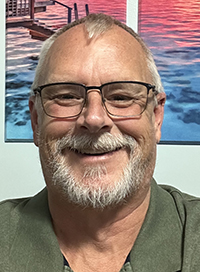
McLain
Scott McLain: I’ve proudly called Marshalltown home since 1984. I graduated from Marshalltown High School, Class of 1989. My wife Lori and I have been married for 33 years, raising seven children and enjoying seven grandchildren.
I served in the Iowa National Guard from 1988 until retiring in 2020, completing all levels of Enlisted Army education — including the Sergeants Major Academy and the Joint Service Program. My service included deployments in Operation Desert Storm/Shield, Operation Iraqi Freedom, Operation Enduring Freedom, and the Kosovo Task Force.
Today, I work for the Iowa Department of Transportation in the Traffic Operations and Safety, Emergency Management team, coordinating state-level disaster response and supporting cities, counties, and partner agencies across Iowa.
While serving in uniform, I was deeply involved in government operations but unable to serve in elected office. Now, I want to use my leadership experience and practical problem-solving skills to give back to the city that has given my family so much.
I offer a common-sense approach to challenges — focused on listening, collaboration, and results. My goal is to represent the people of Marshalltown with fairness, accountability, and respect.
I’m running for City Council to provide the people of Marshalltown with safe streets, responsible budgeting, and infrastructure that works. I believe in transparent, citizen-driven government and in making decisions that serve the entire community.
By focusing on the future and applying common-sense solutions, together, we can build a stronger, more vibrant community for generations to come.
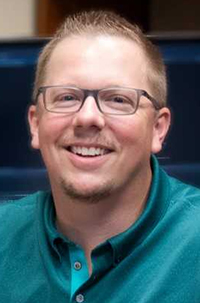
Schneider
Jeff Schneider: I’m married to my wife Kelli, a teacher at Anson School. We both have generational roots in Marshalltown and are proud to call it home. I was born in Marshalltown and graduated from MHS in 1998, then earned my BS in Computer Science from the University of Iowa in 2002. After graduation, I returned home and ran my own business for eight years before joining MARSHALLTOWN Company in 2010 as a computer programmer. Today, I serve as Chief Information Officer, overseeing our IT and software engineering teams.
I enjoy volunteering and helping people, spending time with family, friends, and my dogs. I’m a member at New Hope Christian Church, involved in Rotary, and serve as president of TRAILS Inc. I’m on a number of other boards too. I’m also a golfer–though I don’t get out enough–and really enjoy gardening, both flowers and vegetables. In fact, I’ve grown the longest green bean in the state at the Iowa State Fair two out of the last three years. I love technology, using it, learning about it, and sometimes even trying to create it!
I’m running for office because I care deeply about our city and the people who live here. Marshalltown is a special place worth making better. My votes over the last four years have made a difference. Our votes and actions need to be bold and inspire confidence in our city–I have both eyes fixed on the future.
I look at community betterment as a three-legged stool: jobs, housing, and amenities. You must have all three. We’re competitive on the jobs front — our partnership with the Chamber is working. Housing remains challenging with high material costs and scarce quality builders, but we’ve made progress: allowing ADUs (accessory dwelling units), supporting upper-story downtown housing, securing grant funding, and seeing new construction across all housing types. The Linn Creek District projects and Iowa River’s Edge Trail are great amenities for all ages. We’re also developing a youth and adult sports master plan. All of these initiatives are important, and I will vote to keep them moving forward.
In general, do you feel like Marshalltown is headed in the right direction, and if not, how would you propose reversing that course? Additionally, what are your thoughts on the city’s current budget situation, and how, if at all, would you propose changing course?
Bradbury: We need to look at how costs keep growing, see why we don’t stick to the budget, keep a running budget, how we stand on bonds and compare to what’s needed now and in the future, know what’s coming up on surprise interest on bonds we owe the IRS, do a better job communicating to the public on what’s going on.
Cahill: I believe Marshalltown is headed in the right direction. While I served on the council and since then, our city had dealt with recovery from two natural disasters that in many ways reshaped our community. Community groups joined our city personnel and came together to provide aid, renovate and rebuild. We combined resources working with state and federal agencies. We have many improved structures and collaborations through this work. We also improved housing options for all price ranges through developments allowing for rental and purchase. Our police department developed the MPACT program with YSS providing services to help families and individuals deal with struggles, allowing our police force to spend more time on law enforcement. The city is prioritizing infrastructure projects as we move through our water line projects in the downtown area. We are involving citizens in community roundtables to share their ideas for continued progress. These are just a few of the areas where our city is heading in the right direction. The city budget is very much impacted by the state legislature. Property taxes are the major point of income and new state regulations affect how much the city can collect from residents. My previous work in the legislature provides an understanding of the state taxing system and can help our community to advocate for better economic positions for cities and communities.
McLain: Marshalltown is heading in the right direction, thanks to years of hard work from residents, city employees, and local businesses, but there’s always more to do. Our city has shown resilience after difficult times, from natural disasters to economic challenges, and we’ve seen positive progress in downtown revitalization and community pride. Still, there is room to strengthen our foundation through responsible budgeting and prioritization of resources. I believe the city must continue to carefully manage spending, focusing on — public safety, infrastructure, and maintaining clean, livable neighborhoods.’ Fiscal discipline is key to any successful organization. We should also focus on attracting small to mid-sized employers that bring steady jobs and reinvest locally. Those companies provide stability, strengthen the tax base, and reflect Marshalltown’s work ethic. With transparency, collaboration, and accountability, I’m confident we can keep Marshalltown growing in a smart, sustainable direction.
Schneider: We are definitely headed in the right direction. We’ve been planting seeds, and we’re starting to see them mature. It takes time — there is no silver bullet. We need steady effort in retaining and recruiting businesses, building housing, and making Marshalltown a great place to live.
Budget challenges are nothing new, but recently we’ve seen costs rise tremendously with inflationary pressure everyone has felt. Like households and businesses across the country, we’ve had to be more strategic about priorities and find efficiencies where possible. We’re about to enter budget season and we’ll have to see what cost increases we’re facing and what we will be able to accomplish. The key is maintaining our investments in infrastructure and quality of life while being prudent stewards of taxpayer dollars. This is not the time for austerity–we need to grow.
Do you feel that the city is currently appropriately staffed with approximately 150 to 160 total employees, and would you advocate for hiring additional staff in any particular departments if elected?
Bradbury: I have no idea about staff numbers. Police and fire service should always be a priority in needed staff.
Cahill: Our police department is understaffed even after hiring two new officers. They also would like an additional community advocate for the MPACT program. The housing department is bringing more information to the council concerning hiring an in-house inspector. Expanding personnel is greatly impacted by the budget priorities for departments and will take much discussion.
McLain: The city’s current staffing level — about 150 to 160 employees — is reasonable for a city of Marshalltown’s size. However, staffing must always align with service needs. I support adding positions in specific areas that directly impact residents’ safety and quality of life. For instance, expanding city inspection staff would help ensure timely development oversight and stronger relationships with builders. I also believe we should consider adding staff to the Police and Fire/EMS departments These targeted increases should reflect practical, need-based management — focused on safety, service and efficiency.
Schneider: The city is as close to fully staffed as it’s been since I joined the council. However, we need a dedicated communications role. Too many people simply don’t know what’s going on with the city — events, projects, ordinances, council discussions. Not enough people read the Times-Republican either. It’s hard to break through the noise and misinformation, but we have to try so the public remains informed. The only way to accomplish this effectively is with a dedicated communications professional.
Goals for growth have been discussed several times in recent years, but Marshalltown’s population has essentially held steady at about 27,500 residents. Do you believe the council and the city’s current strategies to attract new residents and businesses are working, and if not, how would you recommend changing them?
Bradbury: I do not know all their plans, except I don’t like the 20-year tax break they gave to the mall. It is nice or great to see job growth at JBS, MARSHALLTOWN Trowel, but yet we see Emerson and Lennox ship out. And it’s nice to see growth, but yet our local people do not have priority for the jobs. It’s first come, first serve. I want to see that changed.
Cahill: Many areas of Iowa have lost population. I am happy that we have not lost residents. We need to ensure that we are providing the services that our current residents need and want. I am committed to helping our current businesses reach their full potential, hopefully leading to increased business and employee growth. Marshalltown is offering increased services with the renovation of the mall. That should increase people traveling to the city and spending their dollars in our retail hub. We continue to build amenities to attract people to our community for enjoyment and recreation. All of these items will keep our population steady and moving on an upward trajectory.
McLain: While our current efforts are making a small difference, they haven’t yet delivered significant population growth. The key to attracting new residents and businesses lies in making Marshalltown an affordable and opportunity-rich community. We must increase income-appropriate housing options that reflect local wages and market realities, while reducing red tape and restrictive property codes that make it harder to develop or renovate property and infill our vacant lots.
Property owners deserve flexibility — their land is their investment — and they should have the right to make improvements as long as those do not create safety or health concerns. Supporting small businesses, streamlining permits, and clearly communicating city processes are also critical. Growth happens when government enables, not hinders, progress. By making it easier for people to live, work, and invest here, we can create sustainable, long-term growth that benefits everyone.
Schneider: As I mentioned earlier, we have been sowing the right seeds–it takes time to reap the harvest. If we did nothing or less, we would see our population recede and lose businesses. There are significant headwinds against rural cities the size of Marshalltown, from demographic trends to economic consolidation. That we’re holding steady while investing in our future is actually a success story.The strategies we’re pursuing — improving infrastructure, creating amenities, supporting housing development, partnering with employers — are the right ones. Our partnerships with the Chamber and the Arts and Culture Alliance help on all fronts. These aren’t quick fixes; they’re long-term investments that will position Marshalltown to grow when conditions align. Our job is to make sure we’re the most attractive option when families and businesses are making decisions about where to locate.
The condition of the city’s infrastructure is a frequent topic of discussions at council meetings. If elected, how would you prioritize street repairs, and do you believe that amenities such as the Linn Creek District projects also play an important role in making Marshalltown a better, more attractive community in the future?
Bradbury: I want to find out why we have not addressed them the last few years. Where’s the fuel tax, first the equipment, manpower or what is the problem and tell the public. Be open and work together.
The Linn Creek projects seem great, but at what expense? Aquatic Center, how many are going to use it? It is meant for a memorial for the four boys that died, only used two or three months a year, and could be a big hidden price tag to run it. I’m already seeing kids run across the busy street to the store. Somebody is going to get killed.
Cahill: We need a plan with input from residents, to prioritize our infrastructure needs. Serious discussions with city staff and looking at current budgets will lead to an updated plan to determine the priorities of the infrastructure needs. We must have unique opportunities to draw people to our community. This includes visitors who want to take advantage of our parks, water features, trails, restaurants and shopping opportunities.
McLain: Infrastructure is one of the most pressing challenges facing Marshalltown. Our roads are the lifeblood of local commerce and safety, yet too many have been deferred for years. I will make infrastructure investment the city’s second-highest budget priority — right behind public safety. We must establish a long-term, transparent repair plan focused on high-traffic and high-need roads first, using preventative maintenance to save costs over time.
I support community-enhancing amenities like the Linn Creek project if they remain within budget and original concept, but only after essentials like roads and safety are fully funded. Responsible growth means matching ambition with fiscal reality.
Schneider: We have spent tens of millions of dollars on street and infrastructure repair and reconstruction since I’ve been in office — it just happened to be concentrated downtown in our most expensive and critical areas. A healthy city needs a vibrant core. We are restoring the infrastructure of that core to give current businesses and investors confidence to invest their own money and time. Ten years from now, we’ll look back and be grateful we invested the money and undertook the work to make it right for generations to come.
We’re also in the middle of two street repair projects right now. Full-depth replacement of all city streets isn’t going to happen — it’s way too expensive. We just need to make progress every year and raise our average street quality. Continued economic growth will allow us to accelerate street improvements.
I think the Linn Creek District project is a great start on revitalizing our quality-of-life public infrastructure. I’m particularly excited about the Trailhead and bridge project. Soon we will be paving more of the Iowa River’s Edge Trail with private and grant dollars and making excellent progress on connecting our community to nature, recreation, and other cities in Marshall County. These amenities aren’t luxuries–they’re essential to attracting and retaining residents and businesses.
Part 2 will be published in the weekend edition of the T-R.
Todays News
GOP govs join Trump pledge designed to shield ratepayers from data center costs

RAGBRAI stop in Green Mountain provides unique fundraising opportunity for historic windmill
Iowa Senator Kara Warme completes prestigious Midwestern leadership institute
Toledo’s Downtown Art Walk merges creativity with economic development
RAGBRAI rolls on