ARL sees year of growth, will continue momentum in 2026
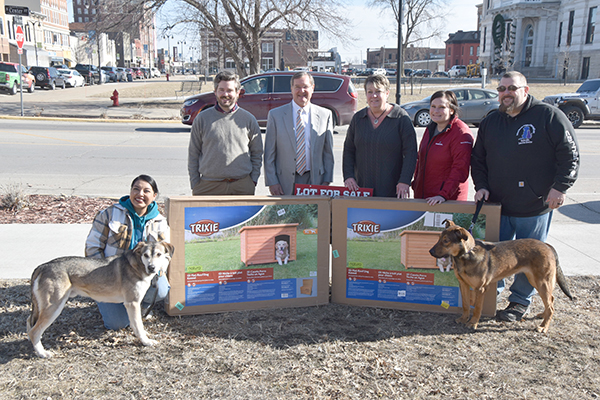
T-R FILE PHOTO One donation received by the Animal Rescue League of Marshalltown in 2025 was dog houses from the Humane Society of the United States in January. Almost all of the 50 dog houses were distributed to Marshalltown residents. ARL Executive Director Austin Gillis said the amount of donations received in 2025 was indicative of the community’s generosity.
This year was one of resilience and growth for the Animal Rescue League (ARL) of Marshalltown.
Executive Director Austin Gillis said they launched the PAWS (Pet Awareness and Wellness Support) Voucher program and expanded the mobile pet food pantry.
“We also strengthened partnerships with neighboring counties and the Humane World for Animals, which allowed us to reach more residents and provide broader support,” he said. “Above all, we worked to restore trust and transparency, making the shelter not just a place for animals, but a true community hub.”
During 2025, the ARL also increased the number of events and community outreach activities. They hosted the November Day of the Dead event at Midnight Gardens, a Halloween Haunted Trail, was a dropoff location for the Marshalltown Area United Way Feed the Need food drive, hosted an online Pawpered Chef party and Gillis kicked off the year by completing a fundraising challenge in which he consumed some dog food.
Gillis said the plan to continue the momentum in 2026 through more community-driven events on the 16-acre property.
“We’ll expand educational programs like ‘Dialogue with the Director,’ add family-friendly adoption fairs and host themed fundraisers that connect our mission with creative storytelling,” he said. “We’re also planning to grow our outreach into underserved areas, ensuring equity and access remain at the heart of our work.”
A key focus of the ARL will be growing PAWS to reach more residents in need.
This year brought some challenges to the nonprofit. Gillis said their primary regulatory focus was on animal bite confinement. While ordinances and regulations the ARL dealt with were not new, they took a deeper dive into gray areas to ensure practices were evolving.
“Our goal is to stay as current as possible on industry standards, updating our protocols and training so that Marshalltown residents can trust we’re delivering care that is both compassionate and compliant,” he said.
Facing new faces on the Marshalltown City Council and the upcoming state legislative session starting in a couple weeks, Gillis said they are actively engaged in conversations with representatives to bring updated language to animal laws which strengthen welfare protections.
“One key issue we’re watching is a statewide bill that would eliminate breed-specific regulations,” he said. “If passed, it would be a major step forward in promoting equity and humane treatment, ensuring that policies focus on behavior and care rather than breed labels.”
The Marshalltown Animal Ordinance Task Force has created edits for the council to review and hopefully adopt once Mayor-elect Mike Ladehoff and council members Sue Cahill and Marco Yepez-Gomez take their seats. According to Gillis, clear and modern ordinances will serve animals and the community.
Another challenge the ARL is facing is a struggling economy, as many nonprofits have been. However, Gillis is cautiously optimistic.
“While economic pressures remain, we’ve seen incredible generosity from donors who believe in our mission,” he said. “By continuing to show transparency in how donations are used — whether for medical care, food or outreach — we hope to inspire confidence and sustain support. We also look forward to showing people how we can make their monetary donations go further than they can imagine.”
Through special discounts and bulk purchasing with a network of nonprofit suppliers, Gillis said the ARL can often turn a one-time purchase amount into the equivalent of five.
“That means every dollar stretches farther, creating a bigger impact for the animals and families we serve,” he said. “We also anticipate growth in supply donations, as many residents find creative ways to give even when budgets are tight.”
The year-to-date expenses of the ARL is $620,000. To date, the ARL received $128,000 in donations in 2025, $112,000 in grants and $46,000 memorial contributions. According to Gillis, the numbers highlight the generosity of supporters and the costs of providing quality animal care.
As the ARL moves into 2026, he said they will remain committed to equity, transparency and humane care. They will continue to grow relationships with government officials and law enforcement agencies to better serve Marshalltown.
“It’s important to remember that support doesn’t always come in the form of physical or monetary donations,” he said. “Sometimes it’s as simple as sharing one of our posts on social media or attending a fundraising event. Support — like cats and dogs — comes in all shapes and sizes, and every act of kindness helps us move closer to a world where every animal has a safe home and every resident has access to judgment-free care.”
——–
Contact Lana Bradstream
at 641-753-6611 ext. 210 or
lbradstream@timesrepublican.com.
Todays News

Tama County Sheriff’s Office seeking help locating missing Garwin man

New publisher is looking forward to building relationships in Marshalltown
Marshalltown records state’s highest wind gust during recent blizzard
The highest wind gust from the recent blizzard that began on Sunday and continued into Monday morning in northern ...
ARL sees year of growth, will continue momentum in 2026

$209M in federal funds awarded for rural health transformation in Iowa