Melbourne mayor, city clerk explain 20 percent water/sewer rate increase
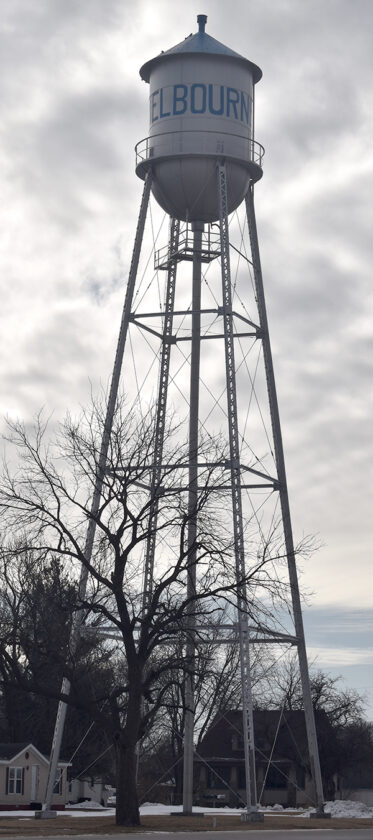
T-R PHOTO BY ROBERT MAHARRY Water and sewer rates for customers in Melbourne recently increased by 20 percent primarily due to a large increase in the cost of water purchased from the Iowa Regional Utilities Association (IRUA) and ongoing infrastructure projects including a major sewer lagoon upgrade.
MELBOURNE — Melbourne residents may have experienced a bit of sticker shock when they received their most recent water and sewer bills and saw a 20 percent increase in the amount they owed, but as Mayor Cynthia “Boo” Mansager and City Clerk Mary Pothast explained during a recent interview with the T-R, the jump resulted from a combination of factors including the need to pay for ongoing infrastructure improvements and a rate increase from the supplier, the Iowa Regional Utilities Association (IRUA).
As Pothast noted, the city ordinance stipulates a three percent increase on top of whatever rate increase the city receives from IRUA, and this year, that number from IRUA was a whopping 17 percent. The matter was discussed in detail as an agenda item at the December and January city council meetings with no public comments or feedback and published in the Mid-Iowa Enterprise newspaper as required by law.
“There’s a couple of things that are going on — one, the cost of water and then the end result, the sewer lagoons. All of that costs money for all municipalities,” Mansager said. “And it’s gotten to be (where) water and getting it to the place and getting rid of it is a really big deal. I just don’t know that, I think, municipalities dealt with this 25 years ago. But we have a sewer lagoon project that’s coming on. We’ve been at it for more than a year, and that will be a $2 million infrastructure (project).”
There is some good news, however, as the city received notice on Monday that it had qualified for a $500,000 grant through the state’s Wastewater Financial Assistance Program administered by the Iowa Finance Authority (IFA) and the Iowa Department of Natural Resources (IDNR) for the lagoon project with an expected lifespan of 20 years. The remaining $1.5 million will likely be paid through a revenue loan from the Iowa State Revolving Fund (SRF).
“The thing with this project is they’re increasing the size of the lagoon, and we’re going back to the type we’ve had years and years ago where they can store it for 180 days. We didn’t have enough space back then to utilize that one anymore, so by increasing the size, we should be able to go forward because Melbourne is kind of landlocked at this point. So we don’t foresee anything after that, and we’re going the cheapest route we can.”
Other options could have cost as much as $4 million and likely would have necessitated an increase in electricity bills as well. The community of approximately 800 residents in southwestern Marshall County has two public works employees on staff currently, and most of its water system was originally installed in the 1940s.
“We’re seeing some deterioration, and (with) that, we replaced a partial one last year, and it’s gonna be an ongoing process,” Pothast said.
Mansager and Pothast added that the infrastructure in Melbourne, much like many other Iowa cities and towns, is aging.
“People don’t like to raise taxes. People don’t want to pay any more taxes, and, you know, the property tax rollback that keeps getting trashed at the statehouse, that’s how we (keep going),” Mansager said. “And the other thing that we’ve received some information since our January council meeting is that we are now looking at having to replace our water meters, the readers and the meters inside the house. One (reason) is plain obsolescence, but two is the software. It’s the reading of the metering and then the billing that gets back in here (city hall).”
The meters, Pothast explained, won’t need to be replaced all at once, but it is an item on the agenda for the upcoming city council meeting set for Monday at 7 p.m.
“We always welcome input, and I think people become complacent sometimes. We don’t have people (at meetings) if things are going well,” she said. “And once in a while, you’ll hit a road bump that nobody anticipates, and there’s not a whole lot you can do about it. And those people are more than welcome to run for office. Come to the meetings. They can always call, they can call council members. We’re open.”
Mansager added that she answered every phone call she received about the matter, and some of the individuals who called Pothast with complaints learned that their usage was as high as seven times the 1,000 gallon minimum in a single month.
“I think it’s kind of been a wake-up call for all of us that we need to figure out how we can conserve a little bit of water, and I’m gonna try to put together a flier,” Pothast said. “And, you know, with summer coming, people with their gardens, they’re panicking. Get a rain barrel. One public works guy has already gotten his stuff on the roll for their garden.”
The mayor said she understands that finances are tight for many families and individuals as she herself is paying the increased rates at her Melbourne home, but she didn’t see how the jump could’ve been avoided given the circumstances.
“These are simply costs that we are passing on because we have incurred them. We pay for the water. We pay for every gallon that we purchase, and so if it went up 17 percent, then the water went up 17 percent,” Mansager said. “The only thing that I think we really did was the $15.72 (sewer fee charged for gallons above 1,000). We moved that to match the water, and so we did. We took that up $10.56.”
When Pothast started in her position 13 years ago, she noted, the city’s water and sewer fund was in the red. The city council meets on the second Monday of each month at 7 p.m. in the lower level of the Melbourne Library, and city hall can be reached at (641) 482-3338.
Todays News
North Tama seeks candidates for school board appointment

Renovation underway at Marshalltown Public Library

Melbourne mayor, city clerk explain 20 percent water/sewer rate increase

Investigation into Tama Co. Human Resources finds over $250k in ‘questioned, improper and unsupported’ disbursements

Ribbon cutting at Grandma’s Attic