Tama County noted for ‘higher than expected’ cancer rates in initial UI report
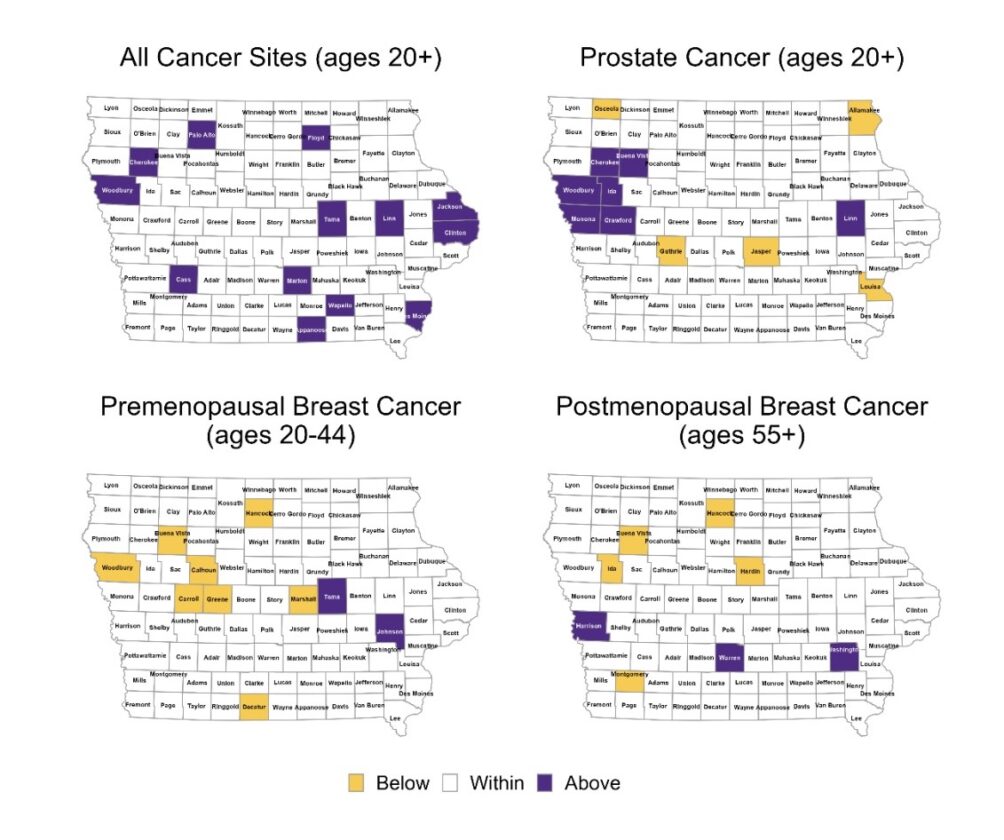
CONTRIBUTED GRAPHIC A graphic included as part of the University of Iowa College of Public Health’s initial findings report on drivers of cancer in the state last week notes that Tama County is one of 13 in Iowa with a “higher than expected” rate for all forms of cancer and one of just two counties, along with Johnson, where premenopausal breast cancer rates in women between the ages of 20 and 44 was higher than expected.
IOWA CITY — As Iowa’s rising cancer rates continue to generate discussion and concern among residents and politicians alike, the University of Iowa College of Public Health released a 118-page initial findings report on “Key Drivers of Cancer in Iowa” that was funded through an appropriation from the state legislature and presented to lawmakers last week. Tama County was one of 13 in Iowa found to have a “higher than expected” rate for all forms of cancer and one of just two counties, along with Johnson, with a higher than expected rate for premenopausal breast cancer in women between the ages of 20 and 44.
The study, available for viewing at https://iphprp.org/wp-content/uploads/2026/02/Interim-Progress-Report-Cancer-Driver-Project-Feb-2026-final-.pdf, highlights the now well-documented reality that between 2018 and 2022, Iowa had the second highest rate of new cancers in the country and was the only state with a rising rate of new cancers. The cluster of six upper Midwestern states including Iowa, Nebraska, South Dakota, North Dakota, Minnesota and Wisconsin had a higher age-adjusted incidence rate of cancer in 2022 than all other state clusters in the US.
“The Iowa cluster also had the highest age-adjusted incidence rate of female breast cancer, the
second highest rates for prostate cancer and melanoma (below the orange cluster represented
solely by Utah which has one of the lowest overall cancer rates in the US and is the only other
state besides Iowa with a rising incidence rate), the second highest age-adjusted rate of
colorectal cancer (below the yellow cluster), and the third highest age-adjusted rate of lung
cancer (below the yellow and pink clusters),” the report reads.
Within that cluster, Iowa had the highest overall cancer rate, the highest age-adjusted rates of lung cancer and colorectal cancer, the second highest age-adjusted rate of breast cancer, and the third highest age-adjusted rates of prostate cancer and melanoma. The report goes on to break down the counties such as Tama identified as “higher than expected” in certain categories.
“The higher than expected rates in the identified counties cannot sufficiently be explained by the
demographic characteristics and behavioral risk factors that were available for analysis and
included in the models. These counties represent the biggest opportunities to explore other
types of risk factors (genetic, environmental, provider screening patterns, etc.),” it reads.
The work on the project is expected to continue through June of 2026 with lung, melanoma, colorectal, and HPV-associated cancers still to be examined, and a full report will be shared once that work is complete. Further findings and recommendations on the suspected drivers, from genetic characteristics to behavioral and other risk factors, will also be examined.
Rep. Dean Fisher (R-Montour), who represents most of Tama County in the Iowa House, shared his thoughts on the release of the report in an email to the News Chronicle on Monday.
“This is exactly why it was important that we allocated $1 million to study cancer rates in Iowa during the 2025 legislative session. With this information, we will be able to make data-driven decisions on how best to address these issues. I am glad the group of researchers came and provided an interim report and look forward to learning more from what they learn as they continue their research,” he said. “I have also spent some time at the University of Iowa talking with cancer researchers so that I can better understand the issues surrounding cancer. We must be vigilant in making sure we are driven by facts and data in this battle against cancer.”
Sen. Dave Sires (R-Cedar Falls), who serves the northeast corner of the county, called the findings “deeply concerning,” especially those specific to Tama County.
“The findings raise serious questions about environmental exposures, access to care, and other underlying factors affecting the health of our communities. We should treat this as a call to action,” he said. “We need to dig deeper into the causes, engage local voices, and commit to meaningful solutions that protect the health of families in Tama County and across Iowa.”
Tama County Public Health and Home Care CEO/Executive Director Stacy Koeppen also shared a statement with the News Chronicle about her reactions to the report.
“The University of Iowa’s cancer report gives helpful information for communities across Iowa, including Tama County. The report shows that some cancer rates are higher than average, but it is important to know this is an early report and does not explain the causes. Cancer is complicated and can be affected by many things, such as age, family history, lifestyle choices, the environment, and access to health care. Tama County Public Health is committed to keeping our residents healthy and already offers services to help prevent cancer and find it early. These services include radon testing and private water testing to check for possible environmental risks. We also offer vaccinations that help prevent certain cancers, such as the HPV and Hepatitis B vaccines. We continue to encourage regular cancer screenings, quitting tobacco, and learning ways to stay healthy,” she said. “As more information becomes available, we will keep reviewing the data and working with our public health partners. We will also continue to share clear and accurate information and provide prevention services to our community. Our goal is to help protect the long-term health of Tama County residents.”
Todays News

Dave Thompson: ‘It’s about relationships, trust and family for us’

New Marshall County Supervisor Christian Goodman sworn into office Wednesday morning
Tama County noted for ‘higher than expected’ cancer rates in initial UI report

Iowa VA facilities to be named in honor of National Guardsmen killed in Syria
Tama County noted for ‘higher than expected’ cancer rates in initial UI report