Council considers radon mitigation requirement for new homes
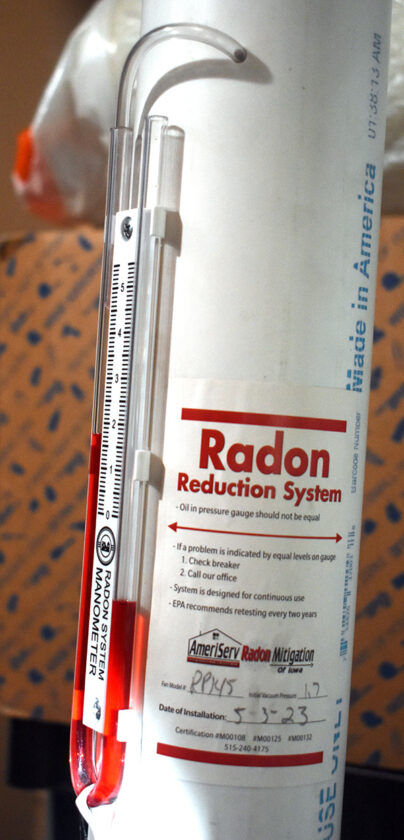
T-R PHOTO BY ROBERT MAHARRY During Monday night’s meeting, the Marshalltown city council voted unanimously to move forward with a proposal to require radon mitigation systems in newly constructed homes. Radon is the second leading cause of lung cancer after smoking.
At the request of Councilor Marco Yepez-Gomez — and amidst ongoing conversations about Iowa’s troublesome cancer rates — the Marshalltown city council discussed and informally agreed on adding code language to require radon mitigation systems in newly constructed homes during Monday night’s meeting.
As Yepez-Gomez explained, he was simply asking the council to adopt an appendix from the International Residential Code.
“In Iowa, we have a cancer crisis, and if you go into the rabbit hole, there’s not a definitive answer for it. But the experts are saying one of the main reasons could be radon,” he said. “I think this is an easy way and an easy step in the right direction.”
According to the Environmental Protection Agency (EPA), 70 percent of homes in Iowa are above the action level for radon, and all 99 counties are at the highest EPA risk level. It is a naturally occurring, colorless, odorless, and radioactive gas formed by the decay of uranium and thorium in soil, rock, and water, and it is the second leading cause of lung cancer after smoking. Yepez-Gomez estimated that radon directly contributes to hundreds of deaths in the state each year. He also noted that the installation of a radon mitigation system in a new house generally runs between $350 and $750, and retrofitting can run between $800 and $2,500.
Fellow Councilor Jeff Schneider commended Yepez-Gomez for bringing the measure onto the agenda, explaining that he and his wife had their basement tested last summer and found out they were well above the risk level. After installing a system, however, the number quickly plummeted.
“These systems do work, and I would encourage everybody, even if you’re not building new, to get one of these systems put in. There’s a bunch of good people out there that can put them in, but stay cancer free,” Schneider said.
Councilor Melisa Fonseca asked whether the requirement would be for a passive or active system, preferring the passive option, and Assistant Housing and Community Development Director Clayton Ender said the building code called for passive systems but left the option open for individuals to install active systems if they desire.
During the public comment period, Layne Pieri noted the fact that Iowa has the highest radon rate in the country, which “seems bad,” and expressed interest in going even further to explore grants for existing homeowners to have such systems installed. Housing and Community Development Director Deb Millizer replied that while grants are “a great idea,” there are no funds currently available to that effect.
“It would take a lot of work for very little juice for us to administer a grant,” she said.
Yepez-Gomez ultimately moved to bring back a formal ordinance with the radon mitigation requirement at the next council meeting, and the motion passed by a unanimous 7-0 vote.
——
Contact Robert Maharry at 641-753-6611 ext. 255 or
maharry@timesrepublican.com.
Todays News

Recast Leaders initiative to focus on small-scale manufacturing

Mock trial makes a comeback at MHS
Council considers radon mitigation requirement for new homes
Brian Hanus, second Tama mayor to resign in last three years, blames ‘certain members’ of council for departure

Mid-Iowa Enterprise owner shares 155-year history of newspaper at Mowry Irvine Mansion