Iowa DOT no longer planning ‘J-Turn’ intersection at Highway 30 intersection in State Center
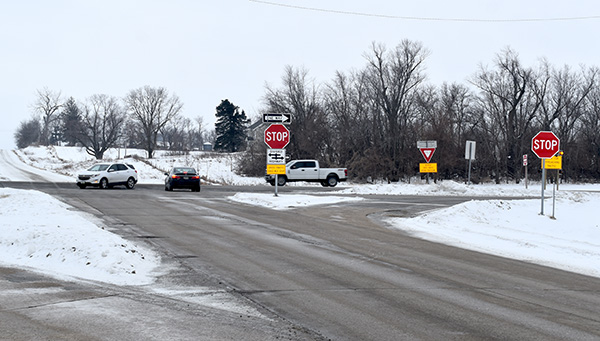
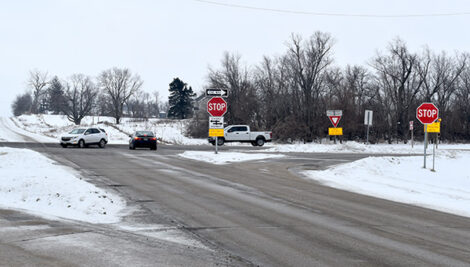
T-R FILE PHOTO A recent photo shows the intersection of Durham Avenue and Highway 30 in State Center facing south. In a letter dated March 4, Iowa DOT District 1 Engineer Allison Smyth informed Mayor Craig Pfantz that the department will no longer be pursuing the controversial “J-Turn” configuration that was suggested in response to concerns over accidents in the area.
STATE CENTER — After over two years of discussion and public debate, the Iowa Department of Transportation (IDOT) has informed the city of State Center that it will no longer be pursuing a Reduced Conflict Intersection (RCI) or J-Turn at the intersection of Highway 30 and Durham Avenue.
In a letter addressed to Mayor Craig Pfantz and dated March 4, IDOT District 1 Engineer Allison Smyth provided a recap of the outreach efforts and public meetings since conversations began in February of 2024. Currently, there is only one other RCI/J-Turn configuration in the entire state, located along Highway 20 near Fort Dodge.
“Ultimately, however, it became clear the community was not in favor of the RCI as a solution and was more interested in less abrupt changes, at least to start. One of the requests we heard repeated was to let the ICWS system stand on its own for a while, to see if its impact was enough to address the crash issues — give it time to work,” Smyth wrote in the letter. “Our DOT team has been working on a solution that will hopefully improve the safety of the intersection and take into consideration wishes of the opposing views from the city. Since the DOT’s focus will always be safety and mobility, we have kept some priorities in mind as we have worked on our plan: Improve safety for the community in State Center, maintain mobility for the travelling public on US 30, and use proven safety countermeasures that can work incrementally toward larger solutions but that can stand on their own.”
The solution, for now at least, is a “partial build alternative” that still allows for the completion of the proposed RCI at a later date. It involves keeping the Intersection Conflict Warning System (ICWS), install speed feedback signs on Highway 30 advising drivers of their speeds (expected to be operational by July of this year), constructing offset right turn lanes eastbound and westbound, including the culvert extension and monitoring traffic operations and safety conditions at the intersection.
“With this plan, we will stop short of construction of the RCI components of the intersection, as the community requested. This means the median U-Turn locations will not be constructed as part of this initial project and vehicles will still have the ability to make left-turns from the side streets (Durham Avenue). However, the DOT will continue to monitor conditions and will complete construction of those RCI features if the intersection experiences an uptick in the crash types that could be prevented by an RCI, as safety really must drive our decisions,” Smyth wrote in the letter. “We are hopeful this compromise demonstrates our willingness to work with the city as partners, and we can continue to build on a cooperative and productive relationship going forward.”
State Center Police Chief Jon Thomas, who withdrew his support for the J-Turn proposal back in December, expressed relief that a compromise was reached and clarified that he would support the full build-out in the future if more accidents occur.
“The message I really want to give (the DOT) is thank you for compromising. Our voice does matter. Our community was extremely active in those meetings, and my message I want to get out is (that) it does matter when you show up,” he said.
Construction on the partial project is set to begin this summer, and the offset turning lanes for drivers entering State Center off of Highway 30 along with a southbound turning lane on Durham Avenue will be the biggest changes. Thomas is happy with where things stand at the moment but will keep his eye on the situation to see if further actions are warranted in the future.
Pfantz told the T-R he was encouraged by the addition of a speed indicator sign, and although city leaders asked for a speed limit reduction from 65 to 55 miles per hour through town, that request was not honored.
“It’s kind of a trial run, and we’ll go from there,” Pfantz said.
——
Contact Robert Maharry at 641-753-6611 ext. 255 or
rmaharry@timesrepublican.com.
Todays News
Mid-Iowa Enterprise owner shares 155-year history of newspaper at Mowry Irvine Mansion
Five most prevalent cancers in Marshall County identified during seminar at MPL
Iowa DOT no longer planning ‘J-Turn’ intersection at Highway 30 intersection in State Center
Albion farmer Wade Dooley ends campaign for Iowa Secretary of Agriculture
Supervisors OK website proposals with Neapolitan Labs
The Marshall County and Marshall County Conservation Board websites will soon be receiving major overhauls as the ...