Progress 2026: Lifelong friends Lincoln Stover and Paul Murty launch MURST LLC with focus on drone spraying
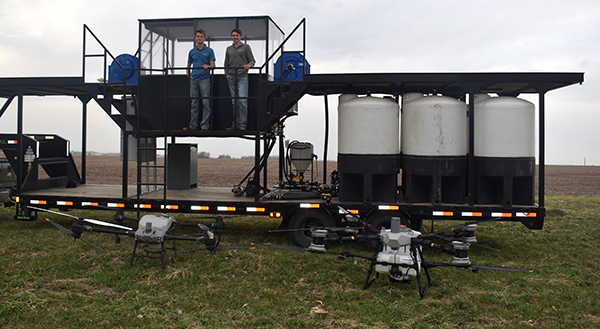
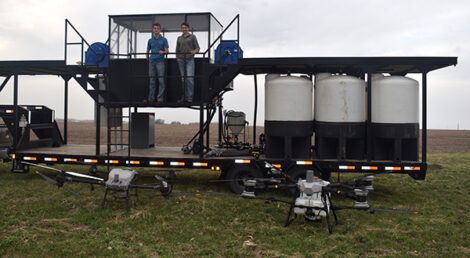
T-R PHOTO BY ROBERT MAHARRY — Class of 2023 BCLUW High School graduates Paul Murty, left, and Lincoln Stover, right, are the cofounders of MURST LLC, which is headquartered northeast of Marshalltown and focuses on various drone applications of agrichemicals and cover crop seeds.
Class of 2023 BCLUW High School classmates Lincoln Stover and Paul Murty have been friends for as long as they can remember, and they’ve also both grown up with a deep connection to agriculture — Stover’s father Kurt is a consultant, while the Murty family farms about 1,400 acres of land both northeast of Marshalltown and near Toledo along with father Brad’s day job as a banker with a focus on agricultural lending.
Just before they graduated, Murty and Stover launched MURST LLC, which is headquartered just outside of Marshalltown on Underwood Avenue and specializes in drone applications of chemicals and cover crop seeds. The venture has taken off over the last few years, and the duo spoke to the T-R about how they got into the business and their goals for the future during a recent interview.
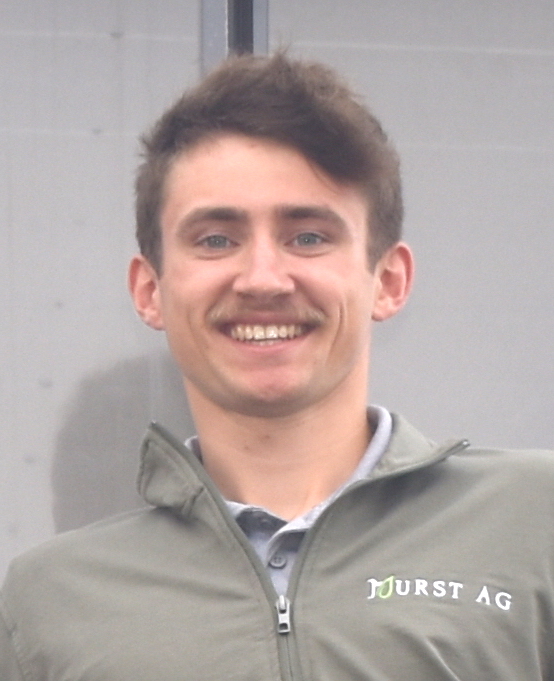
Stover
“We both have been in ag our entire lives. In high school, we were in FFA, but growing up we both worked on farms all the time. I did some crop scouting for a couple companies, interned at New Century FS, worked at Corteva last summer as an intern on their crop protection side, marketing and sales,” said Stover, who is currently a student at Iowa State University and grew up near Liscomb.
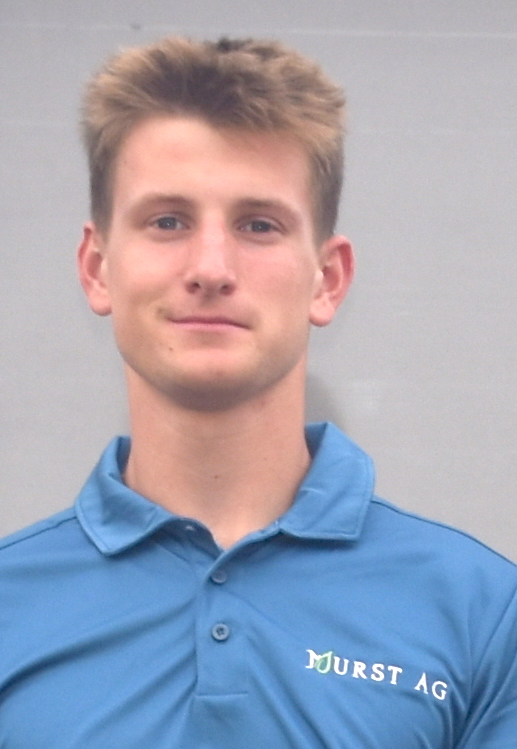
Murty
Murty was in the process of becoming an agricultural pilot and flying crop dusters, but his interest in drone application arose out of challenges with some of the family’s hillier ground in Tama County.
“We always saw the planes flying, and there’s a lot of trees around. They couldn’t ever get close enough to the ground to do a very good job. I knew about these drones, and Lincoln and I actually went to a farm show and saw these drones back in February of our senior year, so we ended up buying three of those that year and getting pretty heavy into it,” he said. “And we’ve just expanded ever since.”
The industry is heavily regulated and required both of them to obtain chemical and remote pilot licenses and register their drones through the Federal Aviation Administration (FAA) and the state of Iowa, along with a Part 137 license to dispense products from an aerial vehicle, a Part 44-807 heavyweight exemption to fly drones over 55 pounds. They also each had to pass a 125-question commercial pesticide application test focused on “higher level knowledge,” drift reduction, managing chemicals and being safe while flying.
When they started the LLC in 2023, Murty and Stover reached out to local farmers they knew and local cooperatives, spraying a few thousand acres including the Murtys’ own ground, and word of mouth quickly began to spread.
“We’ve just continued to grow and grow. We’ve sprayed all the way from Cedar Rapids to the west side of Ames. So we’ve sprayed quite a bit of area. Our name’s just gotten out there. We’ve gotten calls from all over Iowa, just people reaching out, word of mouth, and then we are on Facebook and we have a website,” Stover said. “We both have ties to a lot of different people in ag and ways to get our name out there.”
While they don’t foresee drone spraying completely replacing traditional ground rigs and piloted aerial crop dusters, Murty and Stover see them as especially useful on hillier plots and getting closer to trees than traditional planes can.
“Here in Marshall and Grundy counties, obviously, it’s pretty flat, but there are power lines at every intersection you go to, so (we’re) getting closer to those power lines than what a plane can do. And then there’s houses in a lot of these fields, so getting closer to those property lines, those trees, and then it’s just that consistent height above the crop,” Stover said. “These drones with all their radars and sensors, they do a pretty good job of keeping a consistent level.”
In 2026, MURST plans to cover about 30,000 acres with three drones (and three backups) and run two crews as the company now employs five people between pilots, fill guys and guys who run tender and procure chemicals in addition to the two founders. The maximum takeoff weight for a T-100 drone full of chemical is about 400 pounds, and the pilots operate from a large elevated trailer they set up at the edge of a field.
Looking forward, Murty foresees drones becoming more and more prevalent, citing their relatively low cost compared to ground rigs and crop dusters and their ability to cover about 1,500 acres a day — similar to a plane.
“I see these drones getting more and more popular, but I don’t see it potentially taking anything out of the industry. Ground rigs still always have their place, especially on bean fields or things like that, because ground rigs can just cover a lot of acres. And planes, out in Minnesota where they have really, really big, wide open fields, they’re just too efficient to switch to drones,” he said. “But I see agriculture technology just continuing to advance and continuing to go more autonomous as GPS technology advances and camera technology and all these sensors that can find objects and automatically avoid them. So I see it advancing very heavily.”
Stover said older farmers love to come out and watch the drones work while sharing stories about their younger days and how much things have changed.
“I don’t know how many times guys have told us that they were a flagger for a plane and they’d stand there and get drenched in chemical. Now it’s all GPS, and now we have these drones that’ll fly on their own and get the boundaries, and it’s just crazy how far it’s come,” he said. “Just in our short 21 years of life and short few years of farming, it’s crazy to see how far it’s already came too.”
The busiest time of year for MURST is insecticide and fungicide season in July and August — some farmers will request a single application, while others prefer two about three or four weeks apart. They also spread cover crop seed after fungicide season once they switch out the tanks on their drones as well as foliar feed, crop imaging, pasture spraying, yard spraying, spraying trees for insects and the potential for heavy lifting up to 225 pounds.
“With our drones and our trailers, we have the capacity for probably over 50,000 acres (of spraying), but for our first season with this new trailer and new drones that we just got, we want to take it a little slow (and) make sure everything’s good. We want to do all of our testing on our own,” Stover said. “This season, we want to take things slow, do a lot of testing… We’ve been in this for three years now. This’ll be our fourth, so we’ve done a lot of testing. We like to communicate with the farmers, check in on it, see how everything did for the season. We’ll have meetings with a lot of our farmers after the season to see how everything did. So we just want to make sure our drones are doing a good job and make sure all our settings are good before we keep expanding and building.”
Murty and Stover also encouraged any farmer interested in hiring a drone chemical applicator to ask a lot of questions and know what they’re doing business with a trusted partner before entering into an agreement.
“Anybody can get into this. It takes a lot of paperwork and stuff, but anyone can do it. But I think it’s a matter of finding the guys who have done their research, been in ag for years and years like Paul and I have and know what farmers need, what they want, what they’re looking for and just know their way around ag rather than just someone who just hops into it and hasn’t really been from that ag background,” Stover said.
MURST can be found online at https://murstag.com/ or on Facebook at https://www.facebook.com/profile.php?id=100089980613042. The phone number is (641) 751-7627, and the email address is murstllc@gmail.com.
Todays News
Remembering Mary Beth Hurt’s time in Marshalltown
Progress 2026: Prop 12, tariffs and more challenge Iowa pork producers
Marshalltown veteran Steven Hyde details journey from enlistment to Vietnam in ‘Blood Sweat and Mothballs’
Progress 2026: Lifelong friends Lincoln Stover and Paul Murty launch MURST LLC with focus on drone spraying

Reserve Development confirms three tenants for Shops at Marshalltown