
No harm, yes fowl
Council proceeds with animal keeping modifications to allow chickens on lots five acres and up
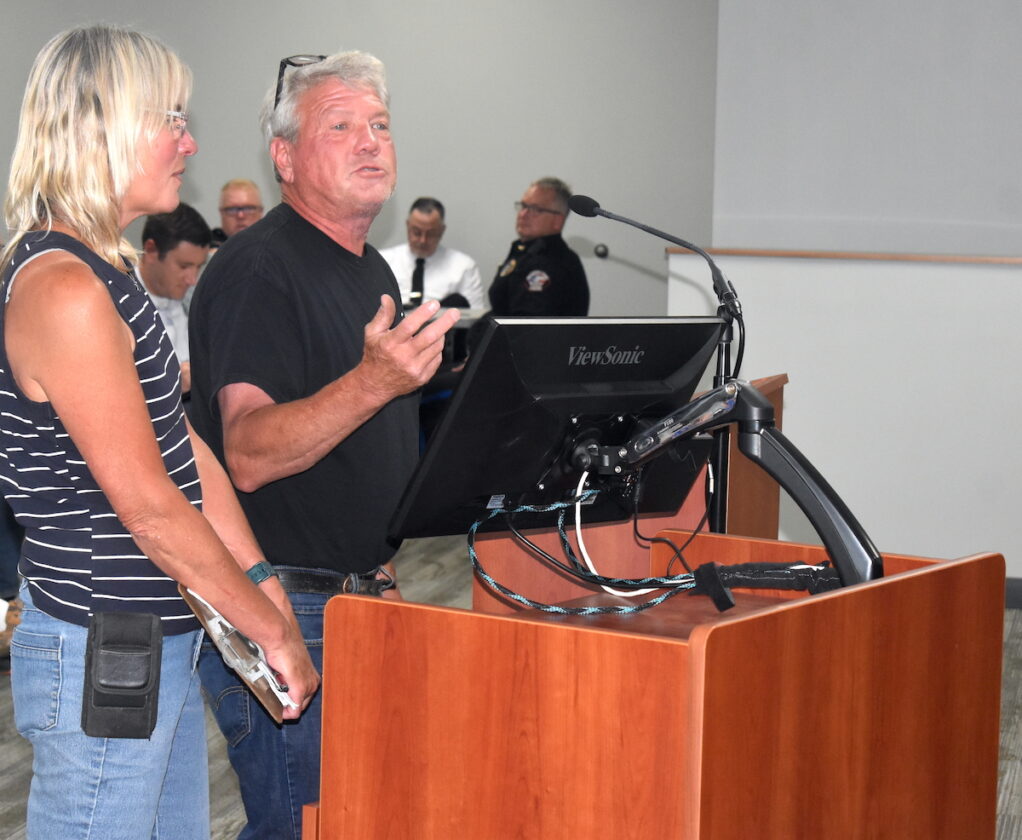
Appleberry Farm Owner Kelly Mason and her business partner Joe Darter address the city council during a discussion about a proposed chicken keeping ordinance change at Monday night’s meeting.
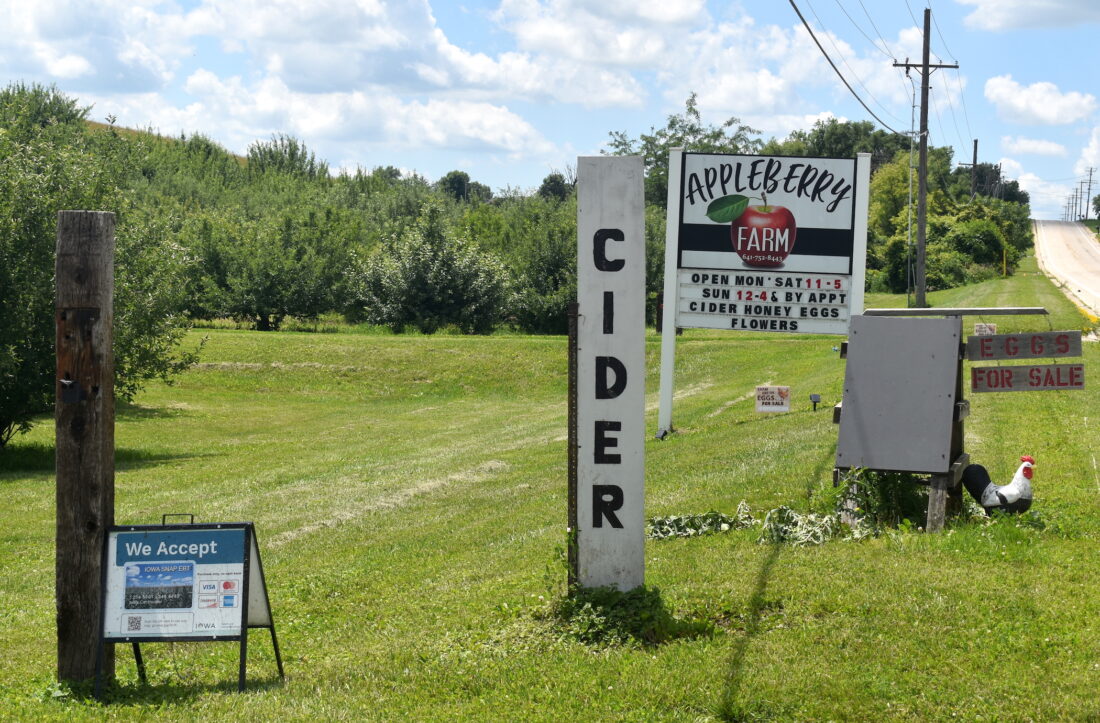
T-R PHOTOS BY ROBERT MAHARRY A view of the Appleberry Farm located at 2402 W. Main St. After the business owners received notice that their keeping of chickens violated current city ordinances, they collected signatures for a petition of support, and during Monday night’s meeting, the city council voted to move forward with new ordinance language to allow the keeping of poultry, domestic fowl and livestock on lots five acres and up within city limits.
Appleberry Farm Owner Kelly Mason and her business partner Joe Darter address the city council during a discussion about a proposed chicken keeping ordinance change at Monday night’s meeting.
T-R PHOTOS BY ROBERT MAHARRY A view of the Appleberry Farm located at 2402 W. Main St. After the business owners received notice that their keeping of chickens violated current city ordinances, they collected signatures for a petition of support, and during Monday night’s meeting, the city council voted to move forward with new ordinance language to allow the keeping of poultry, domestic fowl and livestock on lots five acres and up within city limits.
Trending
Spurred by a petition in support of a longstanding local business on the western edge of the community, the Marshalltown city council moved forward with modifying its animal keeping rules to allow chickens on lots over five acres within the city limits during Monday night's meeting.
A large crowd had gathered within the chambers to object to a ruling requiring the Appleberry Farm, located at 2402 W. Main St., to remove its chickens from the premises. The business sells farm fresh eggs along with various other produce, jams, syrups, honey and plants, to name a few items.
City Clerk Alicia Hunter first read written public comments submitted to the council. Austin Gillis, the executive director of the Animal Rescue League of Marshalltown, warned that owning household chickens will not do anything to reduce household expenses for families as it costs significantly more than buying eggs. He also worried that stray cats and dogs in the community would hunt chickens if they are allowed, but he did, however, express support for Appleberry Farm being allowed to keep its chickens because of the unique nature of the business and ample space.
Another written comment came from Brian Hunter, a renter who said he appreciates the opportunity to buy eggs from Appleberry Farm and hoped they would still be allowed to keep their chickens to be able to provide families like his with high-quality, locally produced food. A third came from James and Martha Landmark and expressed a similar sentiment advocating for Appleberry to be able to keep their chickens.
Assistant Housing and Community Development Director Clayton Ender then told the council that city staff was made aware of the ordinance violation because of the ban on poultry keeping at all residentially zoned properties regardless of size -- Appleberry Farm is zoned as Res on Ag Land. He also explained that the current city code did not include language grandfathering in any parcels.
Ender presented three primary options:
1. No changes to city code and proceeding with enforcement as is;
2. A citywide amendment setting a minimum lot size for poultry and domestic fowl keeping;
3. A specific zoning amendment for Appleberry Farm to classify it as agricultural land, which would require changing the minimum lot size (Appleberry is listed at 19.5 acres on Beacon) and modifying the comprehensive plan.
After seeking clarification on the number of lots over two acres within the city, Councilor Gary Thompson commented that he was leaning toward raising the minimum lot size to five acres for all animals while grandfathering in lots under that size with currently allowed livestock like cattle, sheep, goats, horses and mules.
Fellow Councilor Melisa Fonseca called Appleberry "a staple in the community" and recounted trips there as a child along with recently taking her own son to pet the ducks before motioning to proceed with the third option. Thompson, however, worried that such a move would constitute "spot zoning," which the city sought to avoid in drafting a new comprehensive plan.
"We're certainly flirting in that territory pretty close. There's an argument to be made against spot zoning due to the historical usage of the site, but beyond the historical usage, it would otherwise be considered spot zoning," Ender said.
Councilor Mark Mitchell felt the city should be allowing more chickens on less acres to be more equitable, and he noted that larger cities allow more than 20 chickens per acre. Councilors Marco Yepez-Gomez and Sue Cahill expressed their preference for setting a minimum number of acres, while Councilor and Mayor Pro-Tem Jeff Schneider, who has been stridently against allowing chickens in the past, suggested setting it as high as 15 or 16 acres to protect Appleberry but discourage the practice elsewhere.
Planning and Zoning Commission Chairman Jon Boston recommended placing limits on the quantities, joking that he grew up on a farm and knows what it smells like. During the public comment period, April Long shared information on ordinances in communities like Ames and Des Moines, and she expressed support for Appleberry Farm while suggesting at least a one-to-two acre minimum for chickens on residential properties.
"As someone who used to own chickens, I can tell you. If you're not completely dedicated to raising chickens and spending the considerable amount of money that it takes to raise chickens and cleaning out the coops, most people aren't really gonna want to have chickens in town," she said. "I think it's a nice fantasy, but the reality is most people are not gonna want to have them or they're gonna have them briefly and a predator's gonna get them or they're gonna get tired of the maintenance and keeping up with them."
Appleberry Farm Owner Kelly Mason and her business partner Joe Darter then came forward and addressed the council, thanking the public and councilors for their support as Darter joked that anyone who wants to raise chickens and take care of 1,000 apple trees is crazy.
"You're talking to a couple of crazy people," he said.
According to Darter, even customers who don't purchase the eggs come to the farm to interact with the chickens and end up buying other products, and Mason agreed with Long that Appleberry shouldn't be the only place in town allowed to have chickens, suggesting a per acre limit with a minimum acre size. They also presented their petition of support to a round of applause from the audience before it was broken up by Schneider as a violation of meeting rules.
Fonseca then amended her original motion to move toward Option 2 with a minimum of 15 acres required for chicken keeping, but that motion failed by a 5-2 tally with only Schneider and Fonseca in favor. Thompson subsequently made a motion to set the minimum acreage at five on residential properties for keeping poultry, domestic fowl and livestock with no limits. Schneider filed for an amendment to exclude roosters, and it passed by a 4-3 tally with Cahill, Fonseca, Mitchell and Schneider in favor.
Finally, the modified motion to allow livestock, poultry and domestic fowl on properties five acres and up passed by a 4-3 tally with Fonseca, Mitchell and Schneider opposed. It will now come back as a formal motion, and after Thompson attempted to make a motion extending the timeframe for Appleberry Farm until after the three readings are passed, City Administrator Carol Webb said it could be handled administratively.
"Kelly, you get to keep your chickens, and the next three meetings, we will read to change the ordinance to allow you to continue to keep your chickens or not," Thompson said.
Contact Robert Maharry at (641) 753-6611 ext. 255 or rmaharry@timesrepublican.com.