
Governor announces change to survivor benefits investment for foster care youth
Trending
Gov. Kim Reynolds announced Wednesday that Iowa will change how the state manages Social Security survivor benefits for foster children with deceased relatives, allowing the child to retain this money for the future.
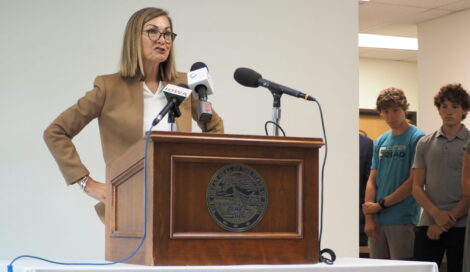
The governor and Larry Johnson, principal deputy director of the Iowa Department of Health and Human Services, announced the change during a news conference at Foster SQUAD, a foster care support organization in Ankeny. Reynolds said the change to survivor benefits comes as Iowa seeks to work on the national initiative led by First Lady Melania Trump to provide more support to foster families and help children in the system live independently and successfully as adults.
"I have directed Iowa Health and Human Services to preserve survivor benefits using the most appropriate account type for each eligible child, so that he or she may use the money in the future to support their life's goals, whether that means pursuing an education, purchasing a home, or achieving financial stability. So this change aligns well with other financial support that already exists for young Iowans who transition out of the foster care system," Reynolds said.
Previously, federal survivor benefits for eligible children in foster care were put toward the cost of foster care. Under the new system, Reynolds said, funding will be placed in accounts that can then be returned to a family if the child is reunited with their family or if they are adopted or gain a permanent guardianship within 12 months of entering the foster system. If the child remains in foster care for more than a year, the federal dollars will be invested through a combination of the 529 education savings plan and an escrow account, or through an IAble account if eligible.
After the child leaves the foster care system, the accounts will be transferred to them, with the money available for spending on certain expenses like education, housing and transportation.
The change came at the request of the U.S. Department of Health and Human Services, the governor said, and builds on other work being done in Iowa to improve the state's foster care system. Reynolds highlighted other efforts to improve foster care in Iowa, like the collaboration between Iowa HHS, the Administration for Children and Families and the Google Public Sector "to develop a new comprehensive child welfare information system," as well as a law signed this year making changes to Iowa's foster care training requirements.
Johnson said the investment for survivor benefits is "another step Iowa is taking to ensure eligible foster youth have every opportunity to succeed."
"These efforts reflect the dedication of our child welfare workforce and the collaboration of partners who share a common goal: building a stronger system that helps children and families thrive," Johnson said. "Protecting and investing survivor benefits reinforces this strategy by giving eligible youth additional resources to build sustainability, pursue education and employment, secure housing, and meet other essential needs as they move into adulthood."
Social Security survivor benefits are only available to children in the foster care system if they are unmarried and their parent died when they were age 17 or younger, if they are ages 18 or 19 and still in school full time, and if they developed a disability at age 21 or younger. Survivor benefits are also paid in certain circumstances to married children, stepchildren, adopted children, grandchildren, and step-grandchildren, according to the Social Security Administration. Officials at the news conference said in Iowa, the change will impact a small percentage of children in the state's foster care system.
Johnson said "the state will cover the cost of the care for foster care" that survivor benefits currently go toward.
"It is a small amount of children, but it will make a difference for them," Johnson said.