
Council hears proposal for permanent pocket park at vacant city-owned lot
Trending
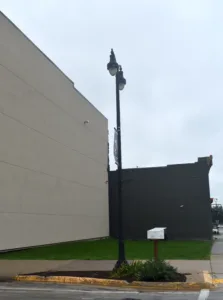
After the first reading of a data center moratorium passed during Monday night's city council meeting, the council closed out the night discussing a request for a permanent pocket park with rotating art installations on a currently vacant city-owned lot at 101 W. Main St.
Arts + Culture Alliance (ACA) Executive Director Amber Danielson explained that the idea is not a new one, dating back to Marshalltown's Iowa Great Place designation and a previous application for state funding. Last November, a Creative Placemaking Committee was assembled to pursue "quick wins," and the aforementioned property was identified as a spot with potential -- though Danielson joked that it may not be going quite as quickly as she'd originally hoped.
As conversations have unfolded, Danielson said they are hearing a desire for the space to become a permanent pocket park and the preeminent outdoor gathering space allowing people to "sit and linger" west of Main Street, which in turn results in more downtown spending, in conjunction with the Downtown Master Plan and Comprehensive Plan.
The 101 W. Main St. lot, she added, is "probably the least developable" of all of the currently available downtown lots, and a park may help to encourage development at the other vacant lot across the street. The city acquired it in April of 2021 through a court-ordered sale.
Danielson also highlighted a potential reduction in maintenance costs through landscaping and providing more seating.
"If you've ever been to Grounded on a Saturday morning, there's very limited seating in there, so how can we expand the businesses downtown and give more space for that?" she asked. "Investing in landscaping can be much more extensive and can be done in a way that reduces maintenance when we're talking about perennials and we're talking about trees... So talking about elements like that makes it a lot easier when we know that this is gonna be a permanent space."
Through the ACA's partnership with the city, the organization is actively seeking grant opportunities to leverage public dollars for more investment in the projects, with Danielson noting that they've already received $15,000 from the American Association of Retired People (AARP).
Councilor Greg Nichols asked if the ACA would be maintaining the space or if it would become another city park, and Danielson replied that it would become a permanent park under the purview of the Parks and Recreation Department as Mayor Mike Ladehoff noted that the city already maintains the space currently.
Parks and Rec Director Kelsie Stafford stepped forward and said the department has already been involved in the development of the space through Parks Supervisor Kristin Titus. In response to a question from Councilor Melisa Fonseca, Stafford and Danielson said they would provide visual plans for the park before it is finalized.
"Right now, regardless, we're looking at kind of a central piece that would provide shade and color, which is what the Master Plan talks a lot about is infusing more color specifically in our downtown. It's talking a lot about seating. It's talking a lot about landscaping and lighting," Danielson said. "If we go the permanent way, which is what we're hearing the community prefers, we have an opportunity to capitalize on the city's investment and I think leverage those dollars to get more dollars to make sure that we're investing the best in this space and it has more of a future."
Councilor Gary Thompson wondered if the ACA could own the property itself and expressed his preference that they buy the lot, which Webb did not feel would be in the best interest of the city. Stafford clarified that the city is currently contracting out for the mowing and said the city could save $800 to $1,000 per year by eliminating that cost.
Thompson cited past city preferences for retail over parking lots and public spaces, and he sought clarification on what was desired for the downtown area. Ladehoff felt the lot in question would be difficult to position for private redevelopment, and Marshalltown Central Business District (MCBD) Executive Director Danielle Lekin called the lot "very small and very odd" with potential developers walking away from it in the past.
"I do think that making this a permanent fixture in our downtown will make our downtown more marketable, and we'll see increased development," she said. "The reality is just (that) the prettier we can make things and the more accessible we can make things, I think the more we're gonna see investment in businesses coming to our community. Additionally, like Amber mentioned, just that ability to linger -- there's very few places to just sit and have a cup of coffee with a friend, and then maybe you're going to take a break and then you're going to go have lunch because you're still downtown. Or you're going to go buy a pair of shoes. I do think that this would have an impact on how much time people are spending in our downtown, and the longer people are downtown, the more money they're going to spend."
Councilor Jeff Schneider said he had previously opposed the idea of turning the space into a park because he believed it could be sold, but because that hasn't happened, his position has changed, and he didn't feel that it made sense for the ACA to own the space given the statutory protections the city has.
"I just think we should make this a city park," he said.
The council did not make a formal motion, but Webb indicated that staff had direction to proceed with a modified agreement with the ACA to reflect the permanent nature of the park.
Contact Robert Maharry at (641) 753-6611 ext. 255 or rmaharry@timesrepublican.com.