
IVH’s last WWII veteran passes away at 102
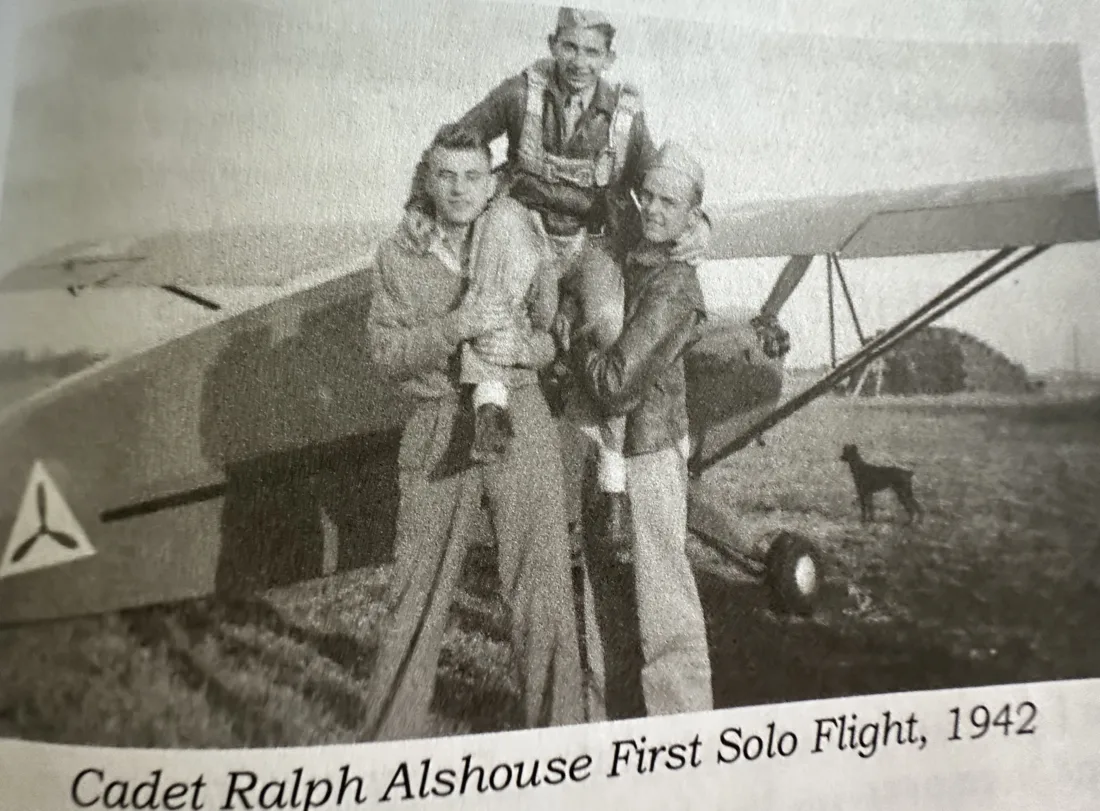
CONTRIBUTED PHOTOS The late U.S. Navy Aviation Cadet Ralph Alshouse is hoisted upon the shoulders of fellow cadets after his first solo flight in 1942 at the Clarion airport.
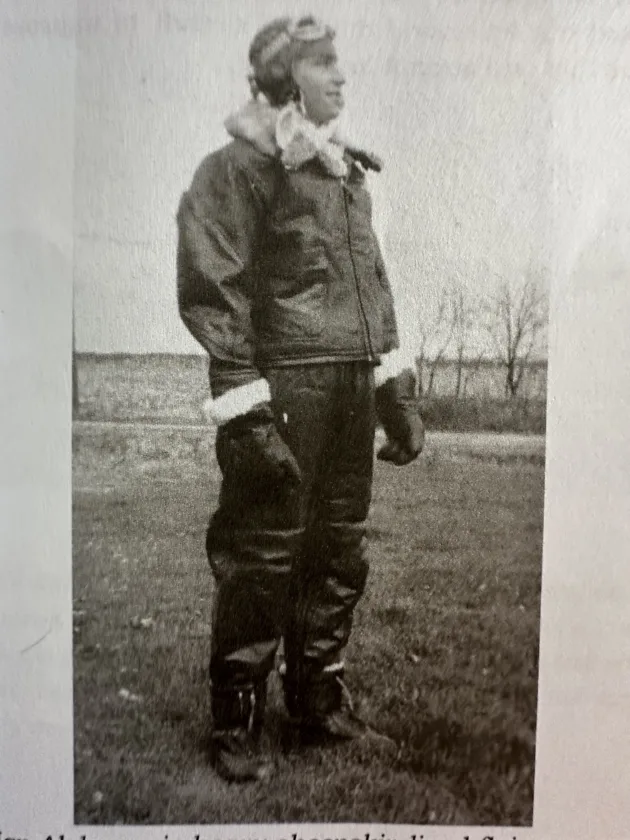
The late Ensign Alshouse in heavy sheepskin-lined flying coveralls, 1943.
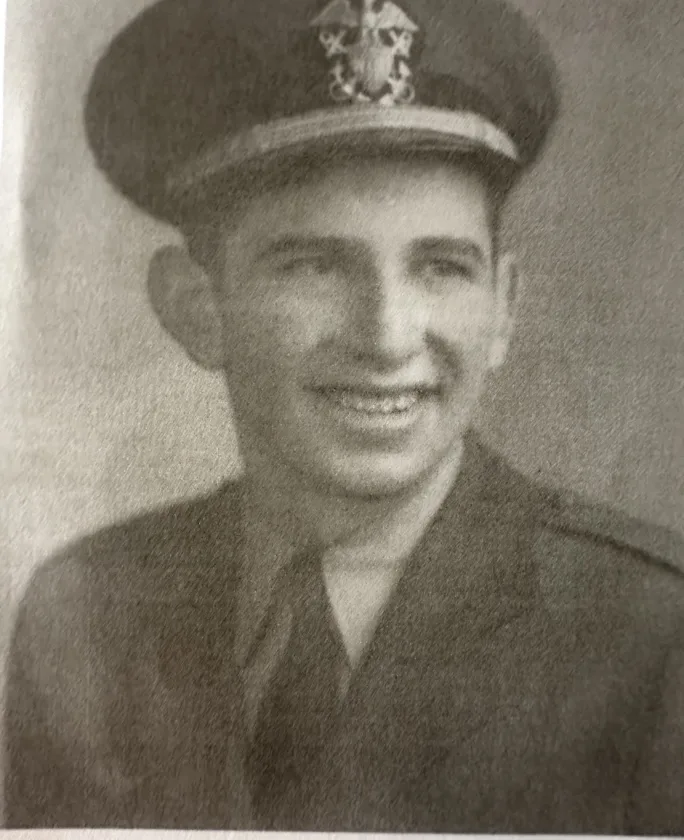
Official Navy portrait of the late Ensign Alshouse, 1943.
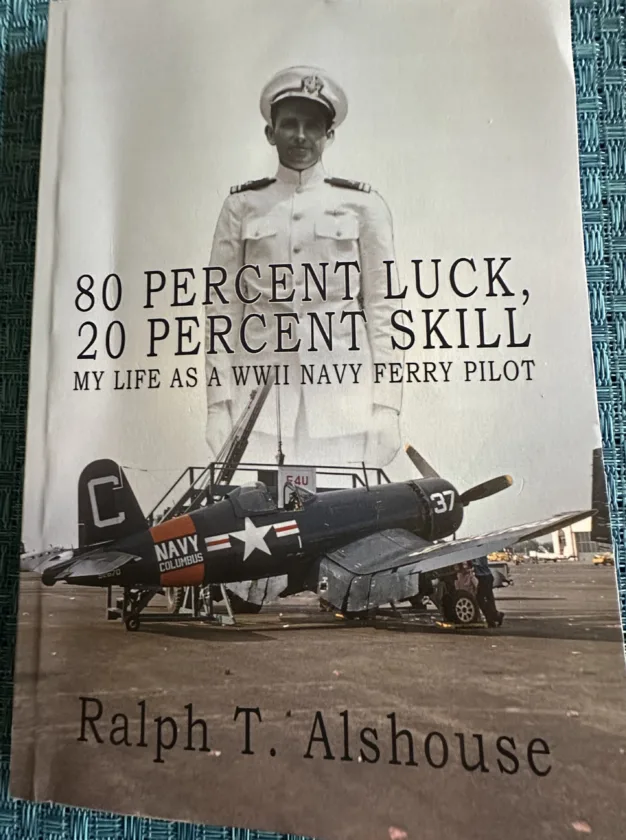
"80 Percent Luck, 20 Percent Skill: My Life as a WWII Navy Ferry Pilot" by the late Ralph Alshouse of Stanley.
CONTRIBUTED PHOTOS The late U.S. Navy Aviation Cadet Ralph Alshouse is hoisted upon the shoulders of fellow cadets after his first solo flight in 1942 at the Clarion airport.
The late Ensign Alshouse in heavy sheepskin-lined flying coveralls, 1943.
Official Navy portrait of the late Ensign Alshouse, 1943.
"80 Percent Luck, 20 Percent Skill: My Life as a WWII Navy Ferry Pilot" by the late Ralph Alshouse of Stanley.
Trending
One of the few remaining World War II veterans in central Iowa passed away recently at the Iowa Veterans Home (IVH) in Marshalltown.
Ralph Alshouse, 102, an IVH resident and a Navy pilot during World War II, died Aug. 21 at the facility, according to Commandant Todd Jacobus.
Sadly, he was one of an estimated 100 to 130 World War II veterans who pass away daily in the United States based on actuarial projections.
Fittingly, Iowans who served in that conflict which changed world history and impacts events 81 years after its conclusion must be remembered. WWII bonded and rallied the American people to great heights to defeat the Axis Powers of Germany, Italy and Japan.
Those fascist countries were initially resolute in their goal of world domination. Alshouse was born and raised on a farm near the small rural community of Stanley in Buchanan County.
At age 11 -- and while working on the family farm -- he had a chance to watch overhead, stand by, touch and rub his hand over sections of a Piper Cub airplane which had landed and parked at a neighbor's farm.
From that point he was hooked on aviation, and it would lead to a military career where he served admirably in WWII and also during the Korean War from 1950 to 1953.
Alshouse enlisted in the Navy at age 18. He wanted to enlist earlier, but his father said no.
"My father served as an infantryman in World War I," Alshouse said. "He experienced trench warfare and said war was a terrible experience ... piling up the dead bodies of fellow soldiers to act as shields from enemy bullets."
Cathy Wilson, Alshouse's daughter, said the family can trace military service back to the Revolutionary War.
Alshouse was one of a handful of high school graduates accepted as an aviation cadet and eventually earned the prestigious U.S. Navy Wings of Gold. Alshouse described in chilling detail numerous escapes from serious injury and death in his book "Eighty Percent Luck, 20 Percent Skill: My Life as WWII Navy Ferry Pilot."
However, the title is somewhat self-deprecating - Alshouse became a skilled pilot. During the war, his job was to fly a variety of new military aircraft manufactured in the U.S and Canada to air fields on the east and west coast needed for the war effort, according to his book which was published in 2023.
However, some of the aircraft he had been assigned to fly had been damaged in combat and Alshouse's skill was able to overcome a variety of issues - such as flying with one engine and damaged landing gear.
Over a two-year period, Ensign Alshouse delivered 146-aircraft and set a military record of 13 forced landings: from landing a Corsair on fire over Pittsburgh Penn., to being struck by lightning while airborne near Douglas, Ariz.
Additionally, two engines failed in flight resulting in two perilous "dead stick" landings. Alshouse described in graphic detail several of his experiences while being interviewed in June 2024 by Jiri Kluc - a Czech doctoral student in history.
Alshouse proudly wore his Naval aviator baseball cap during the interview.
"Training was rigorous and challenging," he said. "There were 27 who started out in the class, and I was one of two who graduated."
He described to Kluc many of the planes he had flown in significant detail, as if he had just flown them earlier in the day.
Looking on during the interview were members of Alshouse's family, including son John Alshouse, a Marine Corps veteran of the Vietnam War, and his daughter Cathy Wilson.
"When Navy admiral William 'Bull' Halsey wanted aircraft, we delivered it safely and on time," he said proudly.
Alshouse served in the Naval Reserve after WWII and resumed active duty as a ferry pilot during the Korean War from 1950-53.
In that war, Alshouse's brother - a U.S. Marine – saw extensive combat as a tank crew member against Communist Chinese and Communist North Korean forces. Korea's mountainous terrain and bitterly cold winters were extremely challenging for U.S. and United Nations forces as expertly reported by the late author David Halberstam in his acclaimed book, "The Coldest Winter."
Ralph was admitted to the Iowa Veterans Home in March 2024. The very first WWII veteran to be admitted into IVH, Herman Hansen, served from April 3, 1942 to Aug. 8, 1942 and was admitted to the Iowa Veterans Home on Aug. 7, 1944. That means that there had been a World War II Veteran on campus continuously for 82 years and two weeks, and Jacobus did entertain the possibility that they could still see another one.
"Over his two and a half years with us, his room in the Malloy Building became a frequent and meaningful stop for the many tour groups I brought through our facility. Ralph was always welcoming, gracious with photo requests, and eager to share his stories. He was a beacon for visitors, welcoming guests ranging from Former Ambassador Ken Quinn and American Legion Commander-in-Chief William Seehafer to international military leadership, including Kosovo Security Forces Lieutenant General Bashkim Jashari and Major General Irfete Spahiu," Jacobus wrote in an email to the T-R. "Those of us at the IVH who had the privilege of getting to know Ralph are better people for it. His legacy also lives on through his family, who have a long history of distinguished military service; several months ago, they generously donated a collection of historic United States Armed Forces prints that are now proudly displayed in the hallway between the Loftus and Malloy Buildings. It is staggering to consider that 16 million Americans served our nation in uniform during World War II, and current records from the Des Moines VA Regional Office indicate that only 190 of those veterans remain in Iowa today. Ralph truly represented the absolute best of The Greatest Generation, setting an enduring example of service, sacrifice, and citizenship for all of us to follow."