
Hinson listens to parents, staff and youth addiction survivors at Iowa recovery facility
Trending
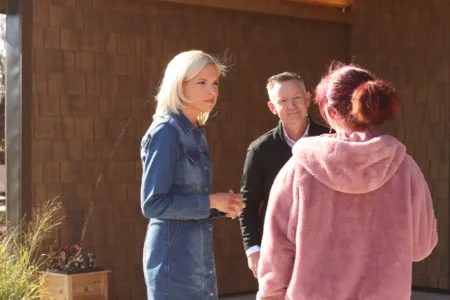
CAMBRIDGE -- The Republican candidate for Iowa's open Senate seat, U.S. Rep. Ashley Hinson, visited Thursday morning with youth, parents and staff at Ember Recovery Center and talked about promoting addiction education and youth addiction screening.
Ember Recovery is a residential center offering nature-based and trauma-informed care to Iowa teens dealing with addiction. Staff and a current resident at the facility said they also pride themselves on the work they do to support teens' relationships with their families to stoke long-term success.
Zoey, a 15-year old resident of the facility who is identified by first name only for her privacy, said prior to the family sessions run at the facility, she never saw herself being close to her relatives.
"That's like my biggest thing now is like my family -- that's my biggest support," Zoey said.
Zoey is set to graduate from the program soon, and in addition to helping with her addiction, she said the program has shaped what she wants to do with her life. After high school, Zoey plans to study psychology with the goal of getting into social work.
Her story is similar to Ember's CEO, Andrew Allen, who entered Ember Recovery, then called YSS Residential Addiction Treatment in Ames, as a teenager dealing with addiction. Allen said he credits the program with "saving his life." Since the $30 million campus opened in January 2025, Allen said the facility has served more than 300 Iowa youth.
Speaking to Hinson on a tour of the facility, Allen said, "Part of what we're trying to do, Ashley, is instead of being known for being number one in the country for binge drinking, we want to be one of the greatest places in the country for young people to recover."
Dave Muhlbauer, the running mate for Democratic gubernatorial candidate Rob Sand, also toured Ember Recovery in July as a stop along his campaign trail. Muhlbauer defended Sand's proposals to legalize recreational marijuana -- a proposal, Allen said, could lead to more children being exposed to the drug.
While Ember Recovery is relatively new, Allen said there are already plans for new phases of the facility including trailers for visiting families and a shop where students can learn trades.
Brian and Mary Lohse helped fund portions of the campus because they said they wished something like Ember Recovery existed when their son was going through addiction treatment. Instead, the Lohses said they had to send their son to Texas and California to get the quality of care now offered at Ember Recovery.
"We wouldn't have had to go through that," Brian Lohse said. "We would have been able to visit him more often. We wouldn't have had to fly him back three or four times to meet with his probation officer ... We had the luxury of being able to do that -- most people don't."
Allen said about 75% of Ember Recovery patients rely on Medicaid coverage as they go through the treatment facility.
Hinson has been criticized for her vote in support of the Republican-led One Big Beautiful Bill Act, which added certain work requirements to Medicaid which the health policy organization KFF estimates will lead to 5.3 million more uninsured Americans by 2034. Allen said the changes to the program from the massive tax bill are not anticipated to impact teens who go to Ember.
"My whole goal is to make sure people who actually need those benefits can access them," Hinson said. "... Ensuring that they actually can bill and get paid for the recovery treatment that they're providing for young people will continue to be a priority for me."
Ember Recovery sits on more than 50 acres of rural Iowa land and almost all of the rooms have large windows facing a remnant prairie on the property.
Jake Rhodes, a lead recovery specialist at the facility, said many of most transformative group sessions happen on the cabin's four-season porches where residents can feel comfortable opening up to others.
Rhodes, speaking to Hinson in a roundtable discussion Thursday, said he also sees a lot of need for education around addiction -- for youth and adults. While teens are in the recovery program, Ember Recovery hosts a family weekend that teaches parents the warning signs of addiction to help them catch addiction early rather than let it progress.
"I threw half my 20s away on that lifestyle, and I don't want to see these kids have to get to that same spot," Rhodes said.
Hinson said there could be room for policy that would add more age-appropriate education in schools around addiction.
Hinson said she recently introduced a bill to improve access to cancer screenings and added that she wonders whether screening youth for addiction would similarly help improve outcomes.
Allen said that currently in Iowa, a teen would have to have three misdemeanor charges before they would get referred to a place like Ember Recovery, even while some children, like Zoey, become addicted to substances as early as 9 years old.
"That - it's too long," Allen said. " ... We should be doing screeners on these kids, and not putting them deeper into the system, but giving them resources and tools because there's 6,000 kids in Iowa that need treatment right now, and some of our programs don't have wait lists."