
Trending
(EDITOR'S NOTE: This is the first of a two-part District 52 candidate question and answers. Part 2 will be in the weekend edition of the Times-Republican.)
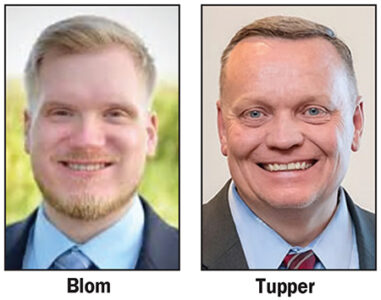
Two candidates will face off against each other in the Nov. 3 general election for the Iowa House of Representatives District 52 seat.
Incumbent Republican David Blom of Marshalltown, a sheet metal worker and former legislative clerk, is seeking to hold onto the seat after winning his first legislative election in 2024 when he beat Democrat incumbent Sue Cahill.
The challenger is political newcomer and Democrat candidate Mike Tupper of Marshalltown, the former Marshalltown Police Department chief who retired after 13 years in 2025.
District 52 covers the city of Marshalltown and the southeast portion of Marshall County, including the communities of Ferguson, Gilman, Haverhill, Laurel and Le Grand.
The candidates’ answers to part 1 of the T-R’s questionnaire are printed below. Part two will be printed in the weekend edition.
How will you address property taxes if elected?
Blom: I have listened to Marshall County taxpayers who have asked for stronger guardrails on property tax increases. Rising property taxes strain homeowners' budgets and lead to higher rents, which make it harder for families to afford a place to live. If re-elected, I will continue the work to rein in property tax growth and government spending, providing meaningful relief and greater predictability for taxpayers. Families should be able to plan their budgets without worrying that rising property taxes will put their homes out of reach.
I’m proud to have supported legislation reforming property taxes and reining in out-of-control government spending. The bipartisan bill will save Iowa taxpayers $4 billion over the next six years. For too long, local governments have grown their budgets exponentially at the taxpayers’ expense, creating uncertainty and strain on family budgets. We capped property tax growth to provide predictability for taxpayers and to increase government fiscal responsibility. Our city and county governments, especially here in Marshall County, provide excellent services and I intend to ensure they can continue to do so. The bipartisan property tax reform bill considered funding for public safety, recreation and education, ensuring essential services can still be provided. Every step taken towards tax relief is important, but it’s very clear that there is more yet to be done for property tax relief. I look forward to the opportunity to continue putting taxpayers first at the statehouse.
Tupper: Despite a lot of talk from politicians in Des Moines, our property taxes go up every year while we are working harder just to get by. These failed property tax reforms are also destroying local governments, especially in rural Iowa. If we continue down the current path, we will have fewer police and firefighters within three to five years. The Republican-led legislature has literally defunded the police under the banner of property tax reform. For example, Des Moines has warned that state property-tax restrictions are creating significant budget gaps, forcing the city to consider staffing and service reductions even as the costs of providing essential police and fire services continue to rise. It is bizarre and public safety is being diminished. The current path is also suffocating growth in rural Iowa and making it difficult for small businesses to thrive.
As your representative, I want to pass property tax relief for Iowans that they feel right away by focusing the cuts to help working families. I will prioritize protecting seniors from being taxed out of their homes and I will work to find ways to help young working families buy their first home.
Growing our local economy, focusing on small business growth, and helping people afford housing will help our communities grow, and this can lessen the property tax burden for all of us. Home ownership is the pathway to the middle class and is an essential part of the American dream. We can make better use of programs that already exist within the Iowa Finance Authority to help low-income and first-time homebuyers. Money from fees we pay at the county recorder's office when we buy a home goes into a fund to underwrite the Title Guarantee Fund. The surplus from this program goes into a fund to promote affordable and safe housing. More could go into this fund by working with the governor's office to loosen restrictions on how the money is used.
Lastly, we need to promote growth in our community by supporting local workers and local businesses. We can grow our community by enticing young people to stay. We can do this by incentivizing jobs and providing amenities people want in our community. Marshall County should become the entrepreneur capital of Iowa. Our history of building thriving local businesses that become world-wide companies is something we should embrace and learn from. There is a shortage of skilled trade workers in our country. This is also a problem in our local community. Ask any small business if they have the skilled workers necessary to help their companies grow. The answer is usually no. I will support legislation that will enhance skilled trade education in our public schools and secondary education programs. College is a great opportunity for our young people, and our local public schools do a great job preparing people for higher education. But a traditional four-year college is not for every student. Learning a trade is a pathway to better paying jobs, the middle class, and entrepreneurship. We can lessen the local property tax burden by training local people to work in our local businesses. Some of these people will start new businesses. These same people will help our communities grow into the future because they are invested here, and we should invest in them now.
What action, if any, will you push the legislature to take on data centers? If you propose no action, please explain why.
Blom: I recognize that data centers are an increasing concern for many in the community and I want to ensure data centers don’t become a nuisance for Marshall County. Businesses built in our county should improve the community and citizens’ lives. I want to see government incentives for data centers removed to ensure they pay for the land and utilities used. At the state level, I’d like to ensure data centers pay their taxes and I will continue to evaluate and address concerns regarding data centers in our area.
Tupper: I support local control and local regulation of these decisions, including local moratoriums. What makes sense for Marshall County is a different discussion from what makes sense in other communities. State government has been infamous for forcing unfunded mandates onto local communities or taking away their authority to make these important decisions for themselves. Despite what some people may assume about Democrats, I actually want smaller government. Government works best at the local level and I will support legislation to ensure our communities can regulate these issues in a manner that makes sense for their individual communities and in accordance with what local community members desire.
In terms of legislation at the state level, the best plan I have seen that I can support is requiring corporations to pay all their own costs and receive no tax breaks from any level of government. I will not vote for, nor can I support, state tax credits or tax incentives for data center projects.
For communities that choose to support building data centers, I want accountability and transparency to ensure they're built in a way that won't raise utility rates where they’re built because of the increased demand these centers create. I want regulations on how close these buildings can be built to residential or farm properties. I will support efforts to protect natural resources and especially protect our critically important water resources.
It is important to remember that Marshall County is a hard-working, blue-collar community. Many of our neighbors and small businesses rely on construction jobs, which are vitally important for our local economies. If a local community decides to build anything (data centers or otherwise), preference should be given to local workers and local businesses to help build projects in Iowa. Too often these large construction projects are built with the help of Iowa tax dollars by companies and workers who do not call Iowa home. This should not happen.
MPACT is set to lose funding at the end of the year. Will you take any action to provide state funding for the program?
Blom: I support MPACT's mission and want to help YSS access appropriate state funding for the services it provides. My focus is on identifying a sustainable funding path, including determining which services could be supported through Iowa's existing behavioral-health funding.
MPACT -- the Marshalltown Police and Community Team -- brings together YSS and law enforcement to help people facing challenges such as mental-health concerns, substance use, family conflict and housing instability.
I appreciate the compassion and dedication of the people doing that work. I have worked alongside them to help constituents navigate difficult situations, and I value their willingness to listen, follow through, and help our neighbors find assistance.
I also appreciate the local donors, churches and community organizations that support YSS and MPACT's mission. Their generosity reflects a community that takes responsibility for helping its neighbors. I have committed my own dollars to helping meet needs in our community because I believe supporting people who are struggling is a personal responsibility as well as a public concern.
Gary Thompson and his fellow city council members deserve recognition for supporting this partnership. Federal COVID-19 relief dollars helped sustain MPACT, including a council decision in December 2024 to extend funding through 2026. The Marshall County supervisors subsequently supported the program's expansion with approximately $125,000 in opioid-settlement funding, helping add a third advocate and extend services beyond Marshalltown. Those investments have provided important support, but temporary funding also makes long-term planning essential.
The state already helps pay for mental health care through several channels, including Medicaid and state health coverage. Separately, Iowa's former regional mental health system transitioned in July 2025 to a statewide Behavioral Health Service System, administered by the Iowa Primary Care Association under Iowa HHS oversight. That system supports access to care for people who are uninsured or have limited coverage.
For fiscal year 2026, Iowa HHS reported a behavioral-health budget of approximately $170.2 million, including $106.1 million in general state appropriations and $20 million in state opioid settlement funding, with the remainder coming from federal grants. That budget covers both mental health and substance use services; it is not a total of all mental health spending through Medicaid, employee insurance and other programs. My priority is making sure those investments translate into accessible services here in Marshall County.
We have local organizations doing important work, including Center Associates, YSS and Mid-Iowa Triumph Recovery Center. Their services range from clinical mental health care to peer support and help connecting people with other resources. I have also worked with Sharon Swope at Mid-Iowa Triumph Recovery Center to help secure funding for mental health peer support specialists serving people experiencing homelessness and others in our community. That reflects the practical approach I want to bring to this issue -- helping local organizations connect their work with appropriate funding.
For MPACT, that means working with YSS, Iowa HHS and the Iowa Primary Care Association to determine which services qualify for existing funding, what requirements must be met and what needs remain uncovered. I want YSS to receive support for the services it can appropriately provide through those programs. My goal is a durable funding arrangement that helps our neighbors, supports our law-enforcement officers, and uses public dollars responsibly.
Keeping this funding for the community requires an effective voice in Des Moines, and I’m the House candidate best equipped to ensure we keep that voice.
Tupper: For a decade, our neighbors have struggled while the state legislature has focused on tax cuts for businesses that lay off Iowans and ship jobs overseas. As police chief, I saw firsthand what that struggle meant for families trying to make ends meet. We need elected officials who will prioritize investing in our community and the social care programs that help them instead of wasting money on things like a soccer stadium in Des Moines or giving handouts to big corporations who don't pay their employees a living wage.
State and federal elected officials love MPACT. They loved coming to Marshalltown to talk about these programs and jump into a photo op. But these politicians also failed us again and again when it came time to put funding with their talking points. We need less politics and more public service.
MPACT has been a great success and has grown into a county-wide program. We have other programs in Marshall County that provide important social service resources that enhance public safety. Enhanced Supervision Court (ESC) is a program that helps non-violent offenders build a life free from addiction and a pathway to being productive members of our community. ESC also needs long-term funding. I helped build MPACT and ESC, and I saw firsthand how these programs can help people rebuild their lives -- and, in some cases, save them.
Mental health and substance abuse services are endangered in Iowa and almost non-existent in rural areas of our state. Our county jails are mental health and substance abuse holding centers. We can do better. MPACT is a great example of public-private partnerships coming together to enhance services and build safer communities. We can partner further with local providers to find ways to invest in people and families at the front end of a crisis and work with them to divert people from the criminal justice system. These programs work, and the money invested up front to help people saves countless dollars that would otherwise be wasted warehousing non-violent offenders in jail or prison. Cycles of addiction and abuse can be broken. We can more effectively help people struggling with mental health challenges. We have proven it with MPACT and ESC. We must commit to finding long-term funding solutions.
As your representative, I will work across the aisle to find funding solutions for these vitally important programs. We can do this. We can't afford not to. This will be a top priority for me.
Contact Lana Bradstream at 641-753-6611 ext. 210 or lbradstream@timesrepublican.com.