
County P&Z director wants public input on renewable energy regulations
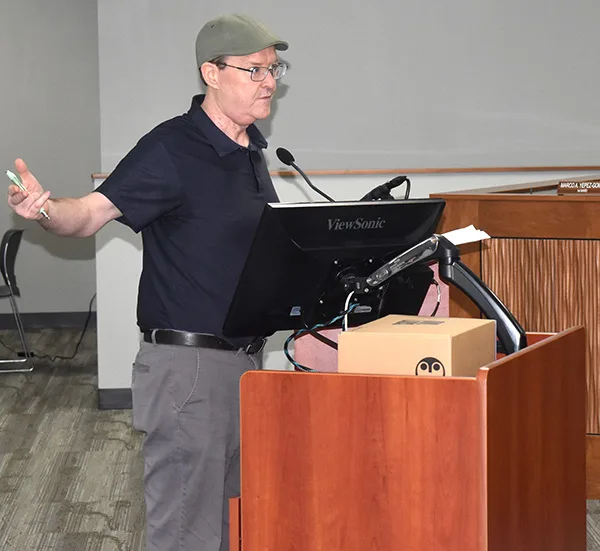
T-R FILE PHOTO Tom Deimerly, pictured speaking at a Marshalltown City Council meeting earlier this year, is one of three members of the Marshall County Conservation Board.
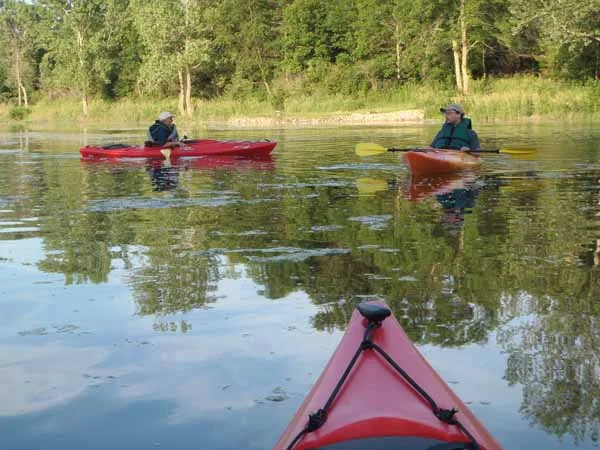
CONTRIBUTED PHOTO Bring-in kayaking is one of the many activities residents can partake in on the Green Castle Recreation Area lake. Bird-watching, hiking and more are available year-round.
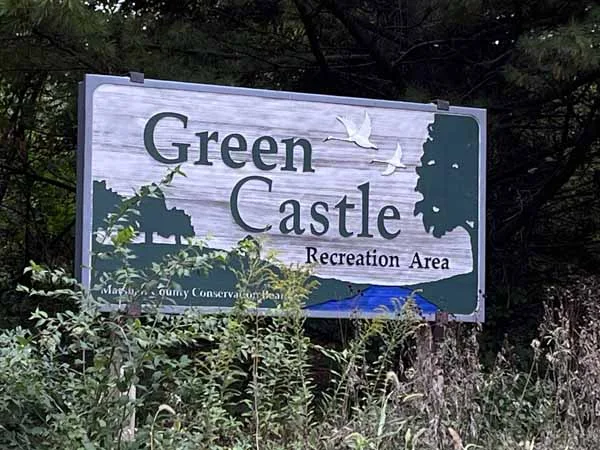
CONTRIBUTED PHOTO The Green Castle Recreation Area between Gilman and Feguson is one of the most heavily-used of all Marshall County Conservation Board-managed properties.
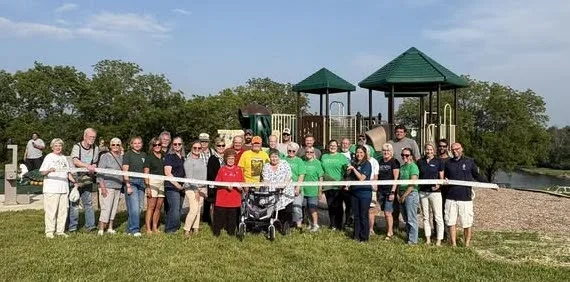
CONTRIBUTED PHOTO Marshall County Conservation Board staff, local elected officials and area residents are pictured at this Aug. 1, 2025 ribbon-cutting celebrating the opening of the Green Castle Recreation Area campground.
T-R FILE PHOTO Tom Deimerly, pictured speaking at a Marshalltown City Council meeting earlier this year, is one of three members of the Marshall County Conservation Board.
CONTRIBUTED PHOTO Bring-in kayaking is one of the many activities residents can partake in on the Green Castle Recreation Area lake. Bird-watching, hiking and more are available year-round.
CONTRIBUTED PHOTO The Green Castle Recreation Area between Gilman and Feguson is one of the most heavily-used of all Marshall County Conservation Board-managed properties.
CONTRIBUTED PHOTO Marshall County Conservation Board staff, local elected officials and area residents are pictured at this Aug. 1, 2025 ribbon-cutting celebrating the opening of the Green Castle Recreation Area campground.
Trending
Marshall County residents are expressing opinions on proposed revisions to an existing ordinance that would regulate the installation of battery cells, solar panels and wind turbines, said Tyler Kelley, Marshall County Planning & Zoning director, sanitarian and weed commissioner.
And he wants more, he said Friday in a telephone interview with the Times-Republican. Residents are encouraged to share their opinions with him and the three P&Z commissioners, Will Hobson, Pat VonAhnen and Will Wears.
Work on the revised renewable energy ordinance began in 2024, and Kelley said there is still more work to do. The existing ordinance was drafted a number of years ago and Kelley said it is outdated.
He previously told the T-R that a surge in recent years of renewable energy development and resulting new technology were at issue. Kelley said he did not want to set a timeline for when the revised ordinance would be reviewed and approved by the P&Z Commission.
That will happen only after they have heard and read all public comments. That ordinance will then be sent to the Marshall County Board of Supervisors for their review, which will also allow for public comments.
In previous statements to the T-R, supervisors Christian Goodman, Jarret Heil and Carol Hibbs have commended Kelley for his efforts to hold work sessions open to the public and attended by county department heads.
Setbacks from County Conservation property at issue
After the most recent work session of Nov. 13, Marshall County Conservation Board (MCCB) Director Emily Herring told the T-R in an interview Wednesday she had concerns about proposals that would significantly reduce "setbacks" to 1,400 feet.
For example, in the revised ordinance a wind turbine could be installed on private property only 1,400 feet from a MCCB park or campground.
"There have been suggestions about removing all setbacks from county conservation areas, the river, the floodplain ... putting them closer to people's houses," Herring said. "We are concerned about those changes ... quite a bit of cutting ... it is disconcerting."
Herring said she is "very uncomfortable" with only a 1,400-foot setback of wind turbines from MCCB properties such as the Green Castle Recreation Area between Ferguson and Gilman.
"I think we will lose income from people who want to camp there," she said. "There is a pond - we get migrating birds ... we did a bat study and have multiple species of bats."
Herring said Green Castle is one of the most heavily used of the numerous MCCB properties open to the public.
"We do not have exact numbers (of visitors), as we count cars," she said. "But from January to September, 26,771 cars visited. The Department of Energy reports the average vehicle occupancy is 1.5 (probably low for people who visit GCRA) ... so we say we have had about 40,157 visitors from January to September. Since July 1, GCRA has brought in $23,000 - that does not include income from the shelter house. Nor does it include money spent at local businesses."
The nearly 117-acre property was purchased by the MCCB in 1977. Its attractions include a 16-acre lake accessible by carry-in canoes and kayaks. There are 16 campsites with electric and water hook-ups. Several are ADA accessible according to the MCCB website.
MCCB seeks compromise
"From the very beginning ... every conversation I have had ... is that we (MCCB) want to try to find a compromise ... we want to find something in the middle. We understand the importance of 'renewable energy' (and that) climate change will have a negative effect on wildlife anyway. We have to find something in the middle that is not detrimental to our county's environment and economic possibilities as well," Herring said. "A lot of people think we are against windmills coming in, and that is not the case. We have had discussions with ScoutCleanEnergy (one of three renewable energy companies exploring Marshall County properties as development opportunities). We have told them on several occasions we are willing to work with them to make their projects successful while protecting county areas. The company has been open and honest with us."
MCCB Board Vice ChairmanTom Deimerly, a local businessman, agreed with Herring on the setback issue.
"Yes, I think a setback of that size (1,400 feet) would hurt our conservation and recreation areas," he wrote in an email to the T-R Friday. "The board looked for a middle ground that’s fair to taxpayers, business and conservation. We feel our proposed setbacks do that ... they should be with limited special permit reviews that aren't overly cumbersome ... that is the goal. Unfortunately, no decision will meet everyone’s needs."
He added: "I like where taxpayer dollars meet conservation and recreation. I studied natural resources conservation and economics and spent years in economic development, and I’m still pro-business. Projects like this pull me both ways."
Deimerly has served on the MCCB board since 2020. He and other directors are appointed by the Marshall County Board of Supervisors.
MCCB board members are volunteers who determine policy and delegate to staff to carry-out their directives. Rich Naughton of Marshalltown - a retired businessman - is chairperson. The board meets monthly at the Grimes Farm Conservation Center, 2349 233rd St., Marshalltown. The meetings are open to the public, and the organization's budget and staff hiring decisions are reviewed and approved by the supervisors.
For additional information or to comment on the revised ordinance, contact Kelley at 641-844-2707 or tkelley@marshallcountyia.gov, or Hobson - 641-752-3894, VonAhnen - 641-751-5385, and Wears - 641-485-8892.
For additional information about MCCB, contact 641-752-5490 or mccb@marshallcounty.ia.gov.