
Unexcused, illness-related absences are top reasons students miss school
Trending
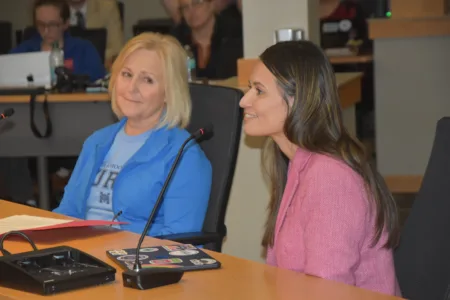
Attendance Coordinator Elizabeth Harris-Medina explored aspects of the Marshalltown Community School District (MCSD) attendance data to get a better understanding of what might be happening.
Harris-Medina told the school board during the regular Monday meeting they have a lot of raw data to find trends and indicators. Attendance during this school year is especially important, because the Iowa Department of Education now has two different count dates, rather than one.
"Hisotrically Oct. 1 was our count date and determined how much funding we got per pupil," she said. "Now we have a second count date of Jan. 15. . . . So, we're paying closer attention to our students that are enrolled both in the fall and in the winter."
Initially, Harris-Medina said the Jan. 15 date made people nervous, because many of the MCSD students travel abroad to visit family during that time. During meetings with families who go on extended leave, it was stressed for the student to return by Jan. 15.
Some research which Harris-Medina found interesting is an increasing rate of parents who doubt the value of daily school attendance.
"As we see our world changing, even with AI, parents know students can access virtual learning or just learn in other ways," she said. "We still know the number one indicator of a student being successful is being present and participating, because they're also learning social emotional skills."
Research has shown that the perception of parents have changed since the COVID-19 pandemic in 2020, as well.
"After the pandemic, we saw an increase of chronic absenteeism,” Harris-Medina said. ". . . One of the things we see is [parents] don't realize how many times a student is absent."
As a parent of toddlers, she said her children get sick about once a month, and illness is an excused absence. However, if she looks at her child's attendance record for the school year, she will see more than initially perceived.
"That's what we're seeing – parents justify the absences, but they just don't have a sense of how many [days] a student is gone," Harris-Medina said. "That's why I started sending those monthly messages to parents whose children have accrued a number of absences. We're talking about excused and unexcused."
Some parents have confusion about when not to send their child to school.
"COVID was a very confusing time for everyone and there were a lot of health regulations that kept changing, people didn't know if there was a runny nose, do they go. People are confused, especially in mental health," she said. "In Lenihan, Miller and high school, we see students with anxiety or needing a mental health break. I hear in the parent’s voice the internal struggle of is it better to give the kid a break or send them to school. . . We see that a lot of parents want to do their best, but sometimes they don't know."
District Lead Nurse Stacey Tool-Crawford said even though the pandemic was six years ago, some parents are still highly cautious. One way to overcome that is through the district having updated Health and Human Services criteria and communicating those to the parents.
Harris-Medina said another health-related barrier is limited medical access as students might need to travel to Des Moines or Ames to see a physician.
"Just the scarcity in health care, the lack of insurance," she said.
Tool-Crawford added that there is a concern with the rate of lack of insurance, but added the district has programs to help support those students. However, district personnel need to know that is a barrier.
"That is . . . why communication is definitely important," she said. "We need to know so we can help them align with different services to help them with whatever their illness or issue is."
Tool-Crawfod said school nurses try to identify health barriers. If a regularly-absent student is struggling with a chronic illness, there could be outside resources which might help.
"Many of our students who have a chronic illness, such as asthma [or] diabetes, any type of chronic illness, we have health plans in place for them," she said. "We want families to know they can be comfortable in sending their kids to school because we have plans in place, because that is a fear of parents."
Regarding mental health absences, Tool-Crawford said there has been an increase of anxiety and depression in grades five and higher. She added the elementary grades are not immune, but sometimes the symptoms are not as clear. It could be an upset stomach or headache but further evaluation shows it is mental health-related.
"A lot of the unexcused absences, we will later find out they are associated with an anxiety issue and sometimes families are embarrassed or they don't want to report to the school," Tool-Crawfod said.
The data available for the 2025-26 school year indicated illness was the top reason amongst pre-kindergarten through fourth grade MCSD students, with more than 5,000 total absences. For grades fifth through eighth, most of the absences were unexcused, numbering at almost 6,000, followed by illness with more than 5,000 and it shows how absences grow with higher grade levels.
At Marshalltown High School, most of the absences – more than 150,000 – were unexcused. Illness was a distant second at around 30,000 absences. Harris-Medina said there are more unexcused absences because students can miss different classes during the day.
Board President Sean Heitmann asked if his high school child misses first period, but is present for second period and misses third period, if that is considered two absences. Harris-Medina told him they only count according to date.
Contact Lana Bradstream at 641-753-6611 ext. 210 or lbradstream@timesrepublican.com.