The 2025 West Marshall bond referendum — through my lens pt. 2
In some instances, individual-owed state income tax may not be paid annually, so any time money is borrowed or the sale of bonds are on the table, qualified collateral assets/property are binding.
Currently, West Marshall has roughly $3,000,000 in capital project savings not committed to a specific project. Potential projects are reviewed annually to determine which will be funded, put on hold, or left alone in hopes of a larger scale project. These funds could also be used for updating building code compliance or safety improvements for educational facilities.
“BUT, I know my property taxes are used for other areas than just capital projects.”
Yes, property tax is generated for 2 remaining funds at West Marshall, also with restricted usage.
1. General Fund
The Unified Levy generates funds per the formula in addition to the State Supplemental Aid (SSA) generated by state funds which is the makeup of the General Fund. The General Fund is used for student instruction, staff salaries, and all daily operations. If you recall the previously mentioned 325 school districts, you will also recognize the funding formula balancing the revenue for all schools-as a so-called fair distribution-when student enrollment, property valuations, and commercial industry are all different.
The general funding formula dictates what every local public school board must adhere to: we cannot locally generate or tax patrons for more money just because; we cannot use it for capital project builds (even though we have approximately $5,000,000 in savings); we can, however, choose not to spend those funds on the above mentioned general fund expenses.
The one exemption boards can use general funds for is to help buy down an existing annual tax levy, as we have done with our 2010 middle school tax levy. If our district were to pass this bond referendum, the board would have the option to annually set the budget and recommend a potential annual buy down of the overall levy if financial indicators are met. The property tax dollars we receive for general fund usage are not up for negotiation as set by law, and as restricted in their use.
2. Management Fund
This fund is a restricted fund to cover specific costs that are not part of regular instruction including:
• Purchasing Liability Insurance: The need to increase our liability insurance coverage has become a patron’s true indicator for our current valued assets so we are not underfunded should a catastrophic event occur. For example, if the 2020 derecho had destroyed our entire elementary campus, we would have found that $14,000,000 would not have rebuilt the campus. That full campus estimated rebuild cost is $28,000,000- $30,000,000. Note that our $14,000,000 bond referendum excludes a new gym, lunchroom, library/media center, art room, and music room.
• Early Retirement Benefits: The management funds can offer an early retirement to employees once they turn 55 until they qualify for social-security. This allows a small benefit to support a portion of health insurance and no longer pay for a potential $90,000 salary from the general fund along with an additional 17% in benefits. On average, a retiree costs the district $5,000 per year until they hit normal retirement age of 62. If the district hires a new teacher to replace the early retiree at $50,000 per year, the difference is approximately $275,000 in savings. Is it worth it? To protect the best usage of property tax dollars, taking into account every instructional dollar for students spent from the general-fund, this has been a continued practice.
Part Three: The reality of it all
In the past 5 years we have learned school infrastructure costs are putting many districts, like West Marshall, in jeopardy of being able to simply maintain, renovate, or build new infrastructure because the cost of materials, equipment, and labor have drastically increased. Labor alone now costs more than materials, equipment, and supplies needed for nearly every job bid since 2020. Over the past 10 years, we have faced a 4-6% average increase of cost for capital projects, equipment, labor, etc.
Spending a dollar ONE time for a LONG time is key!
In 2017, we evaluated our 50-year plan with the mindset of current and long-term goals. We held public meetings in three towns and also welcomed input from district-wide surveys seeking stakeholder input over the course of the next four years. Through this process, we prioritized needs and began completing needed repairs, finding general improvement costs to be much more than what is generated in an average year’s capital project budget.
For example, the buildings we operate come with surprises, such as:
1. In our K-3 building we have found two layers of carpet on top of tile flooring, with both the tile and tile glue containing asbestos. If we alter or damage the tile, we must abate the product which comes with astronomical costs to 1) monitor the abatement; 2) abate the asbestos, and 3) complete final verification of test results in order to occupy the classroom safely.
2. In our K-3 building, 2 years ago an ice-dam leaked gallons of water into a classroom, thus requiring a full gut and remodel, which included the removal of horse hair-soaked plaster and lathe, fibrous containing panel boards used for insulation, blown-in insulation, 9×9 tile, and mastic which all tested as fibrous. Thankfully, insurance covered the $22,000 price tag after paying the $5,000 deductible. This gave us an approximate cost to gut and remodel the 13 remaining K-3 classrooms.
We must also consider construction costs which are driven by additional regulations for public schools. Architectural and engineering fees, mobilization fees, material storage fees, bidding document fees, etc., are a substantial cost for single projects in a “pay-as-you-go” scenario. In most cases when attempting to renovate or repair buildings from the 1920’s through the 1950’s, and even the 1960’s, disrupted materials have encapsulated asbestos.
As a public entity serving students ages preschool to 12th grade, certain safety compliance standards are required as well as specific building codes. This compliance CANNOT be overlooked and often these standards are something the general public may not even be aware of.
Safety compliance standards must account for testing, monitoring, and remediation on an annual basis such as asbestos, lead-based paint, and a new carbon-dioxide law/regulation required of public schools in Iowa starting in 2027.
School districts must ensure the air quality is in check through required ongoing testing. Soon we will know more about the following questions:
• What happens if carbon-dioxide is found and remediation needs to be performed?
• Which buildings do we have a greater concern?
• What will be the cost to remediate structures with old tunnel systems that are notorious for CO2 permeation or to overhaul an HVAC in order to comply with fresh-air regulations?
My final thoughts
I am not a stranger to an upbringing where “fix and repair got you by.” “New” was something we bought from others who were done using and you spent countless hours and dollars repairing or fixing. I do not take anything for granted and understand seeking money is more for the preservation of not spending money on something a second time. Regardless, the financial stewardship of my position is the one thing keeping me up at night when we annually prioritize infrastructure updates, repairs, and the cost of safety regulation upgrades.
Hard work is the foundation of what we continue to capitalize on within our West Marshall School System, from programming, student services, educational pathways, and the simple practice of “if it was easy, everyone would do it”. I have been honored to serve the district and patrons who have shaped my upbringing allowing me to learn from each of you as neighbors, teachers, employers, and colleagues.
This election and your votes will be the true answer of the test to know if what we do on a daily basis is supported. The question is and forever will be…what is best for kids?
Your choice is for us to either make due and repair for us to continue to “get by”; or, for us to build new, allowing generations of students and educators to be progressive with academic programs and the ever-changing regulations of a public-education system.
I am and forever will be a Trojan!
——-
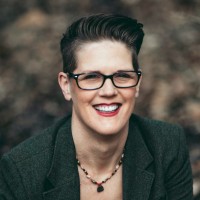
Jacy Large is the Superintendent/Elementary Principal of the West Marshall Community School District.