
Chasing likes, not scholarship, elevates ‘6–7’ to Word of the Year
What happens when dictionaries chase viral trends over measured consideration
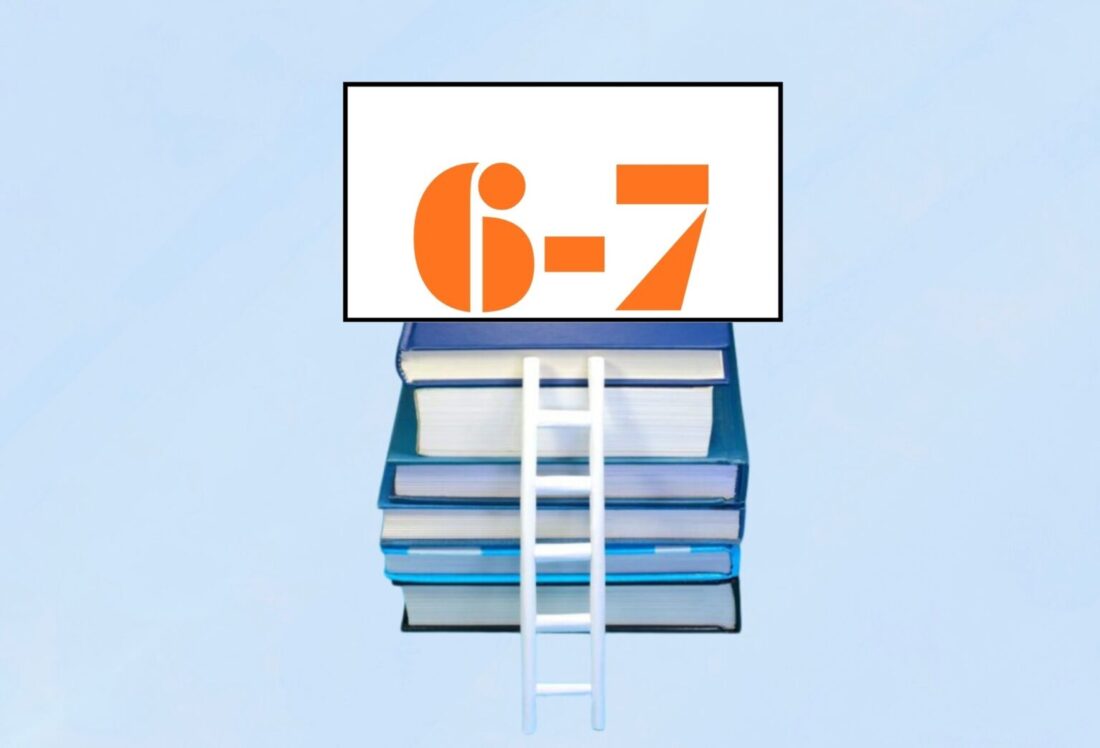
People made a terrible fuss when Dictionary.com named “6-7” its word of the year.
Brain rot, people said.
Language has gone to hell, others decried.
Our children are illiterate, still more wailed.
(My gripe is that “6-7” feels more like an idiom than a single word.)
But “6-7” does not bother me.
Words of the year are a cheap way for word-centered businesses to attract attention at the end of the year, when what remains of the news media struggles to fill websites and broadcasts.
The monotonous repetition of “6-7” by middle-school children is annoying but hardly alarming.
The “6-7” phenomenon is to language fads in the 2020s what “groovy” and “far out” were to the 1970s.
Everything was “totally awesome” and “gnarly” in the 1980s.
The Gen X war cry was “whatever” in the 1990s. Millennials said “literally” when they meant “figuratively,” and “low key” had nothing to do with a musical scale in the 2000s and 2010s.
No, I bear no grudge against “6-7.” In a world filled with nonsense, making something as meaningless as “6-7” into a generational slogan almost feels like sly self-satire.
What caught my attention was the amount of attention paid to Dictionary.com’s Word of the Year.
Word of the Year hype once belonged almost exclusively to Merriam-Webster and Oxford, the stalwarts of the printed age.
Oxford, first published in 1884, serves as the English — by which I mean British — dictionary of record for academics and legal professionals. It emphasizes how language is used and what that usage reveals about society. Oxford remains a global authority in scholarly linguistics.
Merriam-Webster represents the union of publishing magnates George and Charles Merriam with the work of Noah Webster, who published the first American dictionary in 1828.
The Merriam brothers acquired the rights to update Webster’s work, and their editions became the standard for American English for nearly two centuries.
Webster’s dictionaries are conservative and explanatory, built around clarity and correctness. “Webster’s New World College Dictionary” is the official dictionary of the Associated Press, one of the last reliable legacy news organizations.
Dictionary.com, however, was born in the digital age.
Early internet entrepreneurs Brian Kariger and Daniel Fierro co-founded Lexico Publishing in the mid-1990s. They wanted to move reference materials online, making them faster to search and easier to use.
They launched Dictionary.com, Thesaurus.com, and Reference.com in 1995.
Author W. Joseph Campbell describes 1995 as “the year the future began.” Microsoft released Internet Explorer. Netscape Navigator went public. Amazon and eBay launched. Sun Microsystems’ Java transformed web pages from static text into interactive platforms.
Newspapers, magazines, and television networks rushed online — and fatally mismanaged the digital transition.
Dictionary.com retained some traditions of print reference. It employed lexicographers. But its mission differed.
Merriam-Webster and Oxford document sustained usage over time. They value stability, evidence, and continuity. Words earn their place.
Dictionary.com emphasizes immediacy. It tracks search data, usage spikes, cultural relevance, and online language patterns. It adds slang quickly and updates definitions as meanings shift.
Defenders of traditional lexicography — including many former copy editors from now-defunct print publications — dismiss Dictionary.com the way they dismiss Wikipedia.
Popularity rules the internet, not research or methodology.
The thousands of stories mocking Dictionary.com’s selection of “6-7” miss the point.
It does not matter whether “6-7” is stupid. What matters is that legacy media and digital outlets alike amplified a story generated by Dictionary.com.
This is not about slang.
It is about who defines words and their meaning.
Oxford and Merriam-Webster also announced their own words of the year — “rage bait” and “slop,” respectively, but they haven’t received the same attention.
Dictionary.com’s focus on immediacy reflects a culture that values speed over context.
That bothers me.
The values of Merriam-Webster and Oxford — and perhaps the value of words themselves — trade poorly in a world where the dominant currency is not clarity, but likes and shares.
We do not need more once-essential institutions chasing engagement.
I can forgive children for experimenting with language. They are still learning who they are; new vernacular is part of that process.
Dictionaries — and the people who write them — should have a higher calling.
——-
Daniel P. Finney wrote for newspapers for 27 years before being laid off in 2020. He teaches middle school English now.
Columnists
There are times to put down cellphones. Lots of times
The year opened with what could be one of the most horrifying videos of 2026. At 1:30 a.m. in a basement bar at a ...

Chasing likes, not scholarship, elevates ‘6–7’ to Word of the Year
Police video case is wrapped in important legal principles
It was Christmas Eve. The gifts were laid beneath the Christmas tree at the home of Merlin and Nelda Powers in ...
Forgetting those things which are behind
The year 2025 passed pretty quickly, almost in the blink of an eye. It began with tragedy as soon as January hit, ...
It’s time to take care of yourself
The holidays are over. Are you feeling worn out and stretched thin? Well, it’s time to make sure you are looking ...
