
From planning to pavement: Understanding Marshalltown’s street projects
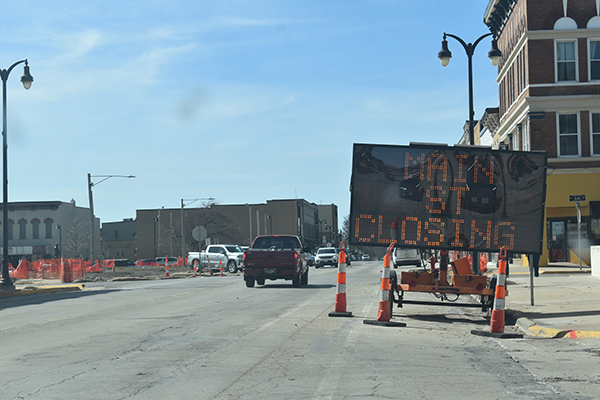
If there’s one topic I hear about the most from residents, it’s streets – and for good reason. Streets are something we all use every day. When they’re in poor condition, you feel it every time you drive, bike, or walk through our community.
Here’s where we are right now, what you can expect this year, and how we are working to improve our streets moving forward.
This year, the City is preparing to move forward with approximately $2.5 million in street rehabilitation work focused on improving existing roads through a variety of methods, including milling and overlaying pavement. This is on top of the reconstruction streetscape work continuing downtown and the $500,000 in concrete patching and $400,000 in preservation street work started last Fall and wrapping up this Spring.
These projects are designed to extend the life of our streets, addressing surface issues before they become full reconstruction projects, which are significantly more expensive.
Right now, city staff and our engineering partner are finalizing which streets will be included in the street rehabilitation project. That process involves reviewing pavement conditions, coordinating with other planned construction, and evaluating where rehabilitation is feasible.
Not every street that looks bad on the surface can be rehabilitated. In some cases, underlying conditions mean a full rebuild is the only option — and those streets require a different level of investment and planning.
City staff initially identified more potential street segments than can be completed within the project budget. From there, we’ve been narrowing the list based on field testing, engineering analysis, and risk assessment.
For example, when crews core into the pavement, we sometimes find that the concrete beneath the asphalt has deteriorated. In those cases, the concrete won’t hold up to construction to allow a mill and overlay — and moving forward without a partial or full reconstruction plan would be a poor use of taxpayer dollars.
City Council recently approved the 2026 street rehabilitation project with the following timeline targets:
• Final design work in April
• Bid Process in May
• Award Construction Contract June 8 with construction to follow
At the same time, there are factors we can’t fully control — like contractor availability, material supply, willingness for trucking asphalt, and weather. These realities affect every city in Iowa, especially communities without local asphalt plants.
Not all street improvements are the same. Some streets can be improved with a mill and overlay. Others require deeper structural repairs. And some have reached the point where only full reconstruction will solve the problem.
That’s why our approach isn’t just about fixing the worst streets first — it’s about making the right investment at the right time. Improving a street that is in “fair” condition today can sometimes prevent it from becoming a much more expensive project tomorrow. Investing in preservation or maintenance work may extend the length of time a street stays in good or fair condition another 5+ years.
In addition to this year’s construction work, the City is investing in a Pavement Management Study to guide future decisions. This effort will use statewide data and specialized software to:
• Model different funding scenarios
• Develop a 5-year plan for street improvements
• Help prioritize projects based on long-term outcomes–not just short-term fixes
This is about adding a layer of proactive and strategic management of our road assets in addition to reactive repairs.
I know residents want to see progress — and you should. You will see construction this year. And you will see a clearer plan for how we address streets not just this year, but in the years ahead.
——-
Carol Webb is the Marshalltown city administrator.
Columnists
From planning to pavement: Understanding Marshalltown’s street projects
Are we safe anymore?
It’s time to ask some serious questions. As spring travel ramps up, a record 171 million Americans are expected ...
The power of biliteracy for our Bobcats
What does it mean to graduate not only bilingual, but biliterate? In today’s world, that distinction opens doors ...
Always money for war and oppression
Last summer, all six members of Iowa’s congressional delegation voted for President Trump’s so-called One Big ...
Lawler Easter Egg Hunt
It’s been going on for 28 years, the Lawler Easter Egg Hunt. It rivals the City of Mt. Pleasant’s Easter Egg ...
The MCO Medicaid mess — Why Iowans shouldn’t have to clean it up
There’s a saying in business: “Where there’s mystery, there’s margin,” meaning complexity, confusion, and ...