
Trending
When District Judge Adria Kester studied at the Drake University Law School, she must have opted out of the "Law of Holes" coursework.
I have written before about the first Law of Holes, in connection with Davenport city officials and their penchant for hiding facts from taxpayers. The Law of Holes is common-sense advice that says when you are in a hole and want to get out, the best thing to do is put down the shovel and stop digging.
Judge Kester found herself in a hole -- actually, a Boone County highway ditch -- on the night of November 4, 2025. She ended up there in her GMC Canyon Denali after an evening of drinking too much.
The wine cooler sheriff's deputies found inside the travel tumbler in the center console held only told part of the story.
It was on November 4, 2025, that the Iowa Supreme Court took its "Court on the Road" program to Jefferson to hear oral arguments at Greene County High School. The county is one of 22 in the Second Judicial District, where Kester was the chief judge.
Kester reportedly attended some but not all events surrounding the Jefferson visit by the seven Supreme Court justices. Less than an hour after they concluded the court session and a juice-and-cookie reception hosted by the Greene County Bar Association, Kester held her own "court on the road" event as she headed home to adjoining Boone County.
Motorists alerted the Boone County sheriff that a vehicle was traveling slowly eastbound in the westbound lanes of U.S. Highway 30. The driver appeared slumped over the steering wheel. When deputies arrived, the vehicle was in the median and Kester was inside.
Deputies quickly realized this woman who could barely stand unassisted was a local judge. She was taken to the Boone hospital to test her blood for alcohol. She then was booked at the jail for first-offense drunken driving.
A month later, Kester pleaded guilty. She was fined $625 and received a suspended one-year jail sentence. She also was ordered to complete a drunken-driver offender course.
While that chapter of the saga ended, Kester soon learned firsthand about the Law of Holes, the part about needing to stop digging if you are in a hole.
When journalists requested public access to Boone County sheriff's body camera video and other arrest information, Kester sued the sheriff seeking to prevent him from releasing the records. Her civil lawsuit also named the Boone County clerk of court and asked for an order keeping the filings in her public-records lawsuit sealed.
Kester claimed this secrecy was needed because no “government accountability gap” existed. She said she would have to relive the "trauma" of her arrest if access were granted.
Soon after she sued the sheriff and court clerk, I wrote commentary about the incongruity of her request for preferential treatment that few other criminal defendants receive. I discussed the important roles played by public records and court access laws in keeping government officials like Kester accountable.
About the same time, a Polk County judge ruled Kester's request to seal judicial records was unsupportable given Iowa's history of open courts.
Last week, as her case moved toward a court hearing on August 6, she dropped her lawsuit. Kester put down her shovel and stopped digging.
After ending her lawsuit, the body camera video of her arrest became public. That has opened the door for Kester to move on to second and third parts of the Law of Holes, which are:
o "Even when you stop digging, you are still in a hole," and
o "The only way out of a hole is to climb."
The second law certainly applies to Kester. She finds herself in a hole professionally. Since her arrest, she has been on paid administrative leave and continues to receive her annual salary of $172,000.
But the State Judicial Qualifications Commission is investigating her actions. Ultimately, the commission will make a recommendation to the Supreme Court, and the same seven justices who were in Jefferson on the night of November 4 will have the final say on her future as a judge.
Perhaps realizing that doing nothing would not help her cause, Kester has started the climb. Along with dropping her lawsuit, she issued a thoughtful statement in which she shared her embarrassment and anguish and apologized.
Kester wrote:
"I understand that wearing a judicial robe means more than applying the law correctly -- it means earning the public's trust every day. My actions that night fell short of that responsibility, and I am deeply sorry to the people I served, to my colleagues, and to everyone who expected better judgment from someone entrusted with that office.
"Public trust matters, and accountability matters, especially for judges."
Kester also reflected on what she learned from the experience and on people who face similarly life-altering mistakes.
"Throughout my career, I worked with people who believed the worst thing they had ever done would define the rest of their lives," she wrote. "I often ended those hearings with the same message: This is one chapter in your book. It is not the end of your story. Turn the page. Start a new one."
Months after her arrest, Kesler said someone she knew reached out with a question that changed her thinking.
"They asked me a question I wasn't expecting. 'Why aren't you practicing what you preached?' " Kester wrote. "And I realized that person was absolutely right. ... Admitting that I needed help was one of the hardest -- and most important -- lessons.
"I cannot rewrite the chapter that brought me here. I am turning the page and starting a new one."
While Kester's statement would have been more powerful had she issued it when she pleaded guilty, it is a start. Kester dug a mighty deep hole in front of two important audiences.
First, the Supreme Court justices will have to decide whether Kester can keep her job. Second, the communities she serves and the taxpayers still paying her salary will have to decide if she remains worthy of the public trust.
And that may present the harshest reality of the Law of Holes: When you dig too deep, the climb back is long and steep.
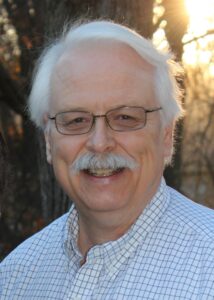
Randy Evans is the executive director of the Iowa Freedom of Information Council. He can be reached at DMRevans2810@gmail.com.