
Data centers?
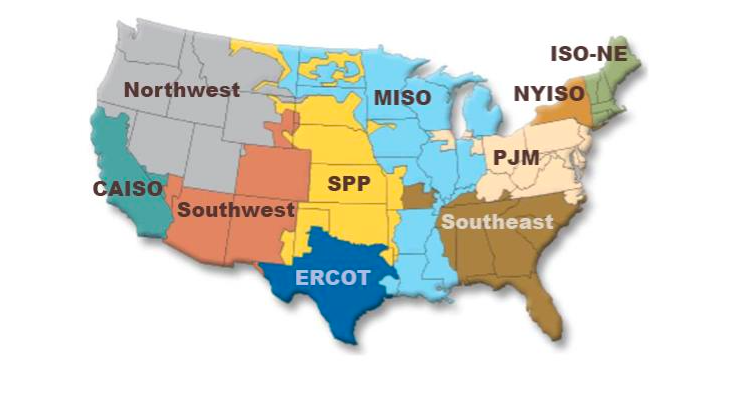
CONTRIBUTED PHOTO The MISO network is shown in this image covering states from Minnesota to Louisiana.
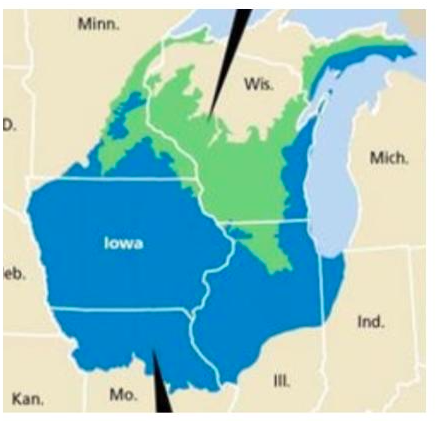
The Jordan Aquifer, officially known as the Cambrian-Ordovician aquifer system, covers most of Iowa and parts of seven other states.
CONTRIBUTED PHOTO The MISO network is shown in this image covering states from Minnesota to Louisiana.
The Jordan Aquifer, officially known as the Cambrian-Ordovician aquifer system, covers most of Iowa and parts of seven other states.
Trending
The concerns that I have heard concerning data centers are: power, water, noise, non-local ownership, and jobs.
Power: Most of Marshalltown receives power from Alliant Energy, and a few get their power from Consumers Energy. Iowa has many other power generation facilities. All of these power generation facilities are members of a larger power grid network - Midcontinent Independent System Operators (MISO). The MISO network is shown in the above image covering states from Minnesota to Louisiana.
MISO operators supply power to the network. Connect a datacenter to the grid inside the MSIO network and everyone shares in the costs. Data centers that produce their own power can actually add to the strength of the network.
Water: Marshalltown draws its water from the Mississippian aquifer. This aquifer is part of the larger Jordan Aquifer. The official name is the Cambrian-Ordovician aquifer system. This aquifer system covers most of Iowa and parts of seven other states. See the image above.
If you build a datacenter in any portion of this aquifer system it shares the water resources of whole area. In addition, Marshalltown Water Works sells the Mississippian water to Iowa Rural Water Association (IRWA) which is a network of water producers. Any development built in this 7-state aquifer system affects all of us.
Noise: The City of Marshalltown has an established noise ordinance (Chapter 134). All Industrial/commercial developments within the city limits must abide by these ordinances today. I have sampled the noise output of the major industrial/commercial developments within the city limits with a non-calibrated phone app. Everyone seems to being living within the current zoning ordinances. Any new industrial/commercial development, such as a data center, must abide by these ordinances as well. For some reference the noise level inside of your car while driving, with the air and radio off, is about 75db based on my limited testing. A typical refrigerator is around 45db.
Non-local ownership: This is an interesting complaint. Of the major industrial/commercial/institutional operations inside the city limits, I can only think of one that is a locally-owned where the owners live in Marshalltown. This is the state of economic development throughout the country. In addition, to my knowledge, no one has ever asked these companies how they will decommission their operation should they fail, nor will they be asked to provide a bond for decommissioning when they decide to expand.
Jobs: Is adding just one job a plus for the community? Yes, it is. Is six to 10 better than one. Yes, it is. In addition to those permanent jobs, the construction jobs increase local business income, hotel motel tax, and local option sales tax. Workers building the current power plant added approximately $1M in local option sales tax revenue to the community. This revenue was used in part to fund community art. Datacenter projects could be in construction for several years once they start.
Recently a group in Ames fighting against a small data center which had been proposed by LightEdge has succeeded in stopping that development. News stories report that the company will now build the same facility in Boone instead of Ames. Same power grid (MISO). Same aquifer (Jordan). Boone does not have a moratorium and will reap the property tax revenue increase for years to come as well as the local option sales tax and hotel-motel tax revenue increases during the construction process. Ames will not. It is just that simple.
Today we have a once in a lifetime opportunity. Marshalltown is not an island. Other communities are moving forward. You have a choice now – today. You must decide. Either allow development that will increase your City's tax revenue, or increase your own local property tax levy rate. I hope the moratorium ends early. It is an unforced error on the playing field of economic development.
Mark Eaton is a member of the city of Marshalltown’s Board of Adjustment.