
Trending
I hate mushrooms. Not that I hate their existence, but rather I hate consuming them - their texture, their smell, their flavor...even just the way they look on my food. I wish this were not true. I love the idea of foraging for wild edibles, but sadly eating a mushroom is about as appealing to me as eating a slug.
Growing up, my Mom would try to hide them in our food by chopping them up finely. "You won't even taste them," she would say. "Then WHY even bother adding them to the food in the first place?" I would respond.
Once, when I was an early teen, I awoke on a bright May morning and wandered into the kitchen to find my Dad frying what I thought were crappie filets in a cast iron pan. This was a fairly normal breakfast in the household of a wildlife biologist who loved fishing, hunting, and all things outdoors. "Cooking some fish?" I asked, rubbing the sleep out of my eyes as I skirted past. "Uh...Yep!" my Dad replied after the slightest hesitation, and what I would later realize was a hidden smirk on his face. He served me up some. Being a groggy and aloof teenager, I took a few mindless bites while perusing the Sports section of the Des Moines Register. And then it dawned on me. "What kind of fish IS this?!" I demanded. He began to laugh: "Not fish. Mushrooms."
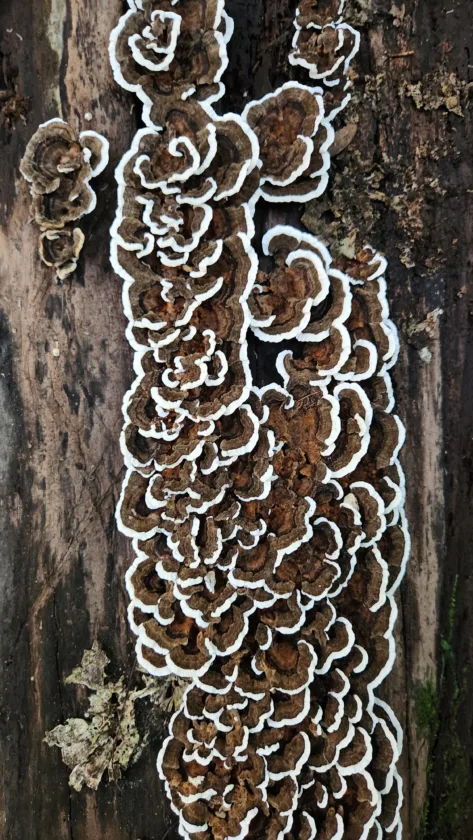
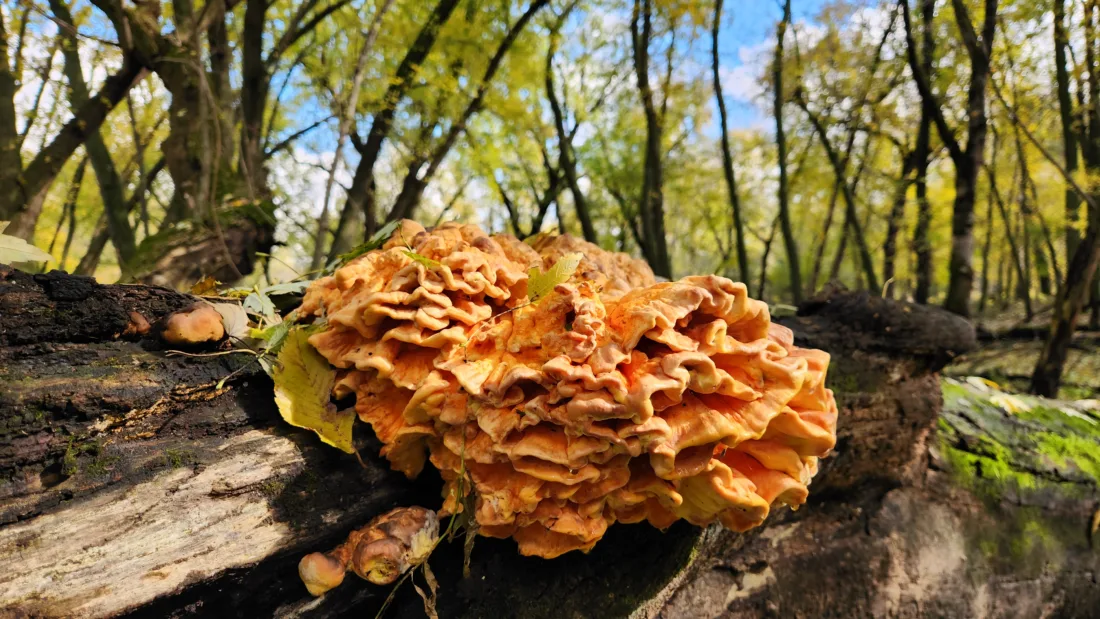
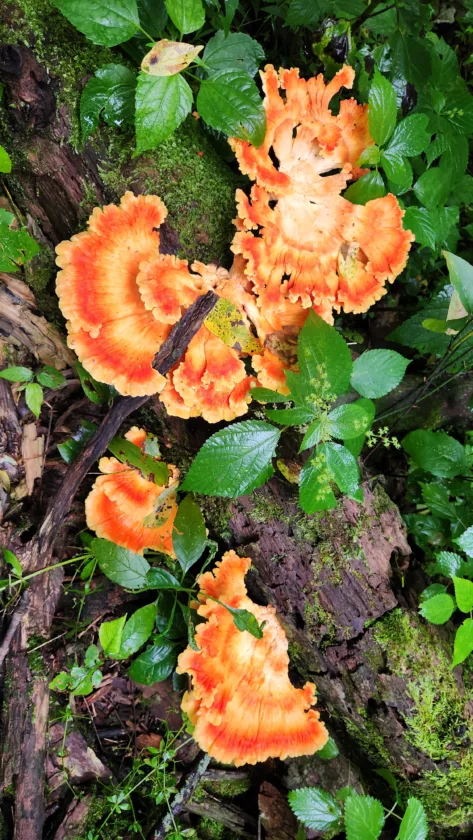
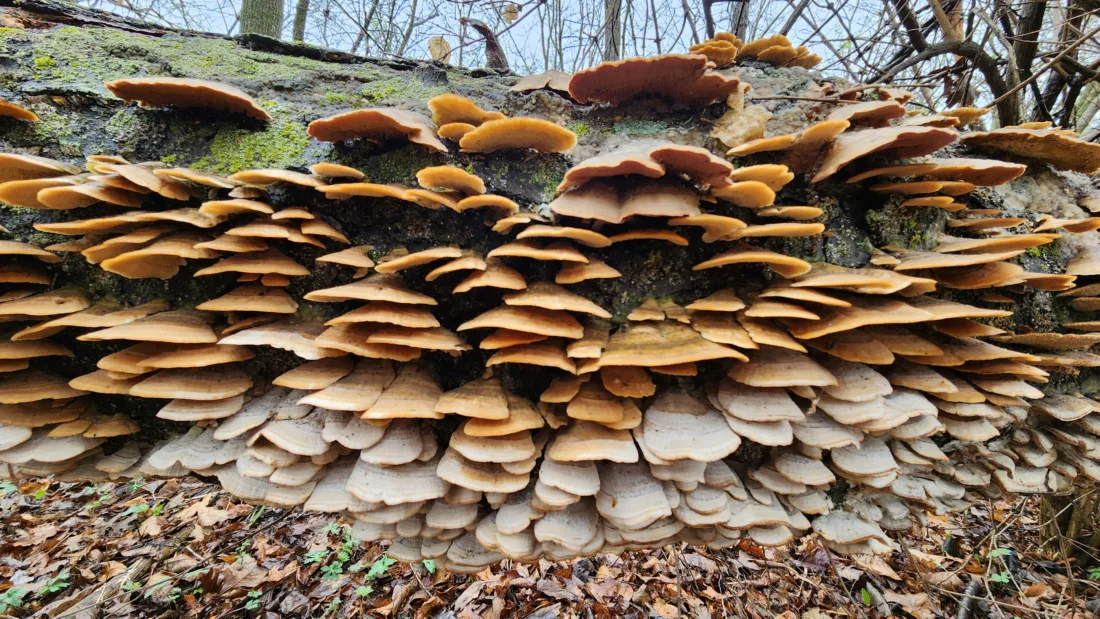
So I don't like to eat mushrooms, but I am a person who loves being in the woods and appreciates the beauty of nature in all its forms. And if you didn't already know that September is "National Mushroom Month" from a culinary point of view, it's hard to spend any time outside right now and not notice the amazing array of fungal forms sprouting up in our local woodlands.
As the crescendo of late summer heat gives way to cooler fall temperatures, and with the help of abundant rain we have been having lately, the fall mushroom season has arrived with as much color and pizazz as I can ever remember seeing. I am not a mycologist, so I will not be attempting to teach readers to identify certain species of mushrooms. And I most certainly cannot suggest which ones are the best to eat or which ones to avoid. For that, folks are wise to visit ISU Extension's "Mushroom Foraging in Iowa" page, seek learning opportunities with the Prairie States Mushroom Club (www.iowamushroom.org), and take the oft-given advice of spending time in the woods with trusted and knowledgeable foragers to be safe.
Besides tasting good (to some people, I guess) and looking pretty, mushrooms - or more accurately, fungi – are pretty darn important to a forest ecosystem and life on planet Earth in general. They play a vital role in the decomposition of dead wood, leaves, sticks, and other organic matter - particularly, lignin, the tough, mortar-like substance gluing the cellulosic building blocks of wood together. This enables nutrient cycling for new plants and trees, keeping natural forest regeneration intact.
Too often, people think of fungi, rot, and decay as villainous organisms that bring death to forests. And in some cases, for example Oak Wilt or Dutch Elm Disease, they can be primary tree killers. But the majority of fungi are beneficial saprophytic or mycorrhizal species. The former are nature's recyclers/garbage men as described above, breaking down dead material and returning it to the soil.
The latter (mycorrhizae, meaning "fungus-root") are formed when certain species of fungi attach to the ends of tree roots in a mutually symbiotic relationship. From the tree, the fungus derives necessary sugars for life. From the fungus, which forms a vast mycelial network that expands the range of the trees' normal rooting system exponentially, the tree derives water and nutrients. It's believed that 80 to 90% of all plant species globally depend on mycorrhizal relationships. The "largest" terrestrial organism on Earth by area is believed to be a massive Armillaria ostoyae fungal network in Oregon's Blue Mountains. Dubbed the "Humongous fungus," it spans 4 square miles or 2,300 acres and is estimated to be thousands of years old.
The fun doesn't stop with ecological services - mushrooms are just plain cool to look at, too. They come in all kinds of shapes and forms - capped boletes (with and without gills), bracket or shelf fungi, coral fungi, gelatinous, clubs-and-spindles, cups, and the all-time classic red caps with white spots (Amanita muscaria), which we '80's and '90's kid recognize as powering up Nintendo's Super Mario and also housed the Smurfs. And what kid doesn't love finding a gigantic puffball, aka nature's Nerf™ ball?
Some mushrooms even exhibit bioluminescence, glowing in the dark to attract insects to help disperse their spores. "Jack-o-lantern" mushrooms can be found in Iowa and appear plain orange in daylight, but emit a faint green glow from beneath their caps at night. Another common species found across Iowa, Armillaria mellea (honey mushrooms) also sometimes glow at night from their black shoestring-like rhizomorphs found growing up the base of dead/rotting trees. The eerie, soft green light from bioluminescent mushrooms is often called "foxfire" or "fairy fire."
In the spirit of the fast-approaching Zombie Run 5k event to be held on October 10th at the Grimes Farm Nature Center, it's worth ending this article with a nod to nature's most terrifying fungus species: the "Zombie-Ant Fungus" (Ophiocordyceps unilateralis).
This species, referred to scientifically as a type of Cordyceps, is a parasitic fungus that infects carpenter ants in primarily tropical rainforest regions of the world. After its sticky spores fall and land on its victim, the spores break through the ant's skeleton using enzymes and pressure. Infection of the body follows, with the fungus feeding on soft tissue and spreading internally. For reasons unclear, the fungus seems to take over the brain and changes the ant's behavior, causing it to leave its nest, climb a plant about ten inches high above the colony, and clamp its jaws tightly onto a plant leaf or grass blade. After the ant is dead, a long stalk grows out of the ant's head, ruptures, and releases new spores down onto the forest floor and other ants below. The phenomenon inspired a video game and fictional TV series called "The Last of Us," in which humans are infected. Note: Cordyceps cannot infect humans.
Each spring, countless Iowans from all walks of life head to the woods in search of the ever-popular Morel mushroom hidden among the wildflowers for a few weeks out of the year. Many will not return to the forest until the arrival of fall leaf color season. But if you've never taken the time to get down on the ground and get up close and personal with some of our most unique and colorful fall mushrooms, you really should. Whether to harvest for eating, to observe and take in their incredible beauty, or to ponder and reflect on the sheer complexity of the biophysical world around us, I promise it will be worth your time. Unless you wind up getting infected by a brain-sucking, parasitic zombie death fungus that makes you grow an antenna and kill your fellow man. Then, probably not worth it.
I hope to see you all at this year's Zombie Run!
Joe Herring has worked as a professional forester and natural resources manager in central Iowa for 20 years.