
US government works to ‘cocoon’ old nuclear reactors
Trending
SPOKANE, Wash. -- Costs to clean up a massive nuclear weapons complex in Washington state are usually expressed in the hundreds of billions of dollars and involve decades of work.
But one project on the Hanford Nuclear Reservation is progressing at a much lower price.
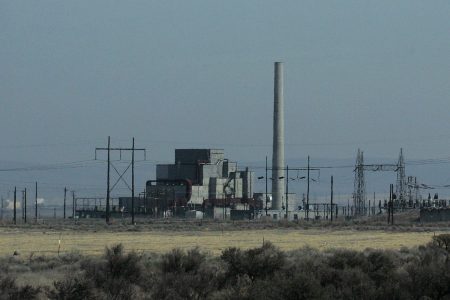
The federal government is moving forward with the "cocooning" of eight plutonium production reactors at Hanford that will place them in a state of long-term storage to allow radiation inside to dissipate over a period of decades, until they can be dismantled and buried.
"It's relatively non-expensive," Mark French, a manager for the U.S. Department of Energy, said of cocooning. "The cost of trying to dismantle the reactor and demolish the reactor core would be extremely expensive and put workers at risk."
The federal government built nine nuclear reactors at Hanford to make plutonium for atomic bombs during World War II and the Cold War. The site along the Columbia River contains America's largest quantity of radioactive waste.
The reactors are now shut down and sit like cement fortresses near the southeastern Washington city of Richland. Six have already been cocooned for long-term storage, and two more are headed in that direction. The ninth reactor was turned into a museum as part of the Manhattan Project National Historical Park.
While World War II ended in 1945 and the Cold War ended in 1989, the United States is still paying billions of dollars per year for the disposal of the nuclear waste produced by the atomic weapons that played a big role in ending those conflicts. The biggest expense is dealing with a massive volume of liquid wastes left over from the production of plutonium, a key ingredient in nuclear weapons.
While the liquid wastes stored in 177 underground tanks will take decades of work and hundreds of billions of dollars to clean, efforts to secure the nine plutonium reactors are much closer to completion.
The last two reactors, shut down in 1970 and 1971, are about to enter the cocooning stage, when they are covered with steel and cement to prevent radioactivity from escaping into the environment, French said.
The cocoons are expected to last about 75 years, by which time the radioactivity inside will have dramatically decreased and there presumably will be a plan for final disposition of the remaining parts, French said.
Every five years, workers enter the reactor building to make sure there are no leaks or rodent or bird infestations, he said.