
California OKs ‘baby bonds’ to help combat child poverty
Trending
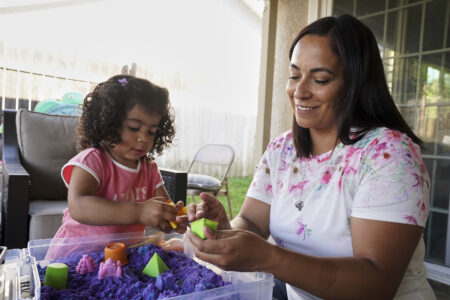
SACRAMENTO, Calif. -- Parenting -- that long chain of decisions that hopefully leads to a well-rounded adult -- was always a little less stressful for Laura Guerra because her husband, Rigo, was "100% in it" for their daughter, Emilia.
But Rigo died from COVID-19 on Christmas Eve in 2020, alone in a hospital room while Guerra watched helplessly from the other side of a window. Since then, left to raise their now 2-year-old daughter mostly by herself, Guerra's mind hasn't stopped racing.
"I'm constantly thinking," she said. "Every decision that I make, if I make the wrong decision, she's going to suffer for it. And that scares the hell out of me."
Now, California is using some of its record-setting budget surplus to help ease Guerra's mind, and those of others like her. Last month, California became the first state to commit to setting up trust funds for children who lost a parent or caregiver to the pandemic.
The money -- $100 million in total -- will go to into interest-bearing accounts for children from low-income families who have lost a parent to COVID and to kids who are in the state's foster care system. State lawmakers haven't decided how much money each child will get, but one early proposal would give younger kids $4,000 and older kids $8,000. That would be enough to provide funding for about 16,000 kids, who could spend the money once they become adults.
"As a mom, this gives me a little bit of that security back," said Guerra, who has been advocating for the trust funds as a member of the advocacy group COVID Survivors for Change. "I don't want her to continue to be a victim of this virus forever."
The first U.S. savings bonds were introduced in the 1930s to raise money for the government and give ordinary Americans an opportunity to invest. Those bonds were nicknamed "baby bonds," because parents would often buy them for their children.
These modern-day baby bonds are different in that, instead of being purchased by parents, the government gives the money to children from low-income families for free. Advocates have held up the idea as a way to help close the racial wealth gap between white and minority families, who were largely excluded from the federal wealth-building programs during the Great Depression.
Hillary Clinton briefly included a baby bonds proposal in her 2008 presidential campaign platform, and U.S. Sen. Cory Booker introduced a national baby bonds bill in Congress that has yet to pass.
The Washington D.C. City Council passed a baby bond program in 2021, committing to give low-income children $500 plus another $1,000 each year that their parents remain below a certain income level. Last year, Connecticut was the first state to approve a statewide baby bonds program -- although it hasn't been funded yet.
The idea is similar to guaranteed income programs that give cash to low-income people each month with no restrictions on how they can use it. California has several such programs at the local level, modeled after high-profile demonstration project in Stockton that launched three years ago.
While guaranteed income programs are about helping people with short-term expenses, baby bonds are about the future. Children could not touch the money until they reach adulthood. During that time, the money would grow by collecting interest payments from a bank.