
Women’s sober living house, Reborn Recovery, coming soon to Marshalltown
Trending
A nonprofit facility intended to help women achieve sober living is scheduled to open in Marshalltown at the end of May or beginning of June.
Reborn Recovery, located on South Fifth Street, will be dedicated to helping up to six women at a time reach and maintain sobriety. The idea is the brainchild of Jessica Jacobson, 22, who has experienced life with a drug addiction firsthand.
"I know I will be seeing people I already know," she said. "The rules will still apply to them, no matter how well I know them. I think as long as I don't let the program get to me, if I don't feel like I'm failing I think the house will be successful. Because no matter what, there will be women who are coming out of prison, out of jail, who will hear or see something to motivate them to get sober."
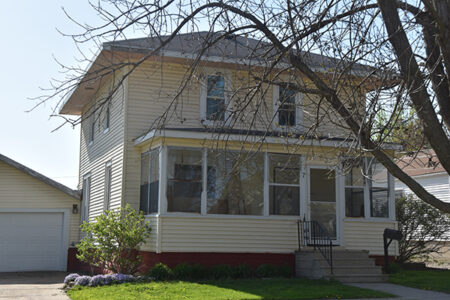
In January, Jessica and her father Jeff Jacobson purchased a three-bedroom house – two women in each bedroom – and decided to turn it into a women's sober living residence. Jacobson used her knowledge and experiences to develop rules each resident will have to follow or else be removed.
Some reasons for removal include not providing and passing a urine drug screen. One is violating any state or federal laws and another is engaging in physical altercations with other housemates.
"They will be required to go to four meetings per week, and I really want them to get involved in the [Narcotics Anonymous] (NA) program," she said. "The goal is to secure and maintain employment while they're there. We give them two weeks to get a job."
House meetings will be held every Sunday morning, and Jacobson will check on residents' progress, such as whether or not they are filling out and submitting job applications and how they are spending their free time.
She said the residents will also have a curfew, starting at 8:30 p.m. on the weekdays and 9 p.m. on the weekends. However, Reborn Recovery has levels for residents to climb to. The higher the level, the later the curfew. For example, Level 2 residents will have a 9 p.m. weekday and 9:30 p.m. weekend curfew, and a 24-hour furlough. Thirty minutes are added to the curfew in Level 3 and they can get two 24-hour furloughs.
"We want them to integrate themselves back into society and learn how to live a normal, substance-free life," Jacobson said. "Jobs, meetings, drug treatment, having good relationships with their PO [probation or parole officer]."
Another goal of Reborn is to reunite women with their children if they were separated because of drug addiction. Since there is a chance children will be at the house, she said they will not accept any sex offenders into the program.
"We are working with DHS to have the kids stay with their mothers three nights per week, if they want," Jacobson said. "We would like them to rekindle their relationship with their kids."
Unlike other sober living houses, this one will not get residents solely based on referrals. Reborn will accept women off the streets and out of jails, prisons and treatment facilities.
"Part of our process is doing an interview, so I can see how genuine they are, their reason for wanting to come into the program and what their willingness to change looks like," she said.
The residents will have to pay a fee of $125 to be in the program. If someone comes off the street and does not have the fee, that does not automatically exclude them. They will be able to make payments as soon as employment is gained.
Another difference from other sober living houses, such as the Oxford House, is that there will not be a staff member living there, but Jacobson will frequently come to the house to help keep the women accountable.
"If they can handle someone coming in, holding them accountable and having them pass UAs, they will be allowed to stay there for as long as they need to maintain a healthy lifestyle," she said. "I don't foresee anyone saying they want to live there for the rest of their life."
Marshalltown not having a sober living house for addicted women means they are only left with Mason City and Des Moines as options.
"Marshalltown's recovery community is growing," Jacobson said. "When I used to go to NA meetings when I was 13, it was only once a week. They now have NA meetings every single day of the week. I walk into a meeting now and I know people because I used with them. Every town has a problem with drugs. It's an epidemic, but I feel like in Marshalltown, once you cross over the bridge [from the south side to the north side], it's bad. You have houses with no running water, no electricity and they're full of people who are getting high and squatting there. It's been so socially accepted that people don't have the motivation to change. Now you see people who you used with – they're changing their lives and that can motivate people to do the same thing."
Jacobson's journey
Sober for nine months, Jacobson, originally from Gilman, acknowledges that her addiction began in Marshalltown at the age of 13. It started with marijuana, and then she was introduced to methamphetamine. After moving to Des Moines, Jacobson began using heroin and smoking fentanyl.
"Pretty much anything that was put in front of me, I would do," she said.
After she got out of prison in October 2024, she resided at Kingdom Living, a sober living house in Des Moines.
"I had a good head on my shoulders and I wanted to do good, but me not having my family support around me and not knowing anyone in Des Moines who was sober, I ended up relapsing," she said. "Sometimes leaning on the people in the program is not enough. I thought I really wanted to open my own house in Marshalltown."
Jacobson discovered that she was three months pregnant after her relapse and decided to move back to Marshall County. She got sober again and dove into NA and drug treatment and is ready to use all of that to help others.
"I've been doing drugs since I was 13," Jacobson said. "I've seen a lot, and I was a bull****er. It's hard to bull**** a bull****er. I'm going to put my best foot forward in running the program. That readiness to change matters, and if I have an interview with someone and don't feel they're ready to change, that they just want to get out of jail, we won't accept them in the program."
Since getting word out, she has gotten some people who are interested in starting already. They are in the process of getting a website built and are prepared for the possibility of expansion to a larger house.
--------
Contact Lana Bradstream at 641-753-6611 ext. 210 or lbradstream@timesrepublican.com.