
Chunky smashed potatoes in a time of relentless change
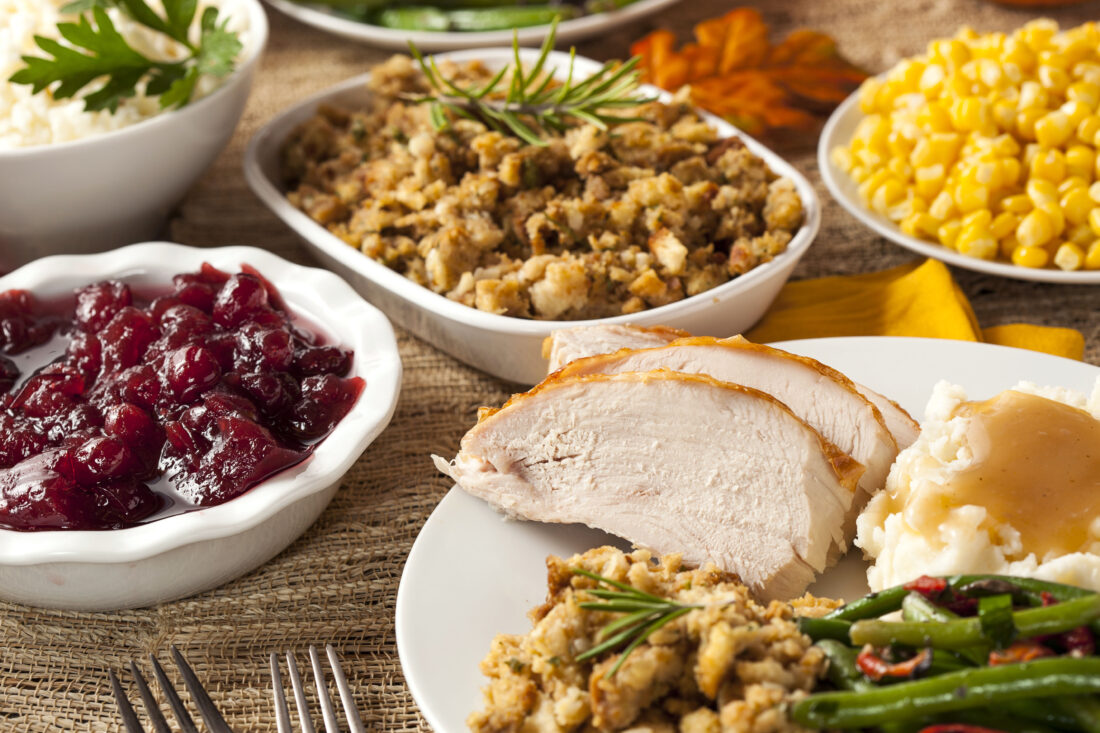
The other day I spoke with a dear friend I’ve known since I was 21. As we compared Thanksgiving plans, I described my usual traditional menu: turkey, dressing, mashed potatoes, Brussels sprouts, salad, cranberry relish, pie – the comforting repertoire my husband and mother insist on. I don’t have strong feelings about the menu, but I love making people happy, and I do love gravy.
My friend, though, was headed to a community “pitch-in.” Her assigned dish? Mashed potatoes. Yet, in her 80s now, her hands were hurting, and she didn’t feel up to making the smooth, whipped, traditional version. Instead, she planned to bring what she called “chunky, smashed, skin-on Yukon gold potatoes.” Just potatoes boiled and smashed with butter, salt and pepper.
“Sounds great,” I said. But she was anxious. She feared her dinner companions would want potatoes “like Grandma made,” and worse, that they’d judge her deviation from the script. She didn’t believe they would be grateful for her contribution; she feared they might be annoyed. She even asked if I’d write a poem for her to give her fellow diners to help “curb” the change.
Her worry was both touching and deeply familiar. I had just finished teaching a course on leading through disruption and change for MBA students in the Iowa State University Ivy College of Business. We spent weeks discussing how the pace of change, whether from geopolitical, technological, organizational or cultural shifts, is accelerating, and what that means for leaders. Research consistently shows that humans resist change as a survival mechanism; often, the more disruption we experience, the more we cling to the familiar. As a result, in times of turbulence, we yearn for reliable anchors: a workplace that feels predictable, technology we understand, mashed potatoes just like Grandma used to make. Consistency give us comfort, identity, and a sense of continuity when the world feels unsteady.
Yet leadership in the modern world requires helping people acknowledge that change is both inevitable and constant. Change itself is neither inherently good nor bad, but it is unstoppable. We can yell into the sky: “No more change!” – but that will not slow anything down. We can only control our own reaction to it. Instead of assuming the worst and resisting, leaders must acknowledge the change as real and cultivate adaptability, nimbleness and emotional intelligence. We must learn to communicate in an empathic and human-centric way, and to help others navigate ambiguity, see new possibilities, and even discover gratitude for what the new can bring.
Gratitude may seem like an odd companion to turbulence, but research shows it is foundational to effective leadership. In an article called, “How to Show More Gratitude at Work: Giving Thanks Makes You a Better Leader,”The Center for Creative Leadership notes that leaders who express gratitude build trust, wellbeing, and engagement in their teams. And new studies from the University of Florida reveal that when leaders reflect on gratitude received from family members, they show more empowering and supportive behaviors at work. Gratitude literally broadens our mindset, both psychologically and biochemically, making us more resilient and more connected both professionally and in our personal lives.
At the same time, gratitude must be balanced. As Harvard Business Review scholars Lan Nguyen Chaplin and Mike Chisholm note, excessive gratitude can become a trap, making people hesitant to self-advocate or voice legitimate concerns. The key is not blind positivity but “empowered gratitude,” where appreciation coexists with ambition, boundaries, and honest reflection. Leaders must model this balance: grateful for what has been and what is, yet willing to ask for what might be better.
This, too, mirrors the tension many of us feel around family traditions during the holidays. My Thanksgiving table is smaller now. Our family is dispersed and others who we shared the traditional meal with have moved or passed away. I miss the siblings, stepchildren, and friends who once filled the room and feel the ache of change. And yet, there are unexpected gifts: less rushing, fewer dishes to wash, quieter conversations, more leftovers. I loved the old traditions, but I also love the new ones emerging in their place.
Which brings me back to my friend and her “modern” potatoes. They are not the whipped clouds of childhood memory, but they carry their own warmth: creative, rustic, honest. They reflect her changing abilities, her desire to show up anyway, her willingness to contribute in a way that honors both tradition and reality. I hope her fellow diners greet her potatoes with delight rather than comparison; I hope they practice gratitude for the spirit behind the dish, not the perfection of the recipe.
Because this is the real leadership lesson, whether in organizations or around a crowded buffet table. We want the comfort of tradition, but the pace of life requires us to accept and even embrace the new. Gratitude helps us bridge the gap between what was and what is becoming. It steadies us as we adapt, and it softens us as others do the same.
So this Thanksgiving, may we savor both the familiar and the unexpected. May we honor Grandma’s recipes while welcoming chunky, smashed, Yukon-gold innovations. And may we practice the kind of gratitude that strengthens us for change: generous, grounded and open to whatever new flavors arrive on the table.
——-
Suzanna de Baca is an Iowa native, proud Latina, CEO of Story Board Advisors, board director, author and artist who is passionate about exploring change and transformation, inclusion, and life in the Midwest.