
Washington seeks over $38 billion from opioid distributors
Trending
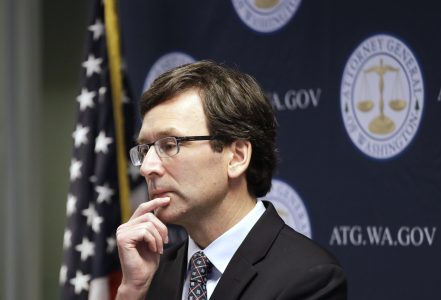
SEATTLE -- After rejecting a half-billion-dollar settlement, Washington Attorney General Bob Ferguson on Monday took the state's case against the nation's three biggest drug distributors to trial, saying they must be held accountable for their role in the nation's opioid epidemic.
The Democrat delivered part of the opening statement in King County Superior Court himself, calling the case possibly the most significant public health lawsuit his agency had ever filed.
"These companies knew what would happen if they failed to meet their duties," Ferguson told Judge Michael Ramsey Scott. "We know they were aware of the harms flowing from their conduct because in private correspondence, company executives mocked individuals suffering the painful effects of opioid dependence. … They displayed a callous disregard for the communities and people who bear the impact of their greed."
But Ferguson's legal strategy isn't without risk, as a loss by three California counties in a similar case this month -- and an Oklahoma Supreme Court decision overturning a $465 million judgment against drug manufacturer Johnson & Johnson -- demonstrates.
Orange County Superior Court Judge Peter Wilson issued a tentative ruling Nov. 1 that the counties, plus the city of Oakland, had not proven the pharmaceutical companies used deceptive marketing to increase unnecessary opioid prescriptions and create a public nuisance. The Oklahoma ruling said a lower court wrongly interpreted the state's public nuisance law.
In an email, Ferguson stressed that the relevant Washington laws differ and called the cases "apples and oranges."
Public nuisance claims are at the heart of some 3,000 lawsuits brought by state and local governments against drug makers, distribution companies and pharmacies. Washington's is the first by a state against drug distribution companies to go to trial. Ferguson is claiming public nuisance and violations of state consumer protection law.
"There is always uncertainty when you take a case to trial," he said. "However, we feel confident in the strength of our case."
The attorney general's office sued McKesson Corp., Cardinal Health Inc. and AmerisourceBergen Corp. in 2019, alleging they made billions off the opioid epidemic by shipping huge amounts of prescription painkillers into the state even when they knew or should have known those drugs were likely to find their way to drug dealers and people suffering from addiction.
Ferguson is seeking a "transformative" payout of tens of billions of dollars from the companies to help undo the epidemic's damage in Washington state, which includes more than 8,000 deaths from 2006 to 2017 and untold devastation to families. The state wants $38 billion to pay for treatment services, criminal justice costs, public education campaigns and other programs over a 15-year period, plus billions more in additional damages.
The trial is expected to last about three months.