Quarry Sesquicentennial slated for July 1
Potluck in Le Grand
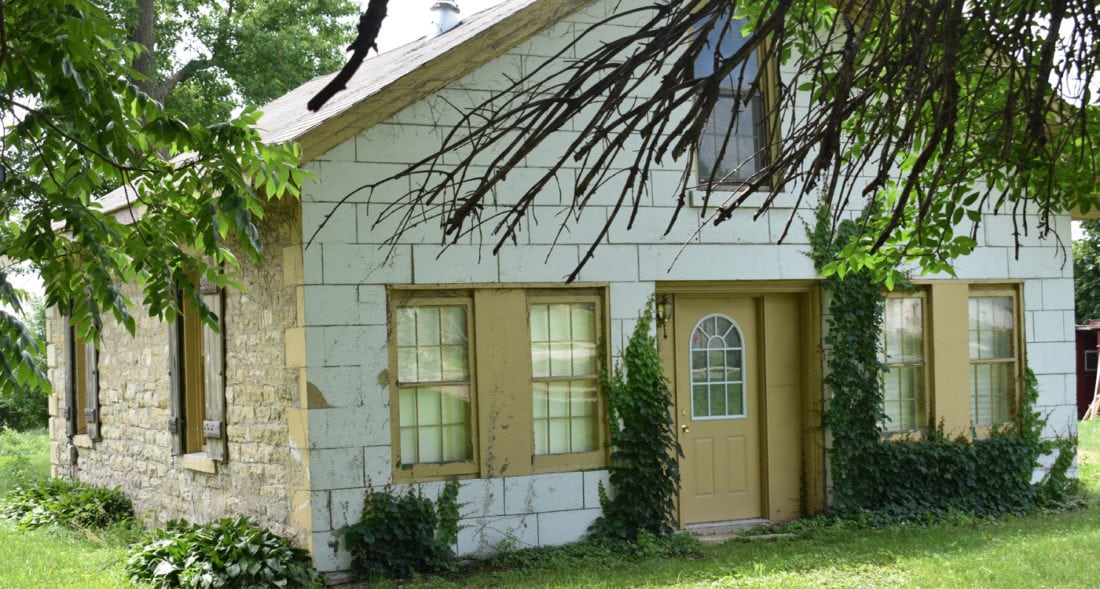
Shown recently is the former Chicago & Northwestern Railroad Depot in Quarry near the intersection of Quarry Road and Quarry Avenue. Like many Central Iowa villages and towns, Quarry owes its origins to railroad expansion.
Current and former Quarry residents are invited to celebrate the village’s Sesquicentennial, 1 p.m to 5 p.m., July 1 in the Le Grand Community Center, according to Bob Anderson.
He attended elementary school in Quarry from 1950-52.
Anderson was born in nearby Marshalltown, and would later serve as Iowa’s Lieutenant Governor.
Now residing in Gig Harbor, Wash., Anderson said he accidently discovered Quarry’s milestone 150th birthday after researching its history on the Internet.
He said his kindergarten and first grade classes in the two-room country school had only two students, his cousin Gary Gummert and himself.
“In the early 1950s more than half the population was made up of either Gummerts or Halversons,” Anderson said.
His great-grandmother was both a Gummert and a Halverson.
“So, the July 1 event will be both a family reunion and birthday celebration for Quarry,” Anderson said. “The celebration will include a traditional potluck, with hot dogs and hamburgers provided. Along with side dishes for the potluck, residents and friends of Quarry are asked to bring photos and other memorabilia to share.”
Anderson said that much of his information about Quarry’s history has come from his aunt Mary Halverson, who spent 10 years restoring the Quarry Depot which still stands.
It is located near the intersection of Quarry Road and Quarry Avenue.
The depot was originally built by George Frederic Kirby in 1870. It is the oldest Chicago North Western Depot in Iowa, and the only one made of Quarry stone. Kirby also played an instrumental role in building the Odeon Theater, Fidelity Bank and Pilgrim Hotel in Marshalltown.
The same year the depot was built, Iowa established a Board of Immigration and printed a small booklet promoting life in the Hawkeye State. It was sent to all the newspapers in the United States and many copies found their way overseas. As a result, the Quarry area attracted immigrants eager to work on the railroad or in the stone quarries. These Germans, Scandinavians, Italians, Czechs, Bohemians, and Poles quickly expanded Quarry’s population to approximately 250 citizens. By 1890, Quarry boasted general stores, a hotel, hardware store, plant nursery and post office.
Today, the Quarry area is best known from the work of Dr. Burnice H. Beane. As a young boy, Beane was fascinated with collecting fossils around the Le Grand Stone Quarry, and as an adult, his discovery of crinoid deposits helped prove the theory that a great central portion of America had once been under a sea, perhaps two and a quarter million years ago. Beane ultimately became an outstanding authority on crinoids, and his finds have enriched museum and university exhibits around the world.
For more information, contact Anderson at bobtanderson@me.com, or 253-753-3013.
——
Contact Mike Donahey at 641-753-6611 or mdonahey@timesrepublican.com
Todays News

ARL of Marshalltown suspends cat intakes, responses to calls outside city limits
Former Tama County jailer charged with sexual abuse
Old hospital owner without representation, not allowed to provide defense
139-year history of IVH presented to full house Monday

Marshalltown Family Aquatic Center opens for season