
Trending
Every December, as we count down the final minutes of another year, millions of Americans make heartfelt promises to themselves and to those they love that this will be the year things finally change. This is the year we’ll lose the weight, write the book, run the marathon, start the business, or go back to school and finish the degree. On Dec. 31, ambition and optimism are in abundant supply because tomorrow represents a fresh beginning. Fireworks welcome the new year, and we go to bed dreaming of a better version of ourselves.
For a few weeks, the resolve is genuine. By February it begins to fade. By spring, excuses replace determination, and by midsummer our commitment to becoming better has quietly surrendered to acceptance of our former selves. Then December returns, hope is renewed, and we begin the cycle again. Rinse and repeat.
On the rare occasions when we keep our resolutions, it isn’t because we wished harder. It’s because we remained steadfast in the belief that we could only achieve something different if we were willing to do something different. That is the fundamental truth of growth. If we want to accomplish what we’ve never accomplished before, we must be willing to do what we’ve never done before.
America’s celebration of Independence Day follows a remarkably similar pattern.
Each Fourth of July, millions of Americans gather to watch fireworks, attend parades, listen to patriotic music, share meals with neighbors, and reflect on the extraordinary experiment that is the United States of America. For one day, political labels seem less important than the simple fact that we are Americans. We experience, if only briefly, an unmistakable sense of shared purpose and love of country.
Then comes July 5.
The fireworks are over. Fewer flags fly. Patriotism once again becomes politicized, and the brief spirit of unity gives way to the same old partisan battles, personal attacks, and division. Another year passes. Another opportunity slips away. Rinse and repeat.
But this year doesn’t have to follow that pattern.
Across Iowa, voters from every political persuasion appear ready to move beyond the exhaustion and destruction of endless partisan conflict. Increasingly, Iowans are looking for leaders who speak to what unites us rather than what divides us.
The values that make Iowa unique have not disappeared. Iowans are decent, hardworking, and respectful of one another. These values have been overshadowed by a political culture that too often profits from division. National polling has consistently ranked Governor Reynolds among the nation’s least popular governors, reflecting the frustration many Iowans feel with today’s political climate.
That helps explain why Rob Sand has attracted support from voters across the political spectrum. Public polling has shown him outperforming Zach Lahn in the race for governor, while his message consistently emphasizes accountability, respect for differing viewpoints, and a willingness to engage with Iowans regardless of party affiliation. Whether one ultimately agrees with every position he takes, his campaign has tapped into something many Iowans seem to be longing for: a politics that rewards listening instead of shouting and cooperation instead of contempt.
If Iowans truly want something different from their government, and for their future, they must be willing to do something different themselves. Voting for Mr. Sand is different. He is not a Republican, but Republicans, or "Rob" publicans as his campaign has referred to them, are already supporting Sand in significant numbers. He is a Democrat by party registration, but he has campaigned as an Iowan first, appealing to Republicans, Democrats, and independents alike.
Ultimately, this election is about more than one candidate or one political party. It is about whether Iowa chooses to continue a cycle of division or to pursue a path rooted in accountability, civility, and respect.
Every New Year’s Eve, we tell ourselves this will be the year we finally change, but change depends not on what we say on December 31st; it depends on what we do every day thereafter. Every Fourth of July, we celebrate the ideals that unite us as Americans, but unity depends not on speeches or fireworks, but on how we treat one another every other day of the year. And every election, Iowans hope for better government, but better government depends not on our hopes; it depends on our votes.
Rob Sand represents a better choice. Whether Iowa embraces that choice is now up to its voters. If they do, the common purpose and commitment to being better may endure long after the last fireworks.
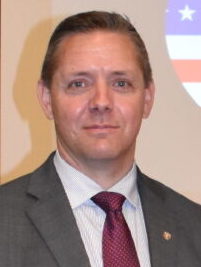
Matthew Peterson, a Marine Corps veteran, served as the commandant of the Iowa Veterans Home from 2021 to 2022. He currently resides in Texas.