
Economics of war: Pain for Europe now, later for Russia
Trending
Across Europe, signs of distress are multiplying as Russia's war in Ukraine drags on. Food banks in Italy are feeding more people. German officials are turning down the air conditioning as they prepare plans to ration natural gas and restart coal plants.
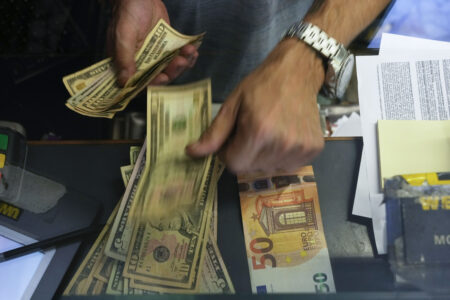
A giant utility is asking for a taxpayer bailout, and more may be coming. Dairies wonder how they will pasteurize milk. The euro has sagged to a 20-year low against the dollar, and recession predictions are on the rise.
Those pressure points are signs of how the conflict -- and the Kremlin gradually choking off natural gas that keeps industry humming -- provoked an energy crisis in Europe and raised the likelihood of a plunge back into recession just as the economy was rebounding from the COVID-19 pandemic.
Meanwhile, high energy costs fueled by the war are benefiting Russia, a major oil and natural gas exporter whose agile central bank and years of experience living with sanctions have stabilized the ruble and inflation despite economic isolation.
In the long run, however, economists say Russia, while avoiding complete collapse, will pay a heavy price for the war: deepening economic stagnation through lost investment and lower incomes for its people.
Europe's most pressing challenge is shorter term: battle record inflation of 8.6 percent and get through the winter without crippling energy shortages. The continent relies on Russian natural gas, and higher energy prices are flowing through to factories, food costs and fuel tanks.
Uncertainty weighs on energy-intensive industries like steel and agriculture, which could face natural gas rationing to protect homes if the crisis worsens.
Molkerei Berchtesgadener Land, a large dairy cooperative in the German town of Piding outside Munich, has stockpiled 200,000 liters (44,000 gallons) of fuel oil so it can keep producing power and steam for pasteurizing milk and keeping it cold if electricity or natural gas to its turbine generator is cut off.
It's a critical safeguard for 1,800 member farmers whose 50,000 cows produce a million liters of milk a day. Dairy cows have to be milked daily, and a shutdown would leave that ocean of milk with nowhere to go.
"If the dairy doesn't function, then the farmers can't either," managing director Bernhard Pointner said. "Then the farmers would have to discard their milk."
In one hour, the dairy uses the equivalent of a year's worth of electricity for a home to keep up to 20,000 pallets of milk cold.
The dairy also has stockpiled packaging and other supplies to guard against suppliers being hit by an energy shortage: "We have a lot stored … but that will only last a few weeks."
The economic woes also appear at the dinner table. Consumer groups estimate a typical Italian family is spending 681 euros (dollars) more this year to feed themselves.
"We're really concerned about the situation and the continuous increase in the number of families we're supporting," said Dario Boggio Marzet, president of the Food Bank of Lombardy, which groups dozens of charities that run soup kitchens and provide staples to the needy. Their monthly costs are up 5,000 euros this year.
Jessica Lobli, a single mother of two from the Paris suburb of Gennevilliers, pays close attention to surging grocery prices. She's reduced her consumption of milk and yogurt and renounced Nutella or branded cookies.
"The situation will worsen, but we need to eat in order to survive," said Lobli, who earns between 1,300 and 2,000 euros per month working in a school kitchen.
Her monthly food budget of 150 to 200 euros dropped to 100 euros in June. She said her family doesn't eat as much in summer, but she's concerned about September, when she will have to buy school supplies for her 15-year-old daughter and 8-year-old son, further whittling her budget.
French President Emmanuel Macron says the government aims to conserve energy by switching off public lights at night and taking other steps. Similarly, German officials are begging people and businesses to save energy and ordering lower heat and air-conditioning settings in public buildings.
It follows Russia cutting off or reducing natural gas to a dozen European countries. A major gas pipeline also shut down for scheduled maintenance last week, and there are fears that flows through Nord Stream 1 between Russia and Germany will not restart.