
Trending
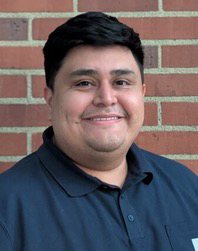
In the days leading up to the 2025 city election -- and with in-person absentee voting beginning today through Monday, Nov. 3 from 8 a.m. to 4:30 p.m. at the Marshall County Election Center located at 107 S. 1st Ave. -- the Times-Republican will be highlighting the positions of the candidates running for mayor and city council in Marshalltown. First up is the council seat in Ward 1, which covers roughly the northeast quadrant of the city and includes the downtown area. The seat is currently held by Mike Ladehoff, who has opted to run for mayor, and the lone candidate running to replace him is Marco Yepez-Gomez, a Marshalltown native who works as a software engineer at MARSHALLTOWN Company. The next edition will feature answers from incumbent Greg Nichols, who is running unopposed for his first full four-year term in Ward 3 after winning a special election to replace Dex Walker in 2023.
What is your personal, professional and educational background, and why are you running for a seat on the Marshalltown city council?
Marco Yepez-Gomez: Like many in Marshalltown, I am a proud son of immigrants who came here seeking a better life. I grew up in Marshalltown and graduated from Marshalltown High School in 2015. After that, I attended Iowa State University and earned a degree in Software Engineering. After college, I lived in Kansas City and Ankeny before returning home to Marshalltown, where I now work as a Software Engineer at MARSHALLTOWN.
My perspective comes from growing up in a working-class household and spending my life among the everyday people of this town. From relying on food assistance programs and Medicaid as a child to now working in an office job, I understand how important it is for a community to provide the right support so that individuals can reach their full potential.
I am running to continue the good progress happening in our city while making sure that the working class of Marshalltown is always represented and considered in every decision we make.
In general, do you feel like Marshalltown is headed in the right direction, and if not, how would you propose reversing that course? Additionally, what are your thoughts on the city's current budget situation, and how, if at all, would you propose changing course?
Yepez-Gomez: I think depending on who you ask, you will get a different answer to this question. On one hand, some people see the undeniable positive changes happening, especially downtown, and are excited for the future. On the other hand, many people are struggling financially and do not see how those projects are helping them. It worries me that at a time when so many Americans are under more financial pressure than ever before, and when corruption is so visible in higher
levels of government, local political races like mine are going uncontested. To me, that signals that people have lost faith in the political process at a time when we need more engagement than ever. I recognize both perspectives and want to make sure the people who are struggling feel heard, represented, and involved in the decisions that affect them.
When it comes to the city's budget, there are reasons to be optimistic. Since 2021, our net financial position improved from roughly -40 million to -20 million, and key financial ratios have all been trending in the right direction. That shows progress.
But I am concerned about what comes next. About 27 percent of our revenue comes from outside government grants. If state and federal priorities shift away from helping working communities, Marshalltown could be left exposed.
Going forward, we should focus on becoming more financially independent by encouraging development that increases tax value per acre instead of spreading outward, supporting infill housing and small businesses that make better use of what we already have, and being mindful of long-term maintenance costs before approving new projects.
In short, we need a budget philosophy that builds resilience and community value.
Do you feel that the city is currently appropriately staffed with approximately 150 to 160 total employees, and would you advocate for hiring additional staff in any particular departments if elected?
Yepez-Gomez: I believe the city does need additional staff in certain critical areas, and I support increasing our headcount strategically. For decades there has been a misconception that government is inherently bloated and must always be cut.
However, when real audits and reviews are done, as seen with Iowa's new DOGE Task Force, many reveal only minimal waste. At the same time, cuts or proposals often land hardest on services that ordinary people depend on.
My focus would be on which departments are understaffed in roles that directly support public safety, infrastructure maintenance, code enforcement, or addressing housing. I would advocate hiring more in those departments rather than adding staff across the board. The question is not whether government is too small or large; it is whether every position is being used to deliver value to residents. And if they are, those position need our committed support.
Goals for growth have been discussed several times in recent years, but Marshalltown's population has essentially held steady at about 27,500 residents. Do you believe the council and the city's current strategies to attract new residents and businesses are working, and if not, how would you recommend changing them?
Yepez-Gomez: My main focus is serving the 27,500 residents who currently live here. That said, I do not take our stagnant population lightly. Several factors contribute to it, but one of the biggest is the disconnect between our labor market and our housing options. From my own and many others' experience, there is no clear path from graduating high school or college to finding an affordable, well-maintained apartment, and eventually buying an affordable, well-maintained house while working the jobs that exist in town.
From aging housing stock to natural disasters, we have not introduced enough new, quality housing quickly enough. Another issue is that we have done little to indirectly provide relief to the people who need it most. Nationally, nearly 60% of Americans cannot afford a $1,000 emergency, and around 40% of Marshalltown residents are considered the struggling working class. At the local level, there are policies we can pursue to help, but the few tools we do have are not being used effectively.
For example, we can remove some of our own self-imposed restrictions by updating zoning laws to make Marshalltown more developer friendly and help increase our supply of housing and commercial spaces. That means making it easier to build duplexes, townhomes, and mixed-use buildings in areas where they make sense, cutting down on impractical building restrictions, and streamlining approval processes for small local builders. These types of changes make it easier for both new residents and existing families to find quality, attainable places to live.
If we make our city work for the people who already live here, others will notice and want to be part of that community. Growth starts by making life stable and affordable for the people who call Marshalltown home today.
The condition of the city's infrastructure is a frequent topic of discussions at council meetings. If elected, how would you prioritize street repairs, and do you believe that amenities such as the Linn Creek District projects also play an important role in making Marshalltown a better, more attractive community in the future?
Yepez-Gomez: There are two ways to have sustainable city infrastructure: either we become more efficient with the infrastructure we already have, or we receive more funding from higher levels of government that have the authority to collect fair revenue from the wealthiest who are not paying their share in this country. We only control the former. So what does being efficient with our infrastructure mean?
It means focusing our repair dollars where people actually live, work, and travel most, instead of constantly expanding outward. It means taking care of existing neighborhoods and streets before adding new ones that only increase long-term maintenance costs. It also means designing streets that last longer by reducing unnecessary pavement width and encouraging more compact development that uses existing infrastructure efficiently.
In short, I would prioritize maintenance and repair of existing infrastructure over expansion. Our goal should be to make sure every dollar invested in a street gives lasting value to the people who already live here, rather than stretching ourselves thin trying to maintain more than we can afford.
I think the current projects being done in Linn Creek District are good.
Do you agree with the council's decision to grant a 20-year TIF incentive for the redevelopment of the Marshalltown Mall (now known as the Shops at Marshalltown), and what would your strategy be to ensure that it becomes a productive asset for the city and keeps more Local Option Sales Tax (LOST) dollars within Marshalltown?
Yepez-Gomez: Tax Increment Financing, or TIF, is an economic tool that helps attract development by providing a public tax subsidy. I am open to considering any economic tool that helps bring or retain high-demand businesses such as manufacturing, food processing, supply chain, engineering, daycare centers, housing, and locally owned businesses. Of course, each proposal has its own nuances and should be judged on its long-term value to the community.
Regarding the mall, I supported the TIF agreement. In my public comment to the city council, I expressed frustration with the status quo and why we were forced to say yes. The reality is that the only party that would have lost if the city had said no was the community itself. It is disheartening that a previous investor can neglect a property, sell it to a new one, and that new investor can then take advantage of the tax increment difference to reduce their investment risk through a TIF agreement. But if the city refuses, the deal simply falls apart and the property wouldn't get the full investment.
While I was not happy about the situation we were placed in, I still believed there was a net positive in supporting the redevelopment. My focus now is making sure that residents have access to good things like a mall where they can shop, gather, and spend time close to home. When people have access to quality places in their own community, our residents benefit.
Do you feel that the downtown reconstruction project has been positive for the city, and how would you advocate for supporting businesses that may be struggling as a result of it?
Yepez-Gomez: Investing in downtown is one of the best things a community can do. It is a place where our culture and vibrancy come from. I have been a strong supporter of the downtown reconstruction efforts and will help see them through until they are completed.
At the same time, I recognize that many small businesses downtown have been affected by the ongoing construction. I support the city's current efforts and any future steps to keep business owners informed about timelines, detours, and temporary workarounds. I also want the city to be creative in how we support them, such as helping promote downtown events, improving signage and accessibility during construction, and encouraging residents to keep shopping local.
I will continue to advocate for a local-first mindset because a strong downtown depends on strong local businesses, and every purchase made here helps strengthen our community.
Do you believe the city should take ownership of the former downtown hospital
property, and what, if any, role do you think the mayor and council should play in
the redevelopment process?
Yepez-Gomez: The former hospital property is scheduled for sale on November 4. Even as a vacant building, it has been poorly managed, and I completely understand the frustration people feel about how run down it looks. The relocation of healthcare services from the center of town to the edges of Marshalltown is a clear example of how development that spreads outward can leave our core neighborhoods worse off.
I believe we should allow the sale to take place and then assess the results before making any major decisions. If a reasonable buyer purchases the property, the city should work with them to ensure the redevelopment meets our standards and that city codes are followed. If the city ends up taking ownership, my main concern would be to make sure the property no longer drags down neighborhood confidence and that the land is made developer friendly to attract new, positive investment.
If it hasn't already been alluded to in the previous questions, what do you believe
is the single most important issue currently facing Marshalltown, and how would
you address it if elected?
Yepez-Gomez: The issues facing Marshalltown are interconnected, and I believe they must be addressed together. As I've mentioned before, my focus is making sure we are not making decisions that leave out the common people of this town. That mindset applies to everything from housing and infrastructure to supporting our local businesses and downtown. My goal is to keep the needs of ordinary residents front and center in every decision, so that every policy, big or small, helps make life a little easier for the people who call Marshalltown home.
Why are you the most qualified candidate for the seat you are seeking?
Yepez-Gomez: It would be hard to find someone who has been more vocal and active in advocating for the common people at City Council meetings than I have, aside from a few others. I have spoken up about concerns over empty parcels on the north side, engaged in housing discussions, and brought attention to many other issues that matter to residents.
You can disagree with what I say, but one thing you cannot deny is that I have the heart to advocate for everyone in Marshalltown, whether I am an elected official or not. A quick Times-Republican search or a look at the city's YouTube recordings will show that I have spent the past year consistently speaking up on issues that may not affect me personally, but that directly impact others in our community.
I'm running not only to push for the changes Marshalltown needs, but also to inspire younger generations to find their voice and get involved. I hope to earn your vote this November.