
Marshalltown ARL director encouraged by state animal welfare progress
Trending
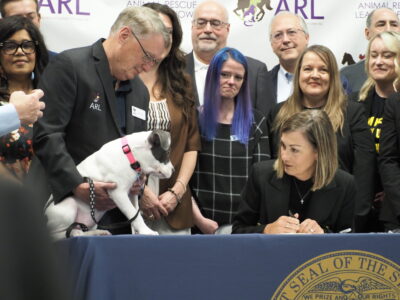
Some positive animal legislation became law on Monday. Gov. Kim Reynolds signed the bill making animal torture a felony, and Animal Rescue League of Marshalltown Executive Director Austin Gillis and his wife Jodi were present for the signing.
During the last Iowa Legislature session, which ended May 3, Gillis supported House File (HF) 2157, a bill which would have held people accountable when animals are left in unsafe conditions, such as leaving them at a shelter when staff are not present. However, HF2157 did not meet legislative deadlines.
"Ultimately, it did not make the final cut before the procedural deadlines, which effectively ended its chances for this session unless leadership chose to revive it -- and that did not occur," he said.
Realizing HF2157 was not going to move forward, Gillis switched his focus and support to the animal torture bill.
"It's encouraging to see progress on any legislation that strengthens protections for animals," Gillis said. "This bill closes important gaps and reflects the seriousness of intentional cruelty. It's a step in the right direction."
Whether or not the passage will help his efforts in holding people accountable for leaving animals at unmanned shelters is difficult to predict, he said. However, seeing Iowa lawmakers take action on animal welfare issues is a positive sign.
"When the legislature acknowledges the need for stronger protections in one area, it can help build momentum for related reforms," Gillis said.
Some reforms he would like to see the legislature address include improving access to basic veterinary care in communities like Marshalltown. He would like the state to certify qualified people, with appropriate oversight, administer rabies vaccines in a shelter on an as-needed basis.
"In Marshall County alone, we serve a community of more than 30,000 people with only a handful of veterinarians available," Gillis said. "Even when everyone is doing their best, the current system creates significant logistical challenges. Rabies vaccination is required by state law before an animal can be released, but limited access to veterinary appointments can extend an animal's length of stay far beyond what is necessary."
He would also like to see a bill providingba safe, regulated pathway for shelters to administer the rabies vaccine. That would reduce bottlenecks, he said, improve public health compliance and help animals move into homes quickly without removing vets from the process.
In order to get such legislation approved next year, Gillis said people can contact legislators directly, which makes a difference. By sharing their experiences, concerns and support, residents can help move issues forward.
"Iowa has made progress, but there is still work to do," he said. "We'll continue advocating for practical, enforceable laws that protect animals and support the agencies responsible for responding to cruelty and neglect."
As the ARL executive director thinks about possible future legislation to improve the lives of animals in Marshalltown and throughout Iowa, the nonprofit organization is dealing with some animal hoarding cases in Marshall County.
Recently, they were contacted to assist the Marshall County Sheriff's Office with the execution of a warrant in Laurel. The ARL's role was to safely remove the animals, document their condition and provide immediate care. However, the case is ongoing, so Gillis could not provide details.
"Anytime animals are found in circumstances that require law enforcement intervention, it is concerning," he said. "Our focus is always on ensuring the animals are safe and receiving appropriate care while supporting the legal process."
Fortunately, animal hoarding cases are not something the ARL of Marshalltown deals with on a regular basis. Animal hoarding occurs when a person or household has an unusually large number of animals. Due to how many animals there are, they are frequently neglected, sometimes going without food and water or necessary medical care. The environment the animals are in also tends to deteriorate.
"Hoarding cases are not common, but they do occur periodically," Gillis said. "When they do, we work closely with law enforcement to ensure the animals are removed safely and the case is handled appropriately."
-------
Contact Lana Bradstream at 641-753-6611 ext. 210 or
lbradstream@timesrepublican.com