
Council votes down next steps in franchise fee implementation process
Legal review required before proceeding with placing item on Nov. 2027 ballot
Trending
After three items related to the implementation of a three percent gas and electric franchise fee were pulled from the consent agenda during Monday night's meeting, the Marshalltown city council ultimately voted all of them down by 4-3 tallies, grinding the current process of adopting the fees by ordinance to a halt as city leadership will now have to wait for a legal review before likely placing the question on the November 2027 city/school election ballot.
City Administrator Carol Webb explained that the council had previously directed staff to move forward with a three percent electric and gas franchise fee with both Alliant Energy and Consumers Energy for property tax relief and public safety.
"Tonight's action does not adopt the franchise fee ordinance. It sets the process in motion by adopting the revenue purpose statement and scheduling the public hearing for June 8, 2026," she said.
Other than the costs of regulating the franchise, at least 33 percent of the revenues would go toward property tax relief, and the remainder of the balance would be put toward public safety. Councilor Greg Nichols then suggested an amendment to decide the fate of the franchise fee by a public referendum in the 2027 city/school board election in November rather than the current proposed implementation by ordinance, which would likely have generated a petition to force a special election yet this year. Fellow Councilor Gary Thompson asked for clarification given the original motion for discussion, and Webb said that if the council wished to reset the timeline and take a different path, they should vote no and bring it back up for discussion at a later date.
In response to a question from Councilor Melisa Fonseca, Webb laid out the timeline for the ordinance implementation, which would end with a third and final reading on July 13. Thompson then "guaranteed" that there will be a petition to force a special election in September, which would cost taxpayers between $15,000 and $20,000.
"We know there's gonna be a petition. We know this is not gonna get through three readings. So why don't we vote no on these tonight, come back and just set a date of an election for a general election, which is November of 2027, since we know it's gonna go to an election?" he asked.
He also noted that a special election on the EMS levy was likely to be held next March, and he didn't see the point in forcing taxpayers to cover the cost of two of them. Conversely, Councilor Jeff Schneider said the council had already voted in favor of the ordinance implementation process at a previous meeting and should stick to it.
Councilor Sue Cahill mentioned the recent increases in the transit levy and stormwater rates and felt putting a pause on the franchise fee and waiting until next November would give citizens like herself a "breath."
"We cannot raise everything at once, and so I would approve of delaying the election until the 2027 date in September, November, whenever it was," she said.
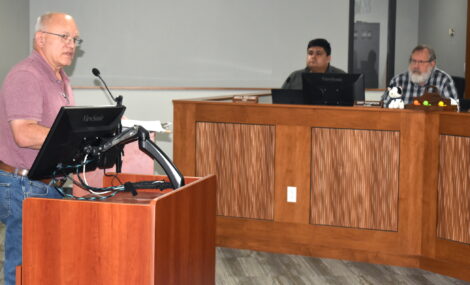
During the public comment period, Layne Pieri expressed confusion about what was being decided before proceeding to deliver prepared remarks on the franchise fee issue.
"When decisions are brought forward and then the public reacts, it can unintentionally create a 'People vs. city government' dynamic. That doesn't mean anything is being done wrong, but we've seen that even reasonable ideas can become difficult to sustain if they don't feel broadly shared," Pieri said. "One way to reduce that risk might be to adjust the sequence slightly. First, defining clear guardrails around what types of revenue tools are acceptable and what goals we're trying to solve for. Second, gathering input in a more intentional way like surveys or targeted outreach so it's not limited to who can attend city council meetings. And third, using that input to guide a final decision whether that's moving forward by ordinance or going to a vote."
In general, Pieri was in favor of the franchise fee proposal. Mark Eaton, who headed up the previous petition effort in 2023 ultimately resulting in an overwhelming rejection of the franchise fee proposal, said he would do the same this time around and criticized the council for "forcing" the public to potentially spend $20,000 on a special election.
He instead suggested waiting until November of next year and felt that would provide more time to educate the public as opposed to just broadly stating that the money would go to public safety.
"What does that mean? We're gonna buy more Flock cameras, speed cameras? We're gonna fund MPACT? What does this mean to the public? That's what we need education for," he said. "I think you should vote all three down so that we can put it on the November election."
Doris Kinnick agreed with Eaton and Cahill's assessments, and she felt it should be put to a public vote with so many costs increasing at the moment. As the council prepared to vote, Thompson questioned whether the franchise fee could even come back if it was rejected without a substantial change or until a new council is seated.
"I don't understand what we're failing to understand. There's gonna be a petition. It's gonna force an election. We need to vote down the ordinance and just go to a different topic of bringing forward the election. What's the point we're missing here?" Thompson asked.
Webb replied that the city's legal counsel would review the matter before offering an opinion on whether the timeline could be reset and considered a new item. Cahill then suggested tabling the issue and made a motion to that effect, but it died for lack of a second.
As it finally came time to vote on the original motion to set a public hearing on an increase in the city's franchise fee under the current agreement with Interstate Power and Light Company (Alliant), it failed by a 4-3 tally as Fonseca, Marco Yepez-Gomez and Schneider voted yes while Thompson, Mark Mitchell, Nichols and Cahill voted no. The following two related motions failed by the same tallies.
In other business, the council:
• Approved the remainder of the consent agenda despite several items being pulled for discussion.
• Heard a quarterly update on MPACT from YSS of Marshall County Senior Director of Community Engagement David Hicks.
• Approved a five-day special Class C retail alcohol license for Lucky Wife Wine Slushies during the Central Iowa Fair and an 8-month special Class C retail alcohol license with outdoor service for the Midnight Ballroom (Grand Slam Grill) for operation of the Softball Complex concession stand.
• Approved a professional services agreement with Snyder and Associates not to exceed $72,000 for West End Park Phase II project.
• Authorized ECICOG to submit a Community Development Block Grant (CDBG) Derecho Disaster funds housing application.
• Approved the third and final reading of an increase in the stormwater rate.
• Approved the first reading of the temporary RAGBRAI ordinance for the overnight stop on July 22 and voted to waive subsequent readings.
• Approved the first reading of an ordinance amendment establishing requirements for outdoor seating areas on public property.