
Efforts underway to secure future of MPACT program
Current funding ends Dec. 31
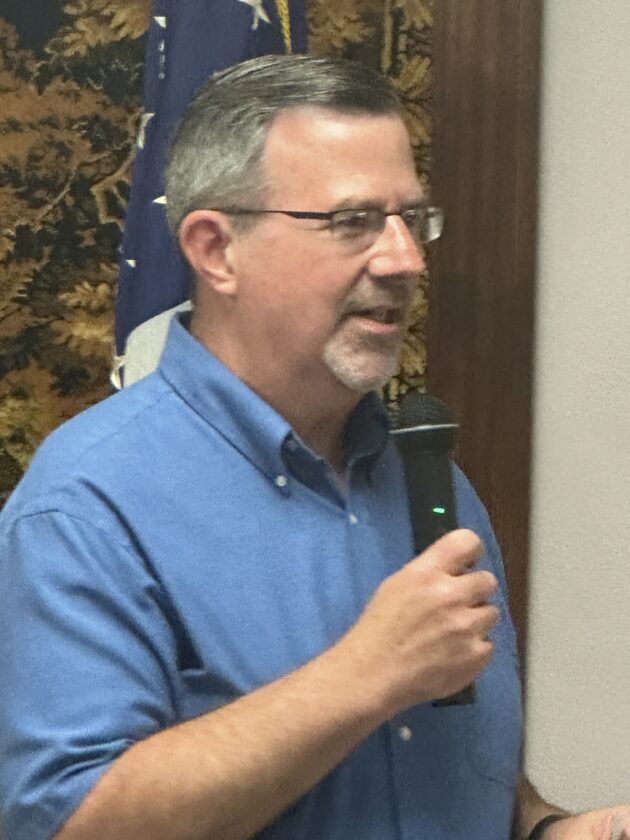
T-R PHOTO BY MIKE DONAHEY David Hicks, senior director of community engagement for YSS of Marshall County, is shown last month speaking to attendees at the Benevolent Order of Elks #312 event at the club's lodge in Marshalltown. Hicks was awarded 2026 "Citizen of the Year" by the lodge for his efforts in co-developing and managing the successful MPACT program.
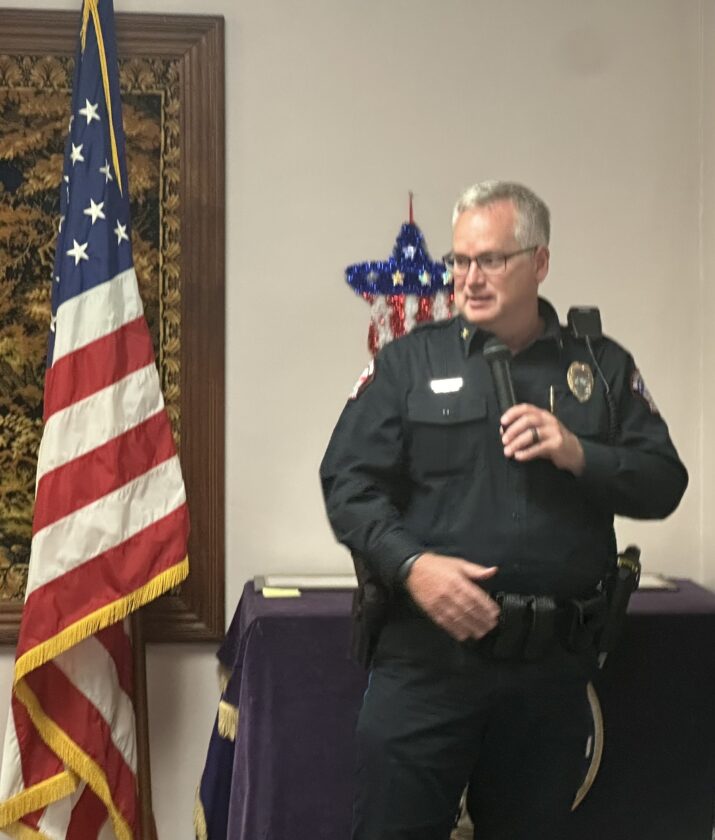
T-R PHOTO BY MIKE DONAHEY Marshalltown Chief of Police Chris Jones is shown recently making remarks to attendees at the Benevolent Order of Elks #312 lodge in Marshalltown.
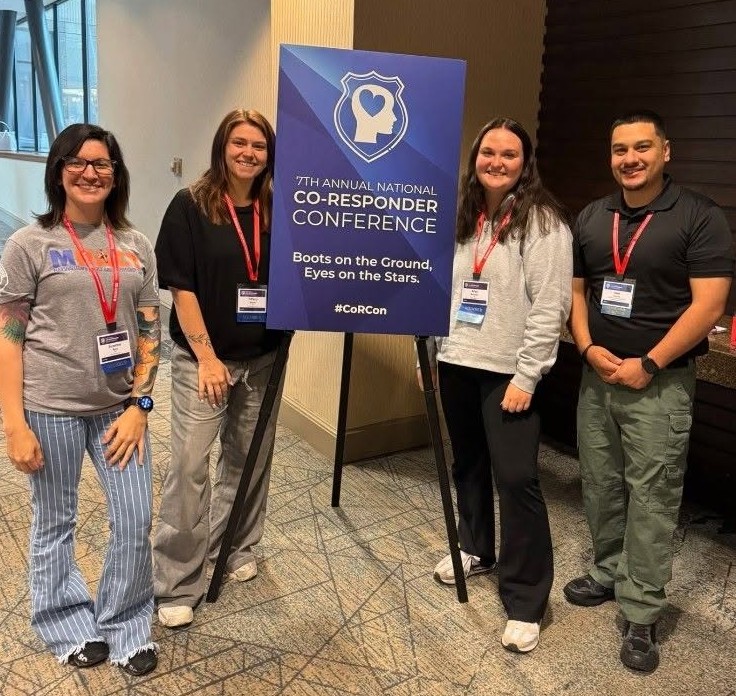
CONTRIBUTED PHOTO From left, Marshalltown Police and Community Team (MPACT) advocates Suzanne Reed, Tiffany Beadle and Riley Robinson and Marshalltown Police Department (MPD) Officer Jose Solorio are pictured at the Seventh Annual National Co-Responder Conference in Dallas recently. "Boots on the Ground, Eyes on the Stars" was the conference theme.
T-R PHOTO BY MIKE DONAHEY David Hicks, senior director of community engagement for YSS of Marshall County, is shown last month speaking to attendees at the Benevolent Order of Elks #312 event at the club's lodge in Marshalltown. Hicks was awarded 2026 "Citizen of the Year" by the lodge for his efforts in co-developing and managing the successful MPACT program.
T-R PHOTO BY MIKE DONAHEY Marshalltown Chief of Police Chris Jones is shown recently making remarks to attendees at the Benevolent Order of Elks #312 lodge in Marshalltown.
CONTRIBUTED PHOTO From left, Marshalltown Police and Community Team (MPACT) advocates Suzanne Reed, Tiffany Beadle and Riley Robinson and Marshalltown Police Department (MPD) Officer Jose Solorio are pictured at the Seventh Annual National Co-Responder Conference in Dallas recently. "Boots on the Ground, Eyes on the Stars" was the conference theme.
Trending
A local program established nearly six years ago to assist Marshalltown Police Department (MPD) officers solve crimes instead of dealing with family conflicts, homelessness, mental illness and more has been a proven success, according to those who have participated in it.
More recently, the Marshall County Sheriff's Office (MCSO) joined the program known as MPACT - the Marshalltown Police and Community Team.
It is co-managed by YSS of Marshall County and law enforcement. Marshalltown Police Chief Chris Jones and Marshalltown City Councilor Sue Cahill, who formerly served as a Democratic state representative, support the program and are eager to see it continue.
"When an officer or deputy arrives at the scene of a dispatched call, they assess the situation to determine if MPACT might be of assistance," said David Hicks, senior director of community engagement for YSS of Marshall County in a recent interview with the T-R. "If so, the officer contacts an advocate and requests they come to the scene."
The presence of an advocate helps minimize the stress and anxiety that can lead to unnecessary arrests and use of force.
"In 92 of 92 cases from Jan through May of this year law enforcement returned 'to the field' after a call for service," Hicks said.
Nearly one-half - or 41 -- of the 92 dispatched calls dealt with elder concerns, homelessness, and mental health according to YSS. MPACT also assisted on 15 calls dealing with family conflicts.
The advocate is one of three highly trained professionals and are contacted when a non-emergent, non-criminal police call comes in involving mental illness, family conflict, substance abuse or emotional/behavioral situations. MPACT is not used when violent situations or life-threatening medical emergencies occur, nor is it a 24-hour service.
Hicks said MPACT's funding of $250,000 ends Dec. 31, 2026. It pays the salaries of three advocates, administrative support and related expenses.
Hicks said he is currently preparing to apply for one federally-funded grant and one state grant to continue the program. The state grant is managed by the Iowa Department of Human Services.
"I have scheduled a conference call with Iowa state senator Kara Warme (R-Ames) and Judge Sharon Soorholtz Greer regarding the state grant," he said.
Greer, of Marshalltown, is a member of the Iowa Court of Appeals and is a Melbourne native. Warme chairs the Health and Human Services Committee in the state senate.
Hicks is also raising awareness of the program through publicity since private donations have been critical to the budget in past years.
"The Marshalltown-area business community has been generous in supporting MPACT," Hicks said.
Jones added that the program is "working very well."
"I am excited to find funding sources to continue the program ... Hopefully we will be able to do that through local, state or federal grants. One of the things that it has brought to our agency for sure is the ability to handle the many social concerns that officers deal with on a day-to-day basis and provide an opportunity for someone to come in and provide resources and case management to help people ... help them overcome the community and personal barriers," he said. "I have seen great success in the people they are assisting. It gives the officer an opportunity to 'give a warm hand-off to' ... they know those in need will get quality service and follow-up."
Another enthusiastic supporter of MPACT is Sue Cahill, who serves as an at-large councilor. She was a member of the city council in 2020 when the program was first proposed by Hicks and former Police Chief Mike Tupper, who is now running for Cahill's old seat in the Iowa House against incumbent Rep. David Blom (R-Marshalltown).
She supported MPACT then as did a majority of other councilors and the program received $150,000 in city funding after hearing Tupper and Hicks detail the program's mission.
"I support MPACT unequivocally," she said Wednesday. "It has proven to be a cost-effective and results-proven effort to get police officers and deputies back in the field while advocates diligently assist those in need with other issues. I hope that YSS is successful in securing grants or other funding."
While a minority member of the state legislature, she worked aggressively in an attempt to secure more permanent funding for MPACT and for similar programs in other Iowa communities. The state legislature did not advance Cahill's measure, but she has remained undaunted in her support of MPACT since.
Cahill was defeated by Blom in her legislative re-election bid in 2024 but was elected to the city council in 2025.
Suzy Reed of Marshalltown has been employed as an advocate for 3 ½ years. She has been dispatched countless times to help manage situations in concert with law enforcement.
Reed -- who supervises two other advocates, Tiffany Beadle and Riley Robinson -- is passionate about MPACT and has seen its effectiveness repeatedly.
"I was called in on a situation where two individuals were living in a condemned house," she said. "One should have been in a nursing home and the other in an apartment or home. After six months of finding resources, we were able to place the one individual in a nursing home and the other in an apartment. Both are doing well now. Our work through MPACT allowed the officer to get back to law enforcement duties quickly."
Reed previously worked at St. Luke's Hospital in Cedar Rapids in a Behavioral Health Unit as a mental health specialist.
"I wanted to be more involved in crisis management," Reed said of her current job.
YSS of Marshall County is a not-for-profit organization which has been providing resources to local youth and families for more than 42 years, according to the organization's website. YSS of Marshall County is affiliated with YSS headquartered in Ames, the Ames site has more than 50 years of service.
There, and in Marshall County, it provides mental health therapy, foster care support, supportive housing programs and more for youth. The Marshall County office is at 22 N. Center St. in Marshalltown. For more information, contact YSS at 641-752-2300 ext. 7403 or www.yss.org/MPACT or www.yss.org.