
Moving forward together: SF2472, tax relief, and protecting 911 service in Marshall County
Trending
Senate File 2472 was centered around providing taxpayers what they care about: Property Tax Relief. When SF2472 became law on May 18, 2026, under Governor Reynolds signature, Iowa stated that it was property tax legislation that will provide "$4.2 billion in property tax relief to Iowa homeowners over the next six years." Additionally, the Iowa Legislature’ fiscal analysis breaks down how the bill will provide widespread tax-relief changes. These changes include increasing SAVE contributions to property tax relief as time goes on. In other words, the purpose of SF2472 was clear from the start: to help taxpayers and bring more discipline to long-term local tax growth.
That intent is important to keep front and center. In Marshall County, the conversation around SF2472 is not about questioning the value of tax relief. It is about understanding how a good statewide policy can sometimes create a difficult local result when it meets the realities of an already careful local budget. That is what has happened here. The law was written to help taxpayers, and in Marshall County, local leaders were already doing exactly that.
Marshall County 911 Communications is not an optional service or a background function. It is the 24-hour connection between the public, and the responders who protect this county. The Marshall County 911 Communications Center is the critical link between citizens and the public safety agencies that serve the community, providing emergency services for residents, visitors, and first responders in Marshall County every hour of every day. When someone calls 911, that call begins a chain of response that reaches law enforcement, fire, EMS, and emergency management. That service has to be stable, dependable, and ready every minute of the year.
There was a local unintended consequence with SF2472 that centers on one specific fact: Marshall County had already made a taxpayer-friendly budget decision before the new cap structure took effect. In late 2025 and early 2026, the Marshall County Communications Commission reviewed a long-term budget plan for a CAD (Computer-Aided Dispatch) system that would be delayed for up to 7 years. The 911 commission then approved using $1 million from surplus funds to lower the levy, bringing the levy submitted for approval to about $1,053,386.72. That was not a decision to expand spending. It was a decision to reduce the levy and lessen the burden on taxpayers, while still keeping operations running.
Just as important, that $1 million was not simply extra operating cash sitting idle. Those reserves are tied to long-term system needs, including the future CAD replacement. In practical terms, that means the levy was lowered by using reserve funds connected to a major future technology project, and pushing that investment farther down the planning timeline. That decision helped taxpayers in the short term, but it also made the certified levy for that year much lower than it otherwise would have been.
That is where SF2472's unintended consequence shows up. Division XXVI of the enrolled bill states that for each fiscal year beginning on or after July 1, 2027, the total property tax dollars levied to fund the services and operation of a local emergency management agency and commission cannot exceed 103 percent of the amount levied in the immediately preceding fiscal year. Put simply, once the law took effect, the prior year became the baseline. For Marshall County, that means the lower FY2026-2027 levy serves as the benchmark for future growth.
That is the core of the problem. A one-time local decision made to help taxpayers now becomes the base year used under the new formula. So even though the intent of SF2472 was positive and taxpayer-focused, the practical local result is a need for an exception to restore baseline funding for the public-safety systems that support 911 and emergency response. This is not a case of bad policy goals. It is a case of a broad, positive reform measure interacting with a one-time local levy reduction in a way that was not intended.
This is where Marshall County's legislative delegation plays an important role. Senator Kara Warme, Representative David Blom, and Representative Brett Barker focused on taxpayers and on Tax Relief in SF2472.
Marshall County had already attempted to do the same thing locally by cutting the levy and tapping into dollars they had previously set aside for a future capital need. When the two collided, it had unintended consequences, shortchanging future dollars for public safety. Pointing fingers isn't the solution.
The bottom line for our citizens is simple. 911 service is not a budget line that can be casually molded. 911 is the phone number you dial when you are having chest pain, when there has been a crash, when someone calls about a fire, when severe weather hits, or when a family needs assistance right now. Every citizen in Marshall County relies on that service, whether they realize it or not. Maintaining that service is one way to ensure the protection of life, property, and our responders in the field.
Good legislation can still create unintended consequences, as seen here. That does not erase the good intent behind it. It simply means the work continues after a bill is signed. In this case, SF2472 was intended to help taxpayers, and Marshall County's own budget decisions were made with that same goal in mind. The task now is to work through the interaction between the two in a way that preserves both taxpayer relief, and the strength of 911 emergency services.
Marshall County 911 is dedicated to both responsible taxation, and reliable emergency communication. Marshall County is also appreciative to the continued engagement of our leaders when implementation challenges arise and need to be addressed. This is how we build strong communities. Not by retreating from good plans, but by partnering to ensure they work as intended. Thank you, Marshall County, Sen. Kara Warme, Rep. David Blom, and Rep. Brett Barker, for standing up for both responsible legislation and the 911 services that keep this community safe every day.
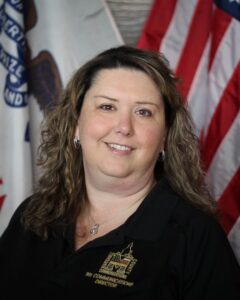
Rhonda Braudis, CPE, RPL, NREMT, is the 911 Communications Director for the Marshall County Communications Commission.