
Iowa hits peak COVID hospitalizations
ISU public health official provides context to data
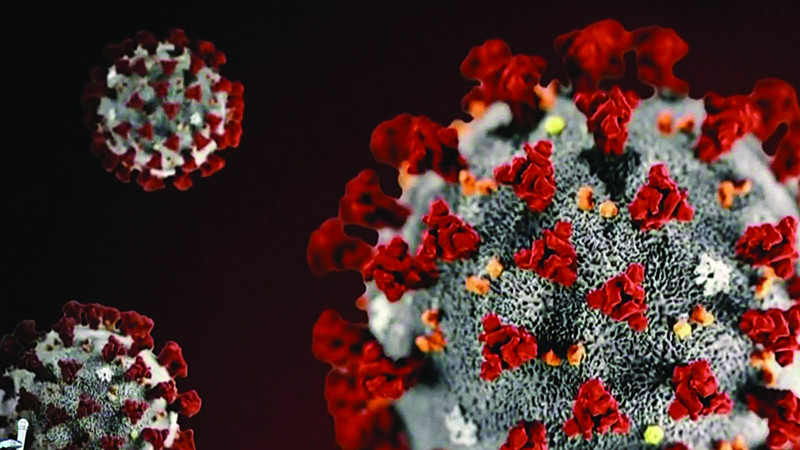
Iowa recorded 482 COVID-19 patients hospitalized on Thursday, setting a record mark for the state according to the Iowa Department of Public Health.
The state has recorded 1,505 deaths, up from 1,360 since the last COVID-19 report published by the Times-Republican on Oct. 2. Marshall County recorded one death in that time period, bringing its total to 36 (10th in the state).
The county has recorded 1,884 positive cases (13th in the state) according to IDPH contrasting with 1,873 according to USAfacts.org, a nonprofit organization that records and reports government data.
There have been 103,170 positive cases across the state, up from 90,007 from the last report, including 1,505 deaths. The United States has reported more than 7.7 million cases as of Oct. 13, with 213,838 deaths.
Iowa is one of the worst states in terms of positive cases per 100,000 population at 3,189.5. Louisiana is the worst with 3,717.1, according to USAfacts.
A report from the White House Coronavirus Task Force released Sunday labels Iowa a “red zone for cases” with 199 new cases per 100,000 population the week prior. The national average is 100 cases per 100,000. The task force used data from USAfacts for its report.
Iowa has the seventh highest positive rate in the country. The report states that 82 percent of Iowa’s counties have “moderate or high levels of community transmission.
There were a reported 107 patients in intensive care units in the state and 66 admitted to hospitals in the last 24 hours. Across the state there are 49 patients on ventilators.
There are 60 long-term care facilities in Iowa currently experiencing outbreaks. None are reported in Marshall County. About 74 percent of the positive cases tied to long-term care facilities are female. There have been 757 deaths among 1,498 cases in the facilities.
Twenty-one percent of the positive cases in Marshall County are among people with pre-existing conditions which is known to increase morbidity.
The highest number of cases by known occupation in Iowa is in the manufacturing and industrial sector, which reports 7,930 cases. This is more than cases among the elderly (6,057). Occupations in education reports 4,197 cases.
Dr. Alejandro Ramirez, a faculty adviser on Iowa State University’s public health team, has researched infectious disease transmission and has been involved in the university’s COVID-19 testing plan. He said flu vaccinations will be an important step to take in lessening the impact of the coronavirus this winter as the interaction between the two illnesses could be severe.
“If you did get influenza and COVID together, it’s not going to be one plus one equals two,” he said. “It’s more like one plus one equals four or five, because that’s how much more severe that it would be. Let’s be proactive in vaccination.”
When looking at COVID-19 statistics, Ramirez looks at hospitalizations and ICU cases as an indicator of how the state or county are handling the virus.
“One of the things we just don’t know is if everybody who needs a ventilator is getting access to a ventilator,” he said. “If we don’t practice things that mitigate exposure we risk bringing the numbers up and overwhelming the hospitals. Our focus needs to be how do we minimize the impacts because unfortunately we can’t eliminate them. We don’t have the tools to take it to zero.”
Ramirez used ISU’s testing statistics as an example of how data, particularly percentages, can be misleading if taken out of context. For instance, the university started with surveillance testing at the beginning of the semester. Surveillance testing is not used specifically to diagnose cases, but to gather data that can help understand the virus’ spread in the future.
The university has shifted to a more targeted approach, focusing on people with symptoms or who have been in contact with individuals that have tested positive. The targeted testing yielded a higher rate of infection, which was expected according to Ramirez.
“Just having students who are positive doesn’t mean there’s a bad outcome. That’s a very different outcome than let’s say a nursing home where my grandmother or mother-in-law might be,” he said. “In that case, just getting positives is nerve wracking. A single death, especially if it’s someone I know or I love, has a huge impact on me.”
Marshall County has the 13th highest number of COVID-19 cases in Iowa
The counties with higher numbers include:
• Polk — 17,489
• Woodbury — 6,559
• Johnson — 5,542
• Black Hawk — 5,010
• Linn — 4,827
• Dubuque — 4,358
• Scott — 3,783
• Story — 3,760
• Dallas — 3,194
• Pottawattamie — 2,766
• Sioux — 2,194
• Buena Vista — 2,168
According to IDPH data:
Race:
• Caucasian: 73 percent
• African American: 5 percent
• Asian: 3 percent
• Native American: 0 percent
• Latino: 13 percent
Sex:
• Female: 51 percent
• Male: 48 percent
Age:
• 0-17: 9 percent
• 18-40: 46 percent
• 41-60: 27 percent
• 61-80: 14 percent
• 80 or older: 4 percent
——
Contact Joe Fisher at 641-753-6611 or jfisher@timesrepublican.com