
Prairie grasses entering prime time
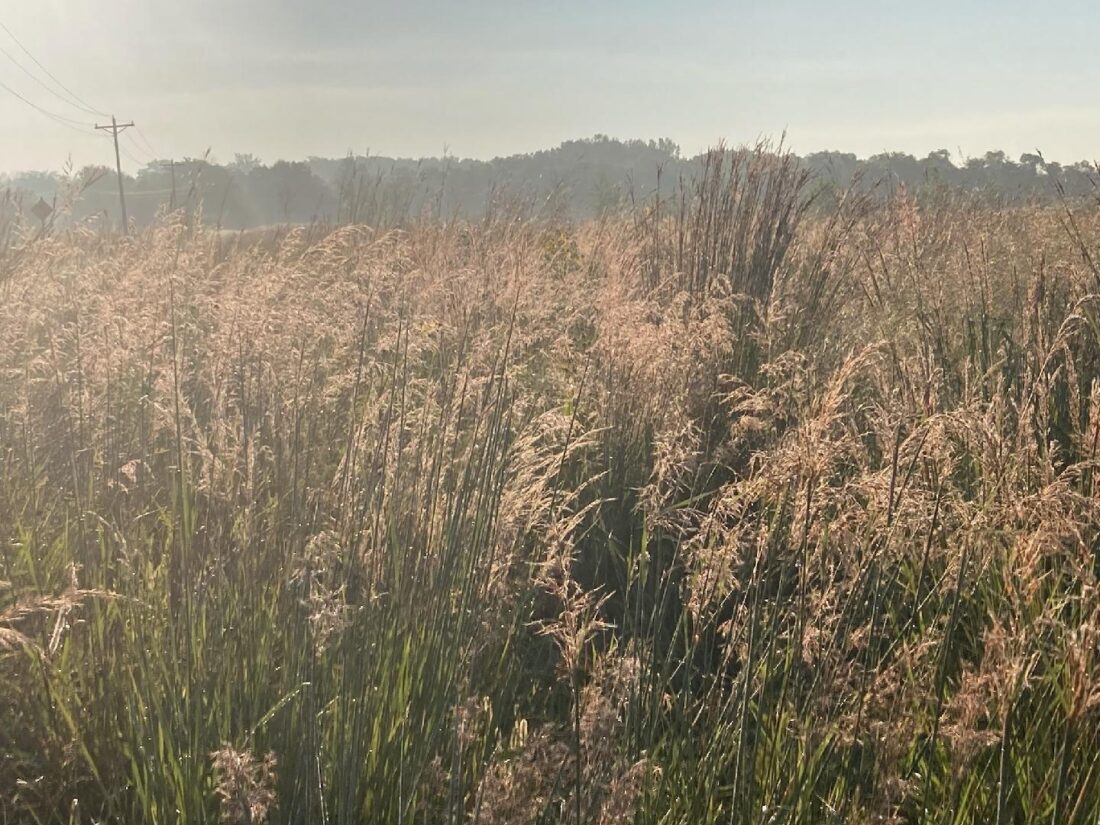
PHOTOS BY GARRY BRANDENBURG — Tall grasses of native prairies are entering prime time. As late summer progresses, these plant types become more easily identifiable. These unique native vegetation species begin to show their tall foliage well. Today’s images are just a few of the native grass species one may find at the Marietta Sand Prairie (MSP) or at other remnant sites. Representative grasses are Big Bluestem, Indiangrass, Sideoats grama, and Sand Lovegrass. Botanists have identified almost 300 species of plants at the MSP and that list includes grasses, forbs, sedges, ferns and an assortment of other unique plants. During Iowa’s settlement times of mid to late 1800’s, it is estimated that 30 million acres of Iowa was dominated by native tall grasses. This represented about 85 percent of Iowa’s land. Forestscovered about 13 percent and the last 2 percent was water in rivers, lakes, ponds, prairie potholes and of course the big border rivers of the Mississippi and Missouri. In today’s modern times, native grassland prairie remnants are about one-tenth of one percent of Iowa’s 56,857.13 square miles.
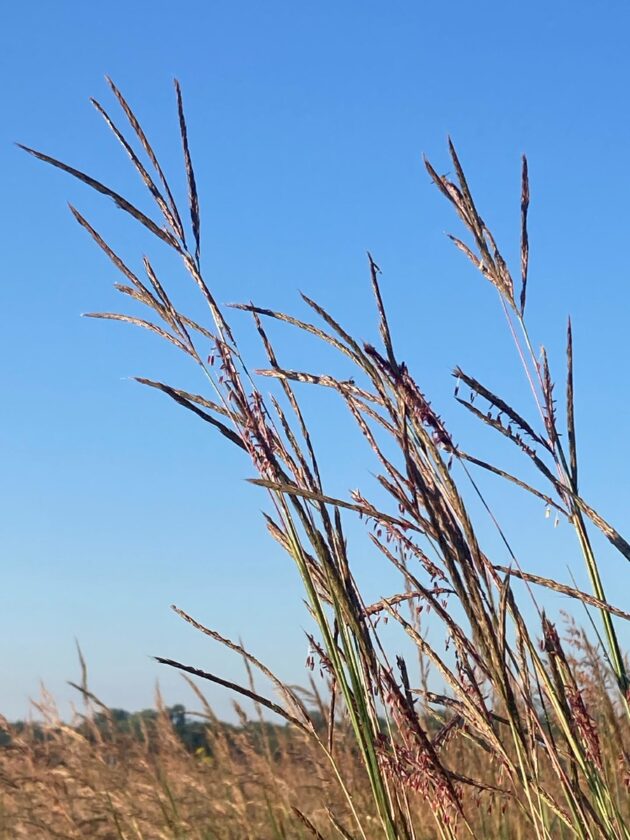
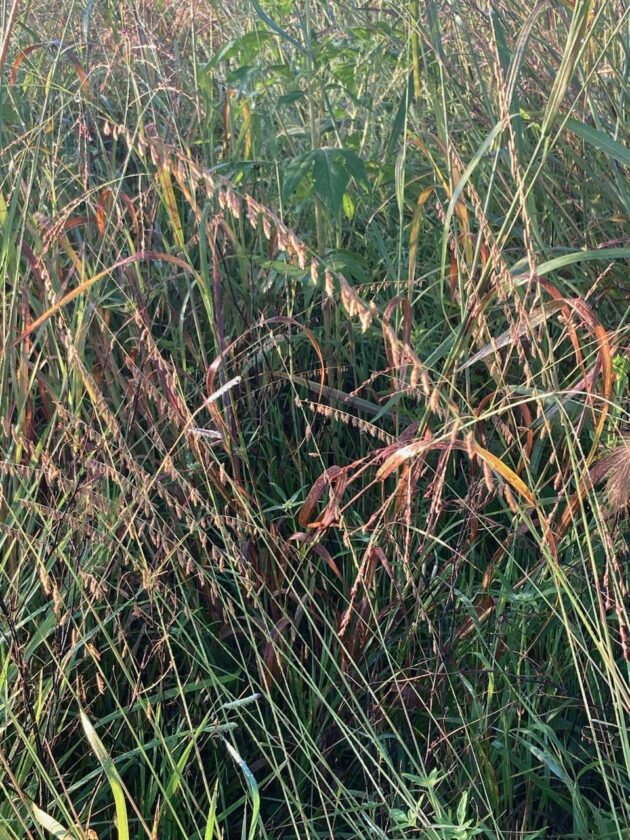
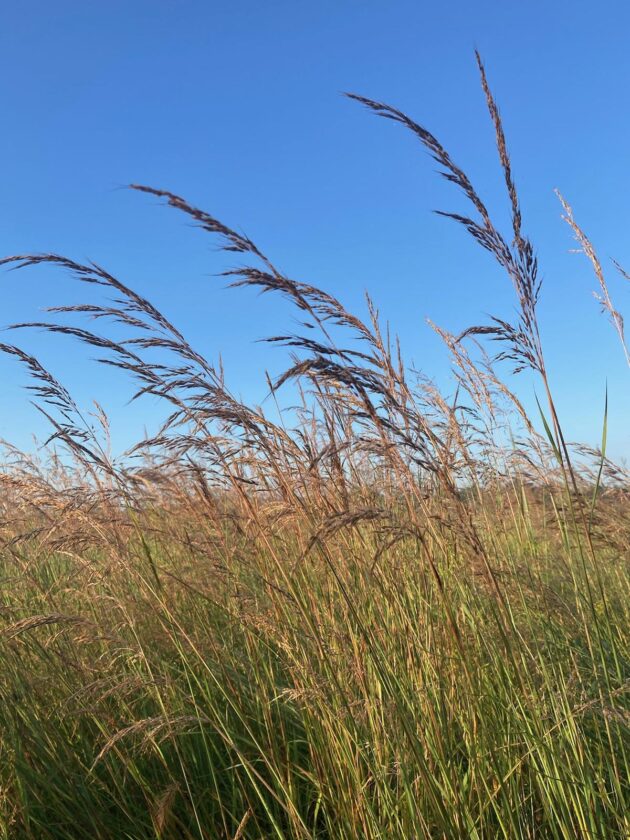
PHOTOS BY GARRY BRANDENBURG — Tall grasses of native prairies are entering prime time. As late summer progresses, these plant types become more easily identifiable. These unique native vegetation species begin to show their tall foliage well. Today’s images are just a few of the native grass species one may find at the Marietta Sand Prairie (MSP) or at other remnant sites. Representative grasses are Big Bluestem, Indiangrass, Sideoats grama, and Sand Lovegrass. Botanists have identified almost 300 species of plants at the MSP and that list includes grasses, forbs, sedges, ferns and an assortment of other unique plants. During Iowa’s settlement times of mid to late 1800’s, it is estimated that 30 million acres of Iowa was dominated by native tall grasses. This represented about 85 percent of Iowa’s land. Forestscovered about 13 percent and the last 2 percent was water in rivers, lakes, ponds, prairie potholes and of course the big border rivers of the Mississippi and Missouri. In today’s modern times, native grassland prairie remnants are about one-tenth of one percent of Iowa’s 56,857.13 square miles.
Trending
Native grasses, those very tall and sometimes mysterious straight stemmed grass species, are beginning to show well as they strut their stuff. Some, like Indiangrass and Big bluestem, have now reached 6 or 7 feet in height.
They wave and sway in the wind, pulsating back and forth as if marching to some unknown destination. Seed heads are filling as each plant type is gathering its nutrients in its hope for future centuries.
Yes, these grasses do produce seeds with which propagation is part of how Mother Nature proceeds. However, many native grasses have a plan B in which they continue to live because of their deep root systems.
These root systems live on and re-sprout every year. Any of the plant materials above ground will die off over winter, however the roots live for centuries.
Prairies are grasslands. Native grasslands encompass all or many of the original vegetative land cover of the Midwest regions of America. Grasses dominate. Added to the mix of native plants are forbs (flowers).
Then mix in different soil types and different moisture holding capabilities to create micro-habitats that allow various native plants to thrive in a preferred environment. The result is a mosaic of prairie.
It takes a long long time for topsoil to be built. Botanists estimate that on average, it takes one century to build one inch of topsoil. This natural process is a combination of partially decaying vegetation over time, adding organic matter to what already has accumulated.
Plant decay and the minerals of the geological processes are the foundation of soil. In our modern times, we may just assume that soil has always been there, a medium to grow any plant species. However, soil is so important because it grows our food.
Prairie grasses dominated for thousands of years as the barren landscapes of post glacial times became places for plants to fill up vacant niches. As the Wisconsinan Glacial system was on its retreat (melting) 18,000 years ago, scouring winds and bitter winter season conditions left the land surface exposed.
Exposed soils were covered for a long time by tundra-like low growing vegetation that could withstand intense winds. Later as the normal warming of the earth took place, with the rise of the interglacial warmer times dominated, tundra gave way to boreal spruce forests.
These in turn gave way to a mix of deciduous trees and boreal trees. Add more thousands of years to this exercise and one finds evidence of a naturally drying environment in which trees were replaced by grasses.
This is a simplification of a long geologic process but you get the point. Since Mother Nature has lots of time on her hands, she slowly morphed and adjusted all kinds of plant types to grow upon the landscapes of the world.
If we take notice of observations by early surveyors and settlers, we find this summary for Lt. Albert Lea. His observation during the 1830s when he traveled into the Iowa lands of late summer and early autumn contained this: "Nothing can exceed the beauty of Summer and Autumn in this country, where, on one hand, we have the expansive prairie strewed with flowers still growing; and on the other, the forest which skirt it, presenting all varieties of colour incident to the fading foliage of a thousand different trees."
Another observer in northwest Iowa during the winter months described the prairie this way: "I could only imagine how very different things must have been in the summer when the thick, soft carpet of dark green grass appears dotted with flowers of all colors; but even so, despite the barrenness, wildness, and monotony of the scene, yea by reason of these, there is something grand and awe-inspiring in the landscape. Nothing impedes or interrupts the view, whithersoever one looks. No hill or rock, not even a house or tree, not a single sharp line. Nothing, absolutely nothing but the vast, broad prairie!"
These observational accounts are just one of many that settlers and pioneers made when encountering tall prairie grasses for as far as their eyes could see, but the settlers came with faith and hope. They had been sold on the idea of land with rich top soil.
Yes, the topsoil was there, just under their feet. When a fellow named John Deere built a plow with a unique steel blade, turning prairie sod became a turning point.
Slowly and inevitably, Iowa's lands and much of the Midwest was transformed into a richness of agricultural capability. Those black topsoils that were created by thousands of years of prairie growth, were now to be exploited, turned into a powerhouse for crop and livestock production.
Our current modern day prairies provide a small snapshot of what once existed. It is good that some of these remnant prairies escaped the plow or other forms of civilization.
We humans do need from time to time to be reminded of how our landscape was shaped, how it modified itself to fit geological time scales, and how we must adapt to the realities of modern day circumstances. Understanding natural history allows us to acknowledge deep time. Prairie lands are a testament to deep time.
I encourage you and friends to visit the Marietta Sand Prairie, or other places where reconstructed prairies have established those waving golden tops of Big bluestem, Indiangrass, Switchgrass, Sideoats grama. Hold your arms out and let those tall grasses pass through your fingers. Then read more about native prairies to strengthen your understanding of one of nature's botanical creations.
--------
Migration hints are in the works for many birds. Orchard Orioles may have left by the first part of August.
Other species are gathering into flocks in preparation for big flights southward. Come September however, things really heat up on the list of birds to watch for.
I have a list compiled by the late Robert Moorman, extension wildlife conservationist at Iowa State University, that shows 40 species of birds will use September to depart from Iowa. In general, all the swallows and warblers will acknowledge shorter day lengths as their clue to head south.
Our autumn season begins officially on Sept. 22, just a mere 30 days away.
--------
Wild turkeys and their young of the year poults have been occasionally observed by myself and others. The young turkey poults are about ½ sized to the adults. They can fly and will roost with the parent birds in trees for their overnight stays.
Being off the ground allows these large game bird a huge measure of safety from ground
predators. As for young pheasants, broods of this popular game bird have also been seen.
My backroad forays affirm that pheasants are doing okay. By the end of August or early September, DNR roadside wildlife count data will be published.
The trend data these surveys provide will help confirm where pheasant populations are low, medium or high across the state of Iowa. Stay tuned.
--------
Here is my thought for the day. Outdoor experiences are meditative. There is great value to the person who enjoys an outdoor adventure.
These folks feel at ease in a forest, wetland or prairie. Time spent outdoors observing nature and learning from her is time well spent.
--------
Garry Brandenburg is the retired director of the Marshall County Conservation Board. He is a graduate of Iowa State University with a BS degree in Fish & Wildlife Biology.
Contact him at:
P.O. Box 96
Albion, IA 50005