
Over 200 Meskwaki objects returned to Tribal Museum
Trending
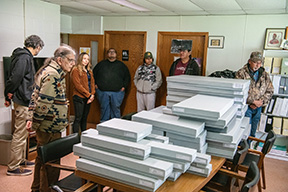
MESKWAKI SETTLEMENT -- History was quietly made on April 28 with the largest mass return to date of Meskwaki objects from a single institution: over 200 items came home in a single day. This marks the first time that a collection came back as a single group. Known as the "Mary Alicia Owen Collection," these items had been housed at the Missouri State Museum in Jefferson City.
People from the Tribe had regularly inquired about these same items since the early 1900s, and especially after the collector's death in 1935, but were met with unresponsiveness. It wasn't until the 1990 federal law was passed, the Native American Grave Repatriation Act (NAGPRA), that the Tribe regained a legal relationship to the items and could try to recover or "repatriate" items from this collection and other collections held in museums and institutions across the country.
Fortified by the new law, in 1993 the Tribe officially engaged the Missouri State 3Museum in repatriation efforts for what ended up being a 33-year process. By early 2025, discussion between the Tribe and Museum staff had arrived at the agreement to repatriate the items as a total collection instead of repatriating single objects individually.
In August of 2025, the Tribal Historical Preservation Office made a formal request to repatriate, the National Register published the Notice, and this allowed the collection to be returned on or after April 27, 2026. One day later, the collection was escorted home safely by key staff from the Missouri State Museum.
Mary Alicia Owen was from St. Joseph, Mo., and was a folklorist who pioneered collecting African and Native American folklore, music, and objects beginning in the late 1800s. The popularity of collecting "in the field" and studying minority culture groups during the late Victorian era was viewed at the time as a respectable pursuit for women from well-to-do families.
This was the beginning of what would become ethnography and eventually anthropology, which eventually became an academic discipline. As a child she first came with her brother Herbert, who made visits to the Meskwaki Settlement in Iowa, and she came to know many people in the Tribe.
As a young woman, she joined the London Folklore Society. Between 1876 and 1886 she renewed her visits with the Tribe and began collecting folklore and objects. Eventually she split her Meskwaki collection, giving part to Cambridge University in England and the rest to the Missouri State Museum by 1929. Owen served as the president of the Missouri Folklore Society until the year of her death in 1935. The Missouri collection lived in relative obscurity after that, and it was feared by the Tribe that the pieces had been sold, loaned out, or otherwise damaged by neglect or misplacement.
There have been many collectors that have come to the Tribe. Some were not people of good intentions or high moral character, and most genuinely held the belief that Indigenous people were doomed and likely to die out within their lifetime. Most tribes, including the Meskwaki, contended with amateur salvage collectors for decades.
There were no true researchers at that time, as we now expect ethical research to be conducted, and most collectors were fundamentally exploitative and extractive to tribes. Owen's depictions of Native American history and culture were decidedly more sympathetic than most, but unfortunately still conjured romantic, imperialistic characterizations of noble savagery in her writings.
She, like other collectors, routinely visited the Tribe and solicited stories and purchased artifacts directly from Native people, most of whom were indeed living through perilous times with few resources and uncertain futures. Items came to be lost due to duress. Owen, however, had an excellent eye for quality, and she selected premium items for her collection that showcase the extraordinary talents of the Meskwaki artists and creative makers of these objects.
Instead of being the "Mary Alicia Owen" collection, now that the items are back home, they can recalibrate to become part of the "Meskwaki Collection" at the Tribe's own museum.
"Ms. Owen will be remembered as one of many contributors who glimpsed the beauty and worthiness of our culture even if they didn't truly understand it, and we thank her for the gentleness she and Missouri State Museum have treated these items for over a hundred years. The pieces are stunning, and we hope everyone soon gets a chance to see them," Meskwaki Historic Preservation Director Johnathan Buffalo said.
The Meskwaki Museum and Tribal Historic Preservation Office (THPO) would like to thank the following people for their support and advocacy that made this transition possible: Mike Ohnersorgen, Director, Cultural Resource Management, Kate Owens, Curator of Collections, Missouri State Museum, Tiffany Patterson, Director, Missouri State Museum, Caroline Crecelius, Repatriation Coordinator, and Luke Kapayou, Repatriation Committee member.