
Lights, Camera, Apgar!
In the beginning, a legacy is born
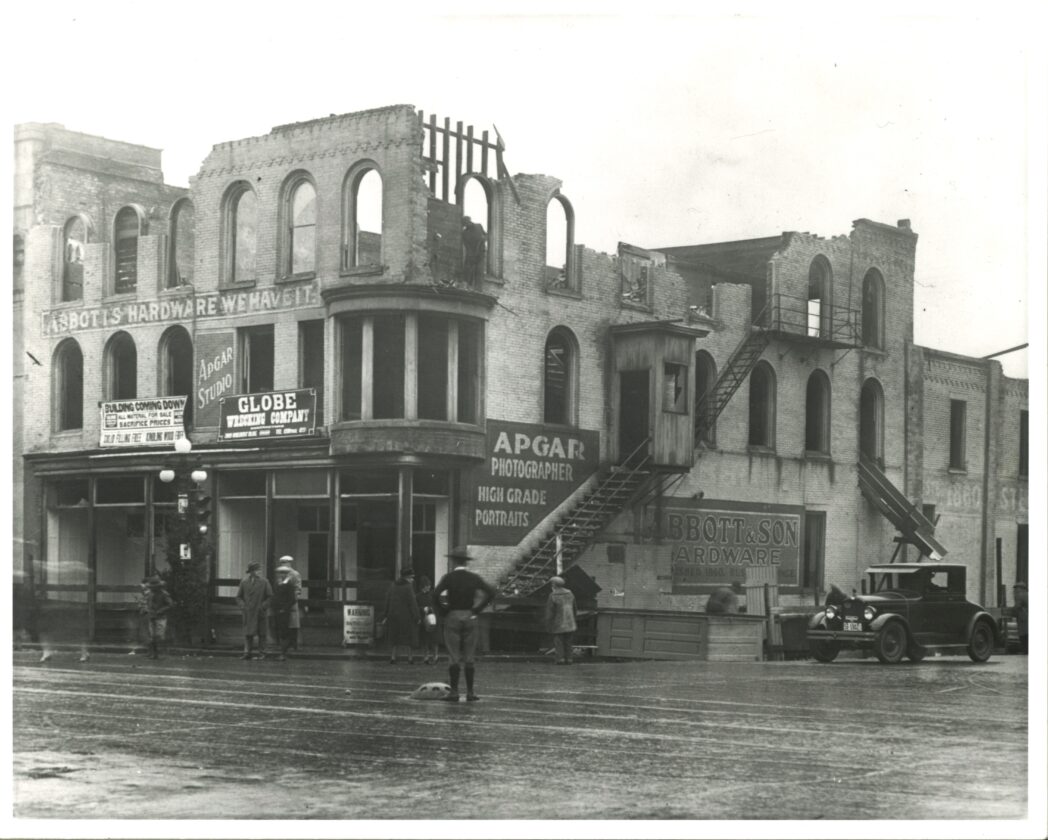
Contributed photo
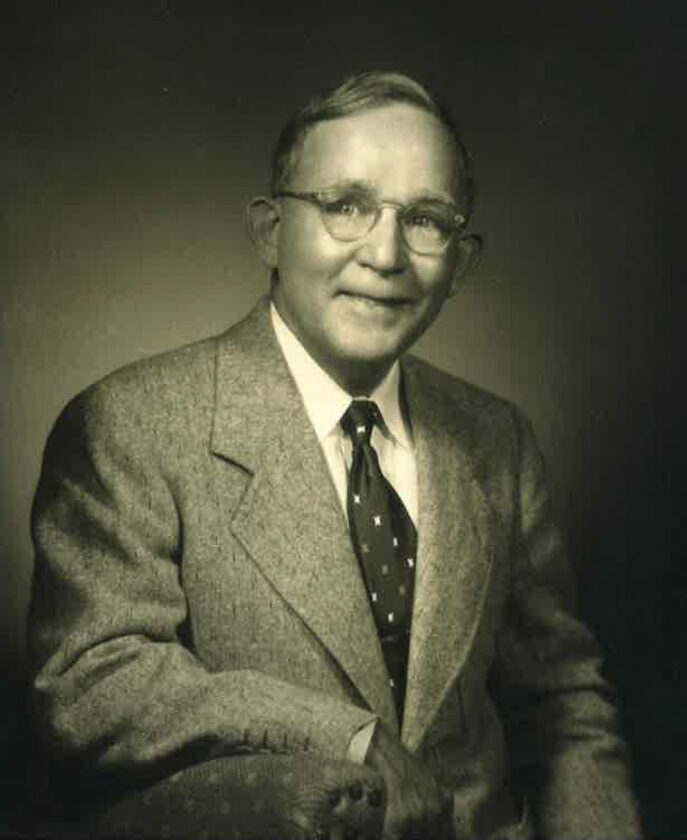
R.E. Apgar
Contributed photo
R.E. Apgar
Trending
In anticipation of the Apgar Family Water Plaza opening on June 6th at 11am in the Linn Creek District, this is the first of 3 articles documenting the legacy of the Apgar Family in Marshalltown.
For 3 generations the family documented, and therefore preserved, key moments in the lives of individuals and the community itself. Through Tom Apgar's extraordinarily generous gift, the Apgar name will continue to be associated with memory making moments and community pride.
Ross Edwards 'R.E.' Apgar (1886-1957), was born in New York state, a 6th generation descendant of a German immigrant who'd arrived in the United States in 1734, settling in what is now New Jersey.
Raised near Erie Pennsylvania, Ross graduated high school as the quarterback of a winning football team. In addition to a passion for sports, he had a deep affinity for photography and ultimately developed this hobby into a profession. Ross spent 3 years in Florida studying all aspects of photography while managing the photo division of a large department store.
Hoping one day to open his own photo studio, Ross was the staff photographer for the University of Wisconsin, from 1907-1911, when he learned that Theodore Brown of Marshalltown, Iowa was selling his successful photography business.
Ross purchased the Brown business on October 21, 1911 and that very night, Mr. Brown took him to the Fall Fete at the Marshalltown Country Club, then located east of Riverview Park. That proved quite fortuitous, for at this dance, Ross met Emma Patton, the woman he would later marry.
Emma and Ross married on September 22, 1914 and lived at 314 North 7th St., until 1919 when they moved to 615 West Main St. There they raised their 3 children; Mary Clare, and twins Patricia Mae and Ross Patton 'Pat'.
When Ross purchased Brown's business, it was located on the 2nd second story of the building on the northwest corner of Center St. and Main St. Electric lighting was not yet common in the Midwest and thus studios were located on upper levels of buildings, ideally with large, multiple windows and a system of curtains to maximize and control natural lighting.
In the mid 1920's, the building in which the studio was located fell prey to a devastating fire. As a result, in 1928, Ross moved the namesake studio to the 2nd story of 18 ½ West Main St. and housed the lab portion of the operation in its basement. At the time, a retail store selling Marshalltown Vinegar Works products, occupied the first floor.
Ross created a solid family business and, as would his successors, was deeply involved in his community. Along with Waltner Bohen, in 1930 Ross built twenty-five houses in a subdivision in southeast Marshalltown.
He worked in the Chamber of Commerce, the YMCA and was a charter member of the Rotary. As Ross managed the family business, his children enjoyed a full childhood/youth. Pat participated in backyard sports, community theater, high school journalism and led the MHS marching band. He achieved National Superior ratings three times in baton twirling and performed in multiple competitions and large scale events, once performing in front of 85,000 spectators at Chicago's Soldiers Field.
He enrolled at Iowa State College (now ISU), to study Civil Engineering, and joined the ROTC. He ended up serving in the Army for a total of 8 ½ years, and was Honorably Discharged as 1st Lieutenant.
Pat was first called to active duty for WWll in April 1943. His specialty was teaching about enemy land mines, booby traps, explosives, and obstacle demolitions. He was placed on active reserve after WWll wound down and went back to college to finish his degree.
He met his future bride, Dorothy Briles from Kansas, on campus. He learned she was a graduate teaching assistant in the Home Economics Department, and enrolled as the only male in her class, so she would notice him.
And, it worked. They began dating and were married on May 9, 1948. Pat was welcomed by his father to join the family business and did so when on inactive duty between WWll and the Korean War. During this time, he married Dorothy, purchased the business, and graduated from a 9 month program at the Progressive School of Photography in New Haven, CT. While he attended the photography school, his new bride lived with his parents/her in-laws. The newlyweds wrote each other every few days and missed each other terribly, as evidenced by the heartfelt letters that still exist.
Pat remained in Marshalltown until the Army recalled him to active service in September 1950. His assignments included working with the South Korean Army, teaching them about landmines, bridging and fortifications. When Pat's father, R. E., suffered a stroke, Pat came home on leave and the Army allowed him to be inactive so he could take over the family business. He was officially honorably discharged in 1953.
Together, over time, Pat and Dorothy Apgar built a life, raised their children and contributed in myriad ways to their beloved community. Learn more in the next installment: 'The Pat and Dorothy Years'.
To read the full articles visit: https://artsandculturealliance.org/portfolio/apgar-family-water-plaza.
-------
Nancy Jeanne Adams is a local artist
based in Marshalltown.