
Collaboration needed to combat food insecurity
Trending
Greater collaboration among entities is needed to better address food insecurity in Marshall County.
That is the biggest lesson taken from a Community Foundation of Greater Des Moines (CFDM) food insecurity meeting held Tuesday afternoon. Amy Pieper, county director of Marshall County Iowa State University Extension and Outreach, virtually attended the meeting, along with five other people from her office.
"Des Moines is a little bit ahead of us," she said.
The meeting was held to reveal a plan to reduce food insecurity, since one in four residents in the Des Moines metro area is facing that reality. The amount of people seeking help from food pantries in the area has increased steadily every month. Mary Sellers, president of United Way of Central Iowa, said the usage of food pantries has reached a critical point.
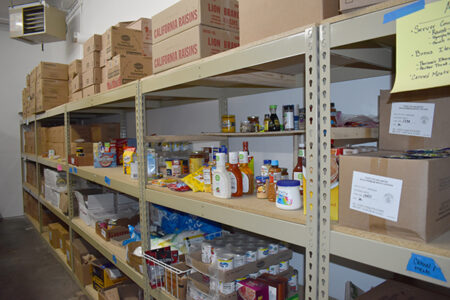
While Pieper said Marshall County is not quite at a critical point yet, higher numbers of people have utilized food pantries every month. The Emergency Food Pantry serves more than 300 families each month. If each family has four members, the pantry provides food for 1,200 Marshall County residents every month.
After the CFDM meeting, Pieper said she would like to see greater collaboration between organizations and residents, which will help address reasons people are hungry. She has seen real life examples.
"We have the [Buy. Eat. Live Healthy] program, and we work with groups of individuals for eight weeks," Pieper said. "I have seen the participants call us and let us know they have food they would like to donate to a pantry. People are helping others and paying it forward."
Improving collaboration is the first step she would like to see. That way, everyone can be sure they are on the same page. Plus, it would make it easier to learn about resources when people visit the Emergency Food Box.
"They can become aware of resources and associations which can help them out of poverty," Pieper said.
She does not have exact ideas on how to make the improvements, but added they will get some inspiration from the Des Moines area on ways to move forward.
She said all of the Marshall County communities, except for St. Anthony, have little food pantries.
"The number of little free pantries has doubled this past year," Pieper said.
The increasing collaboration and help extends beyond donated groceries. With the significant rate of ALICE households, the willingness to help neighbors is huge. ALICE stands for "Asset Limited, Income Constrained, Employed." Pieper said that means Marshall County residents are working, but they are not getting paid enough. The most recent ALICE report indicated that of the 15,298 households in Marshall County in 2021:
12 percent earned less than the federal poverty level;
Households in poverty and ALICE households have increased by almost 16 percent since 2019;
87 percent single mothers earned less than the ALICE threshold, compared to 45 percent of all single fathers or 20 percent of married couples with children;
32 percent of Black and 13 of Asian residents earned less than the ALICE threshold, compared to 9 percent of white residents.
Pieper said last year, 10 percent of the county population relied on SNAP food benefits. Of that, 42 percent were children, 11 percent were disabled adults and 12 percent were senior citizens. In the Marshalltown school district, more than 50 percent of kids qualify for free and reduced lunch.
Pieper said the next food insecurity meeting will take place March 6 at 10 a.m. at the Iowa State University Extension office in Marshalltown. The meeting is open to the public.
------
Contact Lana Bradstream at 641-753-6611 ext. 210 or lbradstream@timesrepublican.com.