
Council plans to pursue three percent franchise fee on gas and electric utilities
Trending
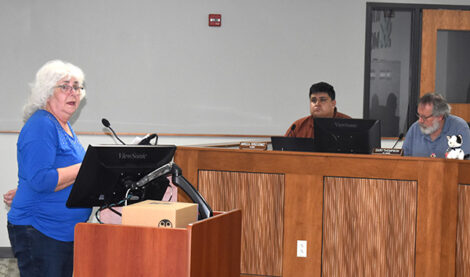
At the tail end of Monday night's meeting, the Marshalltown city council returned to a familiar topic that has proven controversial in recent years -- the implementation of a franchise fee added to gas and electric bills -- and ultimately voted 5-2 to proceed with a path to imposing such a fee while leaving the option open for residents to force a special election referendum by petition as they previously did three years ago.
The difference between the prior five percent proposal, which failed by a wide margin at the polls in September of 2023, and this one, however, is that the council is only seeking a three percent fee, according to the discussion that occurred during the meeting. City Administrator Carol Webb started the conversation by asking the council for direction on the plan, how it would be implemented and what would be included in a revenue purpose statement.
Councilor Marco Yepez-Gomez was the first to speak up in favor of the franchise fee as a way to supplement the general fund for uses like public safety, and, as a "backup plan," he also offered his support for a Payments in Lieu of Taxes (PILOT) program, which would allow the city to collect money from the tax-exempt wastewater and stormwater utilities, if the franchise fee failed.
Fellow Councilor Mark Mitchell expressed a desire to put the revenues generated exclusively toward roads and felt that would be more popular with the general public if the matter came to a vote. In response to public commenter Layne Pieri, Webb explained the basic concept of a franchise fee, and Councilor Greg Nichols added that it would replace the current one percent sales tax applied to utility bills in the city.
Another commenter, Tom Deimerly, asked about whether the franchise fee would simply offset the current sales tax on utilities, and Webb replied that it would be up to the council as to the percentage they set. Councilor Jeff Schneider said Marshalltown is one of the only cities of its size in Iowa without a franchise fee currently in place and suggested applying the fee to gas and electric bills.
"I think given the general fund pressures we have and ones that we look like we're going to have, I think the revenue purpose statement needs to be for, probably, public safety," he said, recommending a three-percent figure.
Pieri then returned to the podium and expressed concern about raising prices on gas and electric utilities as they are already surging.
"I might suggest something that's not tied up in the Strait right now," Pieri said, referring to the war with Iran and the controversy over access to the Strait of Hormuz.
Webb estimated that a three percent electric franchise fee would generate about $1.17 million in annual revenue, and the same fee on gas would generate $416,000. Councilor Greg Nichols shared his support for the three percent gas and electric proposal, and Schneider said a voter-generated petition or reverse referendum would require a 60 percent majority in favor for the fee to pass.
It would not be able to go on the ballot this year, according to Webb, and the earliest election date would be next year. Mitchell estimated that a special election would cost between $15,000 and $20,000. Councilor Melisa Fonseca asked Webb for more details on the PILOT program, which she described as essentially a franchise fee for municipal utilities. Webb questioned whether it would make sense to impose a PILOT on the stormwater utility after the council had just voted to raise rates but felt it could be used on the wastewater utility.
In response to another question from Fonseca, Webb said the council could pursue both a franchise fee and a PILOT, and Fonseca indicated that she would be interested in seeing a side-by-side comparison with pros and cons for each course of action.
Webb recommended putting some of the money generated toward property tax relief to offset what would be lost in Local Option Sales Tax (LOST) revenue that currently goes to property tax relief. She then asked the council which course of adoption they would prefer to pursue -- if the council adopts it by ordinance, residents can then petition for a special election if the number of signatures equivalent to 10 percent of the number of voters in the prior city election sign it -- and Schneider spoke up in favor of the council adoption by ordinance route.
With the directive of three percent, gas and electric, property tax relief and public safety and council adoption, Schneider made a motion to that effect and advised Webb against further exploring the PILOT idea as he did not believe it would generate nearly as much revenue.
Once it was seconded, Leigh Bauder stepped forward to the speaking podium during public comment and recounted the lopsided election results in 2023 -- almost 77 percent of voters opposed the implementation of the five percent franchise fee at that time. She also recalled the promotional efforts both for and against the ballot initiative and said those who asked questions about how the money would be spent faced criticism from the prior council and then-Mayor Joel Greer.
Her other concern was the costs that Alliant Energy would incur from the fee being passed on to consumers, especially senior citizens, the disabled, veterans and those on fixed incomes, and she worried that it could force businesses out of the community.
"That is of concern. We're trying to grow our community. Will this prevent (it) and cause problems for our community?" Bauder said.
She concluded by urging the council to be "very, very transparent" in how the revenues generated by such a fee would be spent, and she also expressed interest in learning more about a PILOT and how it would compare to the franchise fee.
Schneider's motion ultimately passed 5-2 with Councilors Gary Thompson and Sue Cahill opposed.
------
Contact Robert Maharry at 641-753-6611 ext. 255 or
rmaharry@timesrepublican.com.