
Past Times: Going for the gold
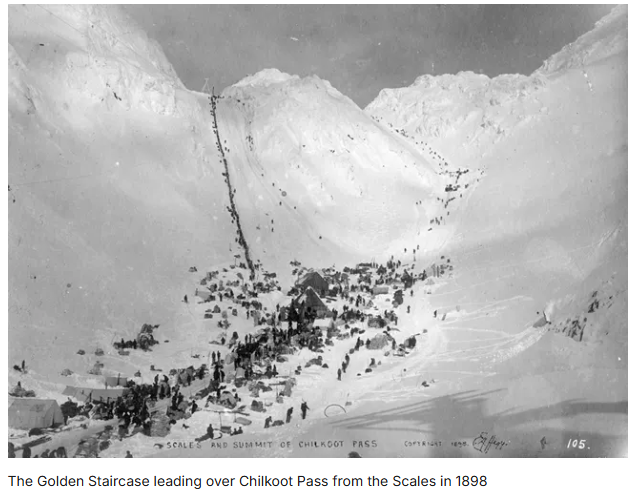
Widely published photo of Chilkoot Pass crowded with Stampeders.
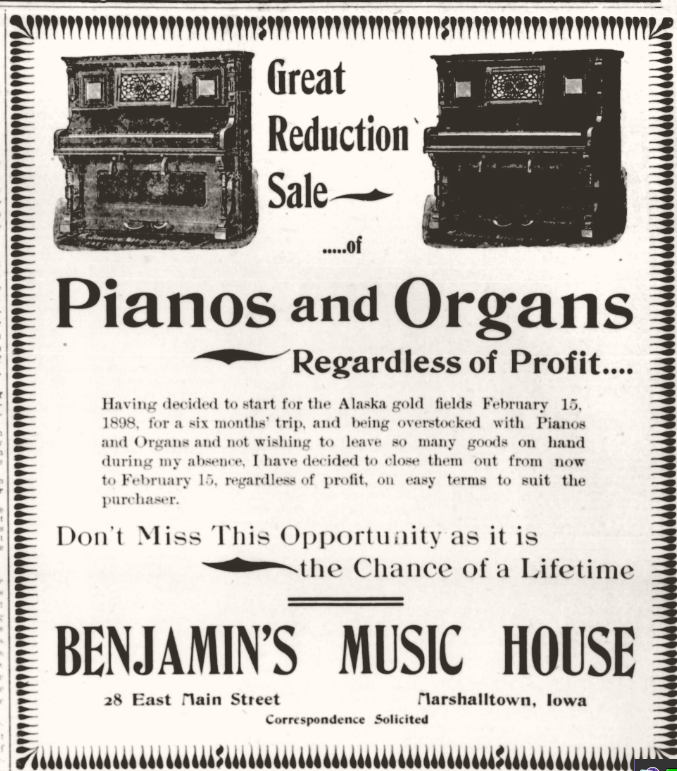
Benjamin's Music Store Closing.
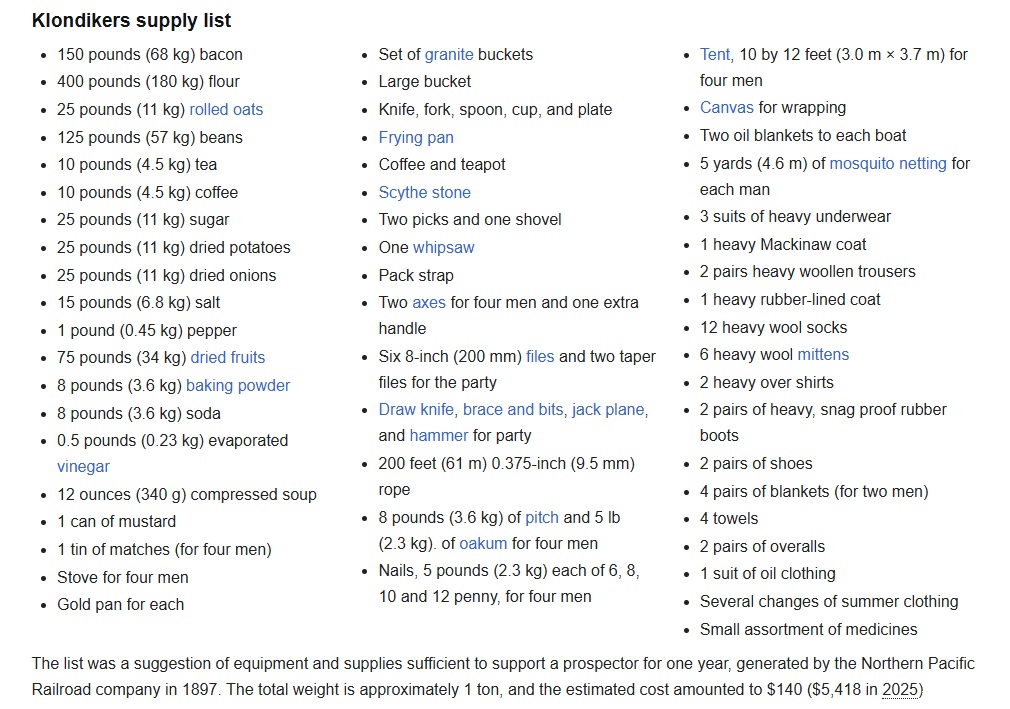
Klondiker's Supply List from Wikipedia.
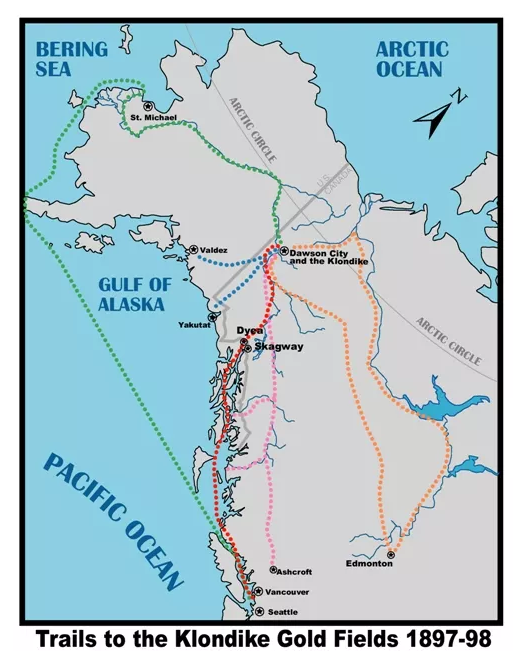
Map of the Klondike Gold Region.
Widely published photo of Chilkoot Pass crowded with Stampeders.
Benjamin's Music Store Closing.
Klondiker's Supply List from Wikipedia.
Map of the Klondike Gold Region.
Trending
The fever was fierce. Fast and furious it spread like a gasoline fire across the US from the west coast to the east coast in late 1896, and then back again in 1897. It soon went global. No mask could contain it, there was no vaccine to control it. It attacked mostly men, single or married, but it affected a great many American families, by the thousands, if not millions. No one seemed immune at some level. Poor families, middle class business men, even very well-to-do upper-class folks could fall victim to the fever. It didn't matter if the infected were US citizens or recent immigrants.
Families became separated, sometimes for many months, sometimes forever. There were many fatalities. Businesses were closed down. People moved away. Folks who contracted the malady prayed to heaven for a successful outcome, but few of their prayers were answered.
Just as today's "Luddites" blame technology like internet towers and cell phones for spreading our more modern epidemics, this one was spread by telegraph wires, public newspapers, private letters and face to face contact.
Marshalltown was one of the many Iowa communities to be well hit by the epidemic in early 1898, after our citizens had been reading about the phenomena in our local papers for many, many months, holding meetings and making plans for it. It started in the Alaska Yukon region of the far north in 1896. It ended there in 1899.
Of course, this wasn't some early version of covid, this was "Klondike Fever", or the biggest gold rush the world had ever seen.
Many Marshalltown and central Iowa area men succumbed to the irresistible lure of instant, fabulous, almost unimaginable wealth. This month, Past Times will discuss and introduce some of the local men involved in the "Stampede." Next month Past Times will quote more specifically from many of their letters home, later published in our local papers.
But first, as a means of introduction, a brief summary quoted here from a fascinating and very informative article posted on Wikipedia, the internet site.
“Of the estimated 30,000 to 40,000 people who reached Dawson City during the gold rush, only around 15,000 to 20,000 finally became prospectors. Of these, no more than 4,000 struck gold and only a few hundred became rich. By the time most of the stampeders arrived in 1898, the best creeks had all been claimed, either by the long-term miners in the region or by the first arrivals of the year before. The Bonanza, Eldorado, Hunker, and Dominion Creeks were all taken, with almost 10,000 claims recorded by the authorities by July 1898; a new prospector would have to look further afield to find a claim of his own.”
This quotation and many more details from the Wikipedia page could have been written by our Marshalltown ancestors; their surviving accounts verify so much of the information posted on Wiki. We could not possibly quote the entire internet article for background so we advise readers to check out Wikipedia and another website posted by the National Park Service.
We also post here for our readers a list of supplies that each prospector was expected to bring with him to the gold fields for his own survival while panning for a gold strike. Readers are invited to take a close look at this amazing list. Each seeker of gold was expected to provide his own supplies to last him at least a year. Very few of these crucial supplies were available in the Klondike area, therefore, it was up to each individual to carry in his own supply. In some places it was required by Canadian law. Think of it! Each man needed to carry almost a ton of equipment into the wild frozen region before they could even begin the process of searching for buried treasure.
Also shown here is a view of Chilkoot Pass at the height of the Stampede. The prospectors loaded themselves with heavy packs then got in line to carry up a growing mountain of their gear. Men would have to leave a companion at the bottom to guard their equipment, and another at the top to guard what had already successfully been hauled to the top. It was an incredibly arduous task.
Letters from our Marshalltown prospectors tell how these important items, so painstakingly carried up rough, snowy, steep mountain passes and trails, were often lost in mere seconds with capsizing canoes on swollen rivers, lost in deadly avalanches, or stolen from them by ruthless thievery. Their Yukon experience, win or lose, was simply extraordinary.
Word of the discovery of gold was widely reported in local papers in late1896. In 1897 recruiters like Starbuck crisscrossed Iowa trying to sign up crews. By early 1898 many were set to leave, but by 1899 it was all over.
With all this in mind, here are some of our local citizens who sought adventure and wealth in this gold rush.
First was Edson Gilman Abbott, formerly of Marshalltown, and married to Ada, a daughter of one of this town's richest cattle breeders, Stephen Packard. Edson was born in 1865, so he was in his early 30's during the Rush years. Abbott in 1898 resided in Charter Oak, but after many discussions with J. M. (Jack) Starbuck of Cherokee, Abbott decided to return to Marshalltown with Starbuck as a first-hand witness, to preach the Gospel of Gold to Edson's close friends here in our town.
Next was Franklin Alonzo Benjamin, who ran a profitable business selling pianos and organs on East Main before closing down to head north to the gold fields with Abbott. Throughout the US many businesses were forced to shut down when employees simply quit showing up to work. In this case it was the music store owner himself who succumbed to the siren song that played in his ear and drew him away from a comfortable living. He was 36 in the1895 Iowa Census. His advertisement says he was planning to leave town for Alaska in February, 1898.
Another convert to the call was Abelbert Hiram "Dell" McCord, born in 1861. The 37-year-old McCord sent many letters home from Alaska which we will reference next month.
Edward Morris Vail, son of banker John Deloss Vail, was another well-known Marshalltown resident who heard the call of Abbott and Starbuck. He was born in 1872 and therefore was a young man of 26 at the time he came down with a bad case of the fever.
William M. Sherlock, who today, like many of the men named here, but not all, is buried in Riverside, and marked by one of the most impressive, eye-catching. monuments in the cemetery. He was born in 1842, which makes him 56 when he took pan in hand to go find gold.
William Henry Granville Michaels, is also buried in Riverside under a very modest stone, despite his memorable name. He was born in 1880, making him only 18 years old in 1898 when he became a Stampeder in the Klondike Rush.
Two other well-known local men, Cloud H. Brock and George Hixson, veterans of the Civil War, partnered up to head to the Yukon, but left separately from the others listed above. As young men in serving with the Iowa cavalry in the 1860s in their late teens and early 20s, they were now both 30 years older, into middle age when they dropped everything to go for the gold.
There were a few more men from our area mentioned very briefly in some press releases but few details were given about them. Next month, Past Times will follow these men named above "North to Alaska." Readers might want to crack out the classic Johnny Horton ballad of the same name to get themselves into "the mood."